The short version
- Wind attacks edges, corners and ridges first
- Broken sealant lets shingles flap and crease
- Flashing and ridge caps can loosen
- Limbs add impact damage
How wind damages a roof
Wind flowing over a roof creates suction, strongest at eaves, rakes, corners and ridges. If a shingle’s adhesive strip has aged or never bonded, wind lifts it. Repeated lifting creases the shingle, and eventually it tears away.
Gusty, straight-line storms and tornado-producing systems are the main wind threats in Middle Tennessee.
What it looks like
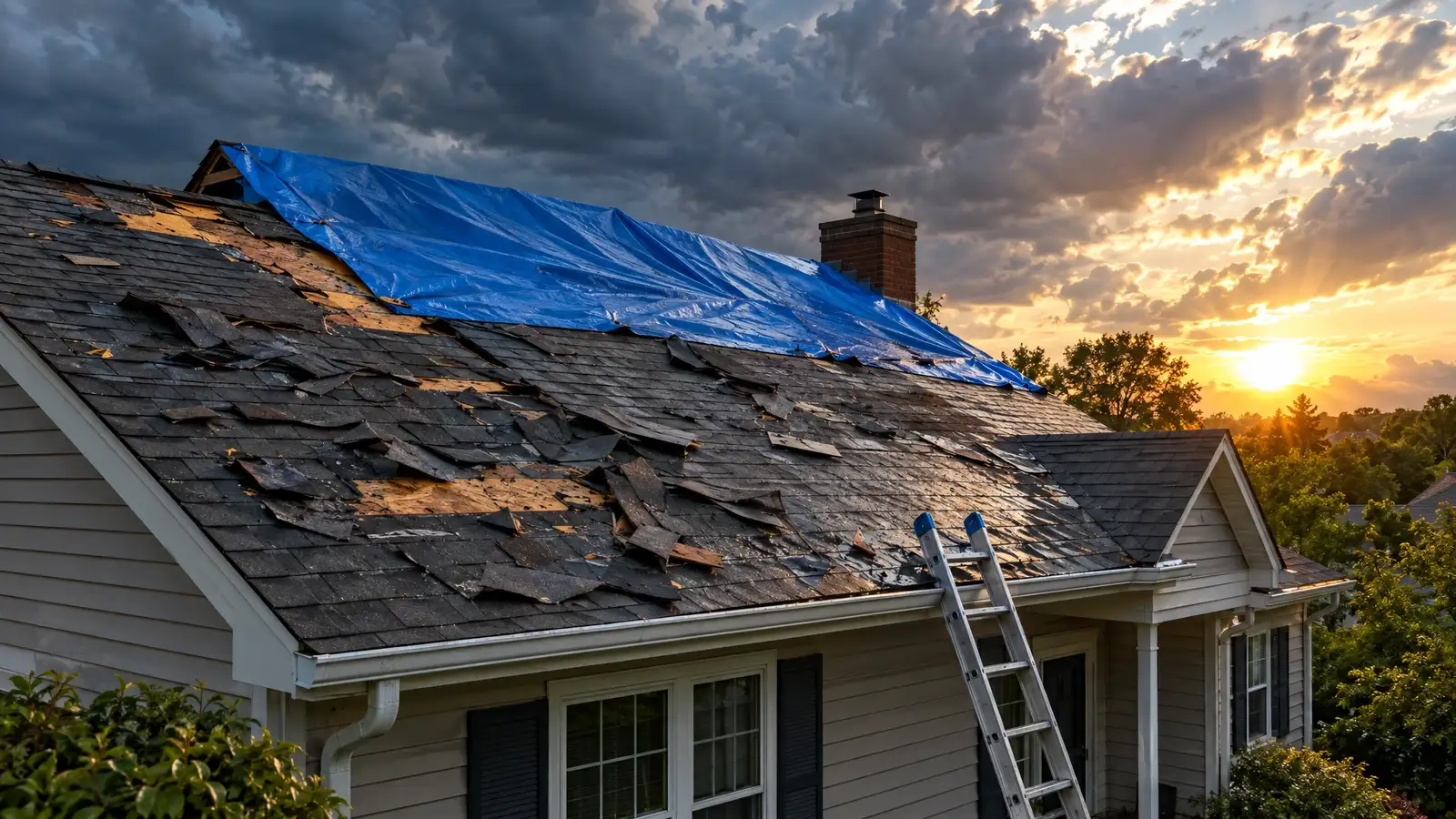
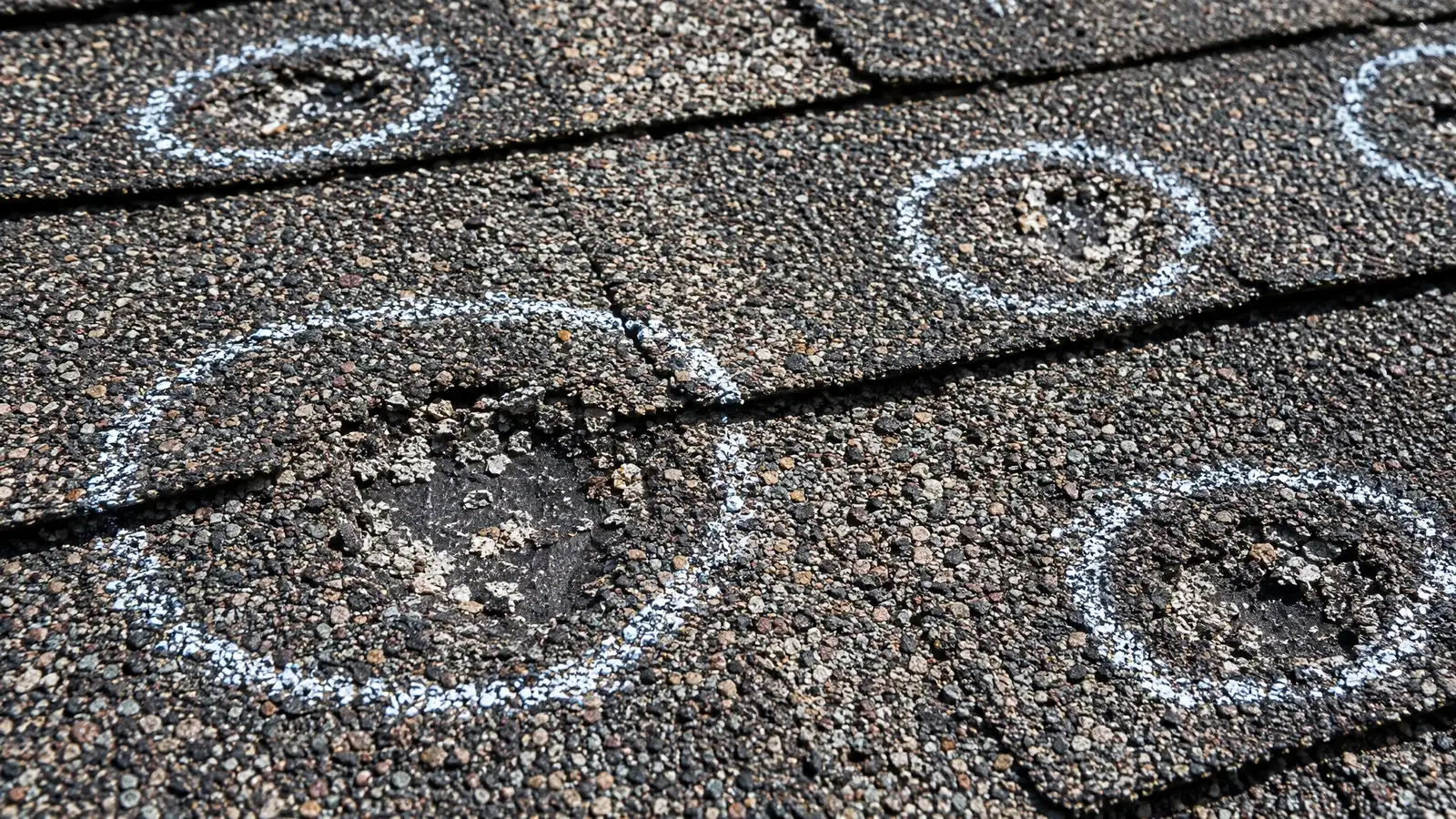
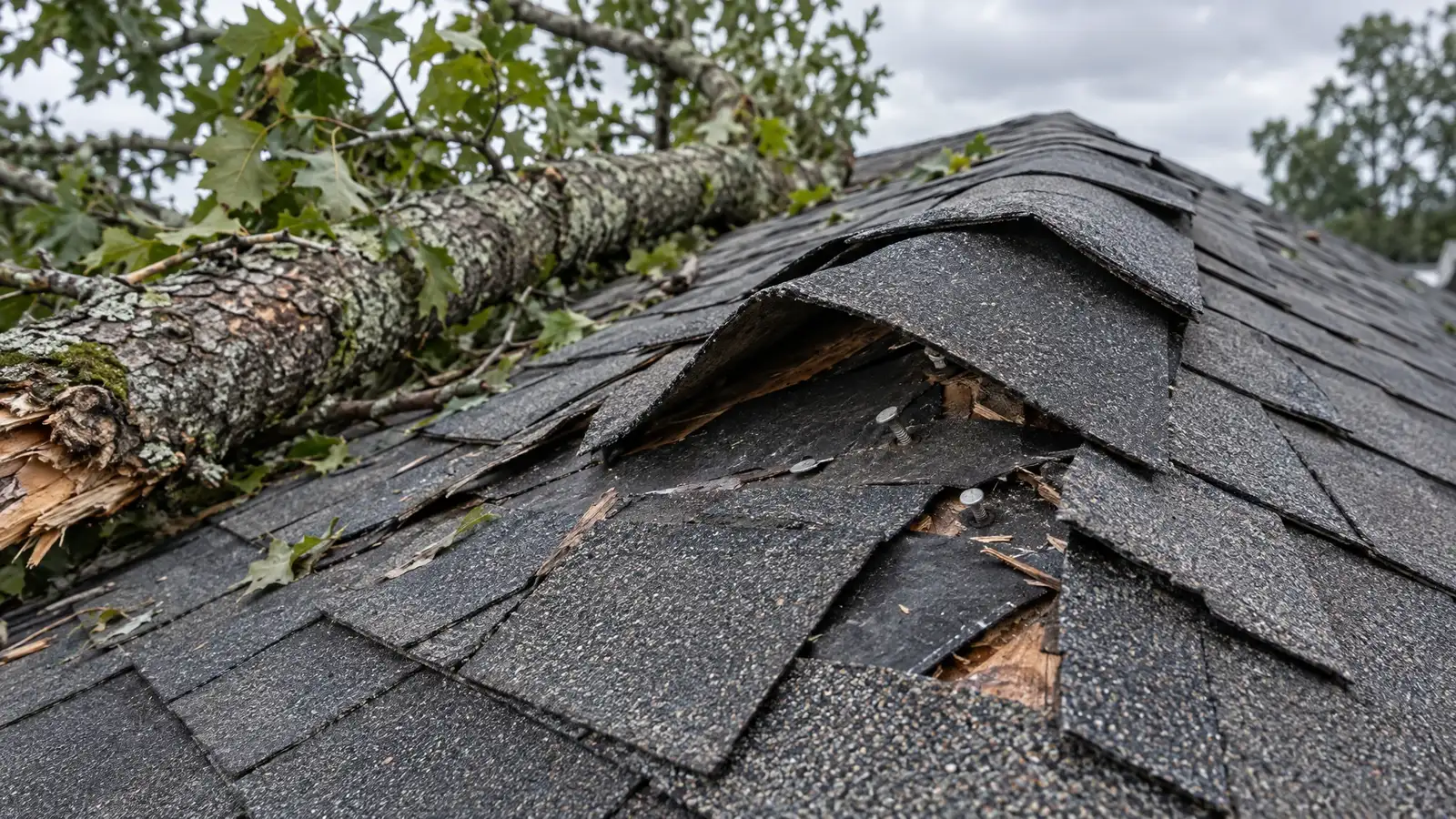
Look for missing shingles, shingles with a horizontal crease, lifted tabs, exposed nails, torn or bare patches, loose ridge caps and displaced flashing. Granules and shingle fragments in the yard are clues.
Damage often starts at the edges and works inward.
Hidden problems
Lifted shingles may settle back and look normal. Underlayment may be exposed or torn. Decking may be cracked under a limb strike. Water can enter through these hidden openings in the next rain.
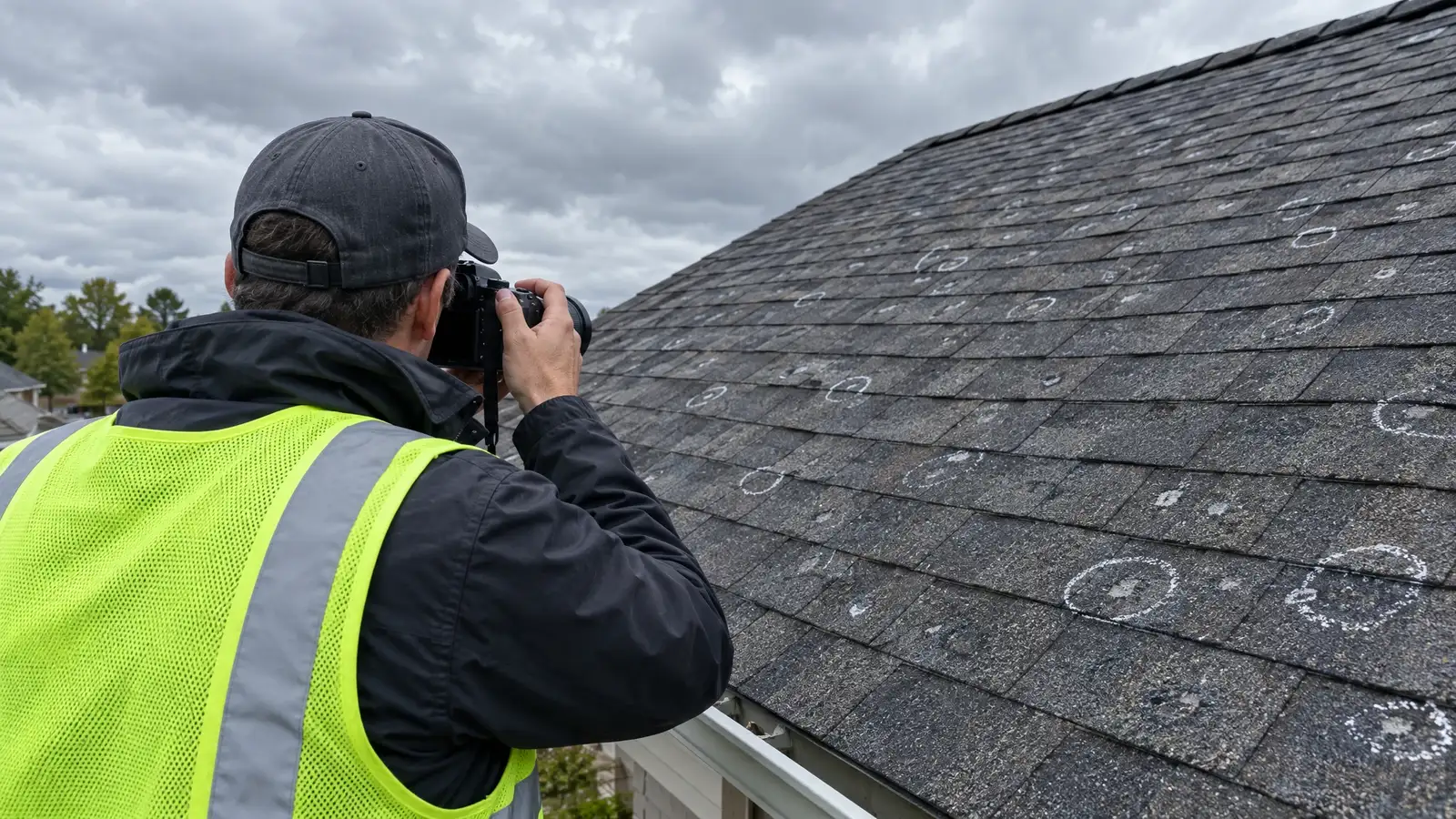
A close inspection finds what the ground view cannot.
After the storm
Photograph visible damage from the ground, protect the interior if water is coming in and arrange an inspection. If the deck is exposed, temporary protection is wise. Avoid climbing on a damaged roof.
Documenting early helps repairs and any claim.
General information, not engineering, legal, insurance or safety advice. Roofs, policies and local requirements vary, and every roof should be judged on its own condition.