
TPO, EPDM and PVC Membrane Roof Inspection in Nashville, TN
A close inspection of single-ply membrane roofs: seams, flashings, fasteners, punctures, blisters, ponding and the condition of the membrane surface.
- Commercial Roof Inspections
- Walked and photographed
- Middle Tennessee
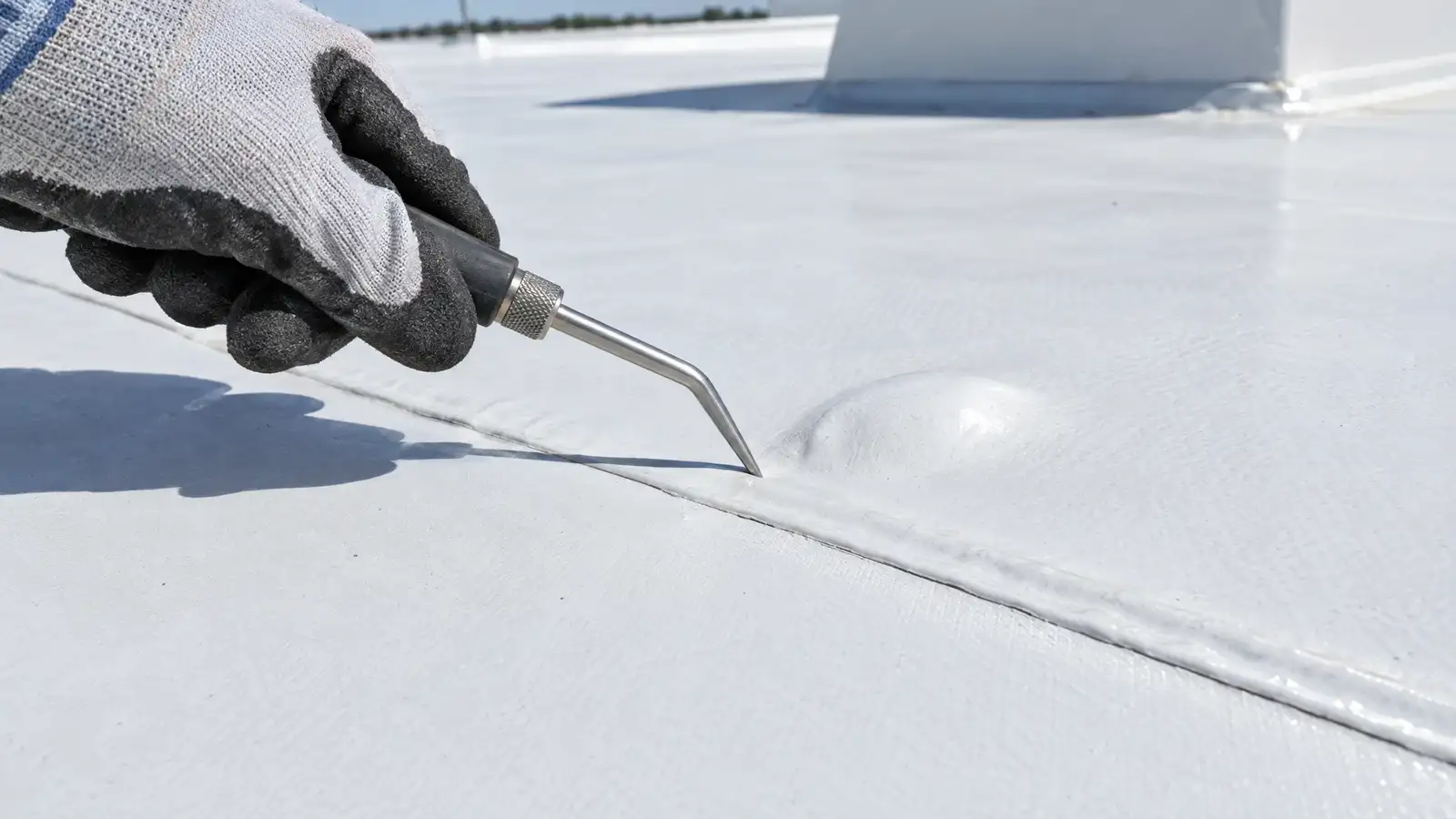
TPO, EPDM and PVC Membrane Roof Inspection, explained.
Single-ply membranes such as TPO, EPDM and PVC are the standard for many low-slope commercial roofs. They are light and efficient, but they depend on welded or adhered seams and carefully installed flashings. Foot traffic, rooftop equipment work, heat and age can all open a seam or puncture the membrane.
We walk the roof surface and examine seams, laps, flashings at walls, curbs and penetrations, fasteners, blisters and punctures. We note membrane condition, such as chalking or shrinkage, and document ponding. When water is suspected below the surface, we recommend infrared or electronic leak detection.
Signs this service fits
- Your roof is TPO, EPDM or PVC
- There is ponding or visible seam trouble
- Roof traffic from HVAC service is heavy
- A leak has appeared and the source is unclear
A good fit, and what to know.
We would rather you hear the limits from us than discover them later.
A good fit when
- The roof is a single-ply membrane
- You want a seam-level assessment
- You are preparing for repair or replacement
Worth knowing
- Surface inspection cannot see wet insulation; that needs infrared or moisture testing
- Repairs are done by a roofing contractor
Why do it this way.
Seam-level inspection
The most common failure point is checked closely.
Puncture and traffic damage
Damage from equipment visits is found and logged.
Moisture recommendations
We tell you when hidden wetness is likely.
Repair-ready map
Defects are located for accurate pricing.
Before and after: flat roof: visible and thermal
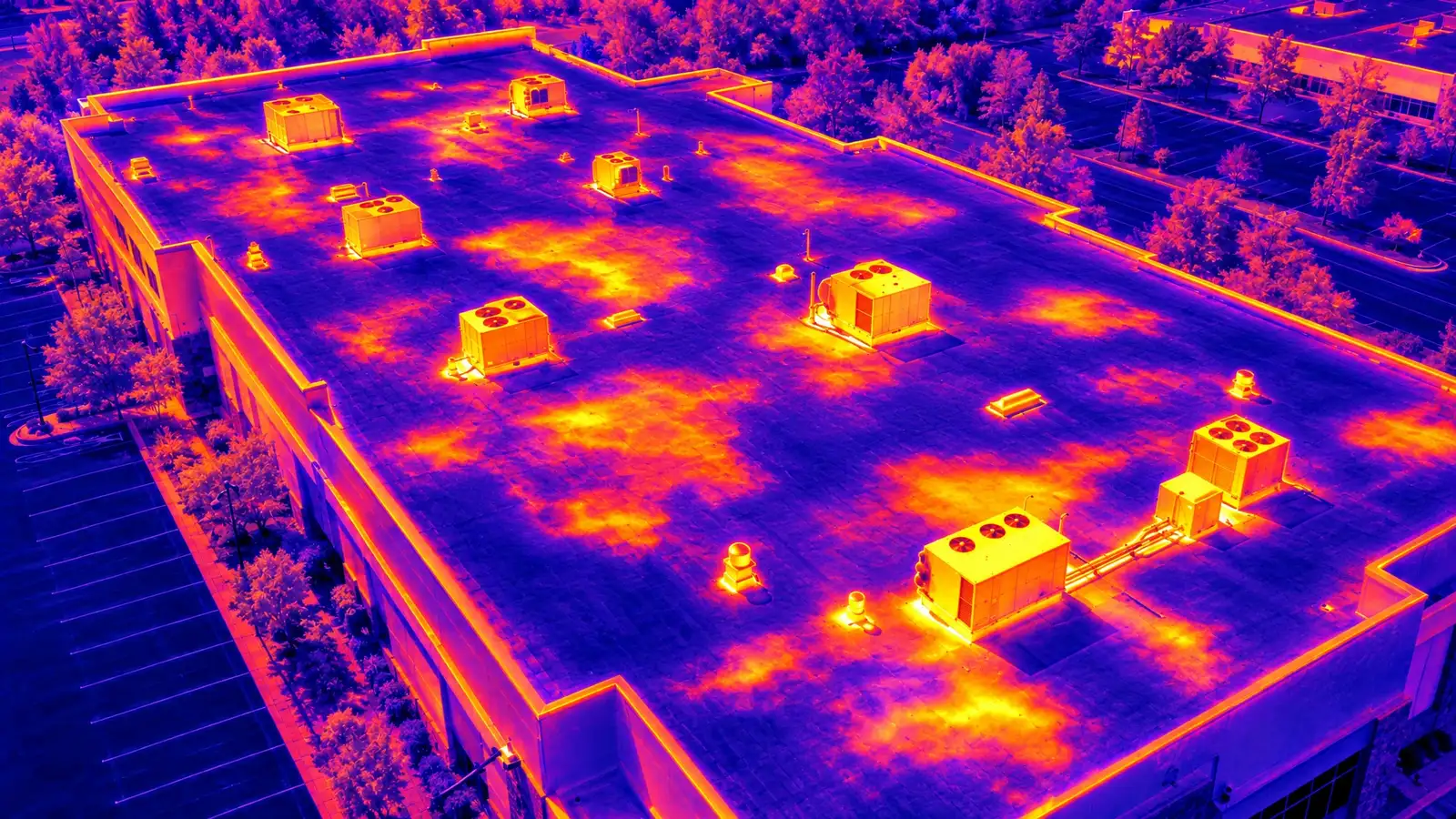
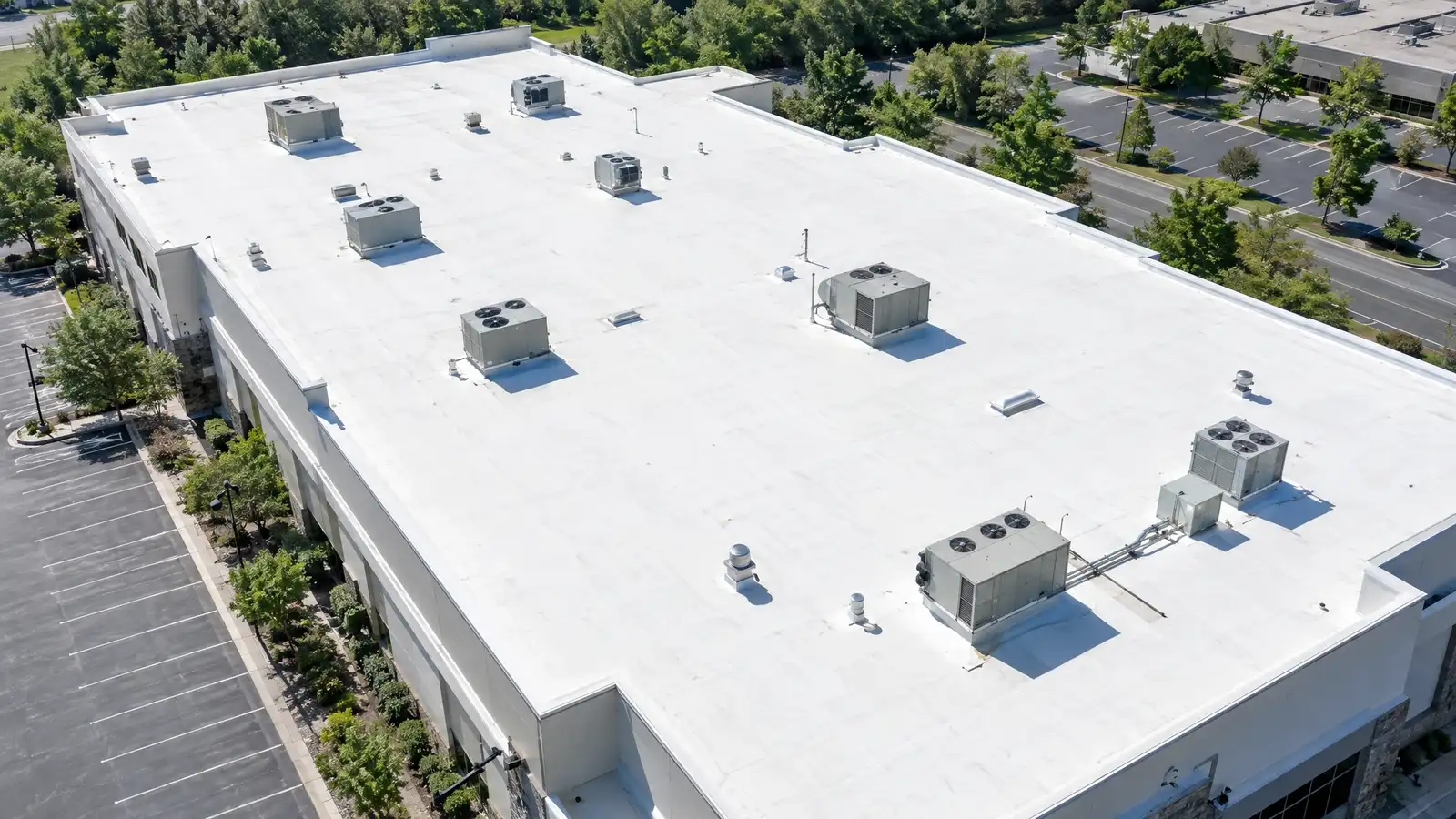 RevealedSurface view
Illustrative scene created to show what a surface view hides and what an inspection reveals. Drag the handle to slide between them.
From first look to finished report.
A clear sequence for every visit.
- 01
Identify the system
We note the membrane type, attachment method and insulation if known.
- 02
Inspect seams and surface
We probe seams and look for splits, shrinkage, punctures and blisters.
- 03
Check details
Wall flashings, curbs, penetrations and drains are examined.
- 04
Report
Findings are photographed and mapped with repair priorities.
Services that go together.
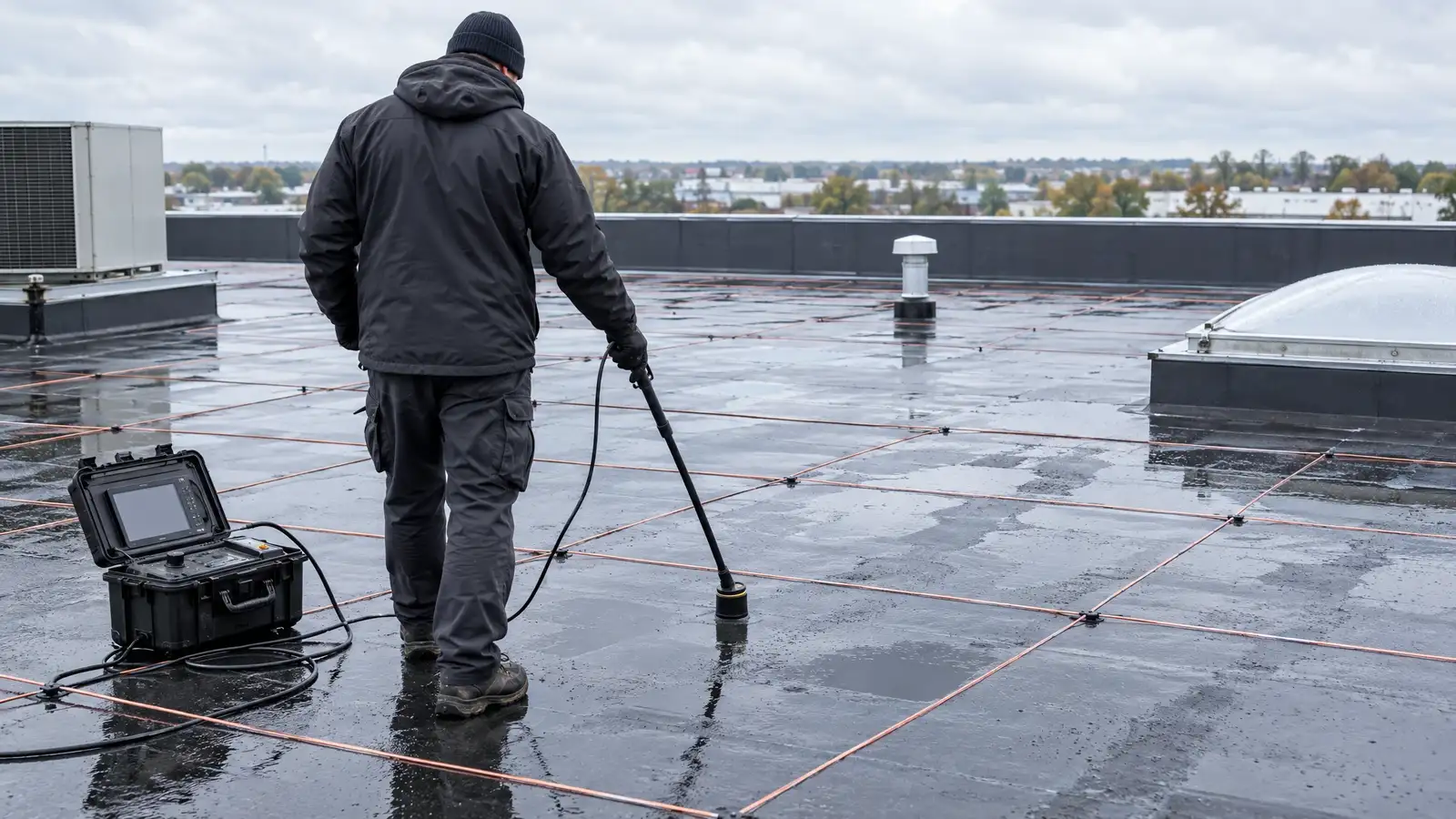 C-03Leak DetectionElectronic Leak DetectionA low-voltage scan that locates punctures and open seams in membrane roofs to within inches, even when the leak shows nowhere near the opening.Moisture and water test
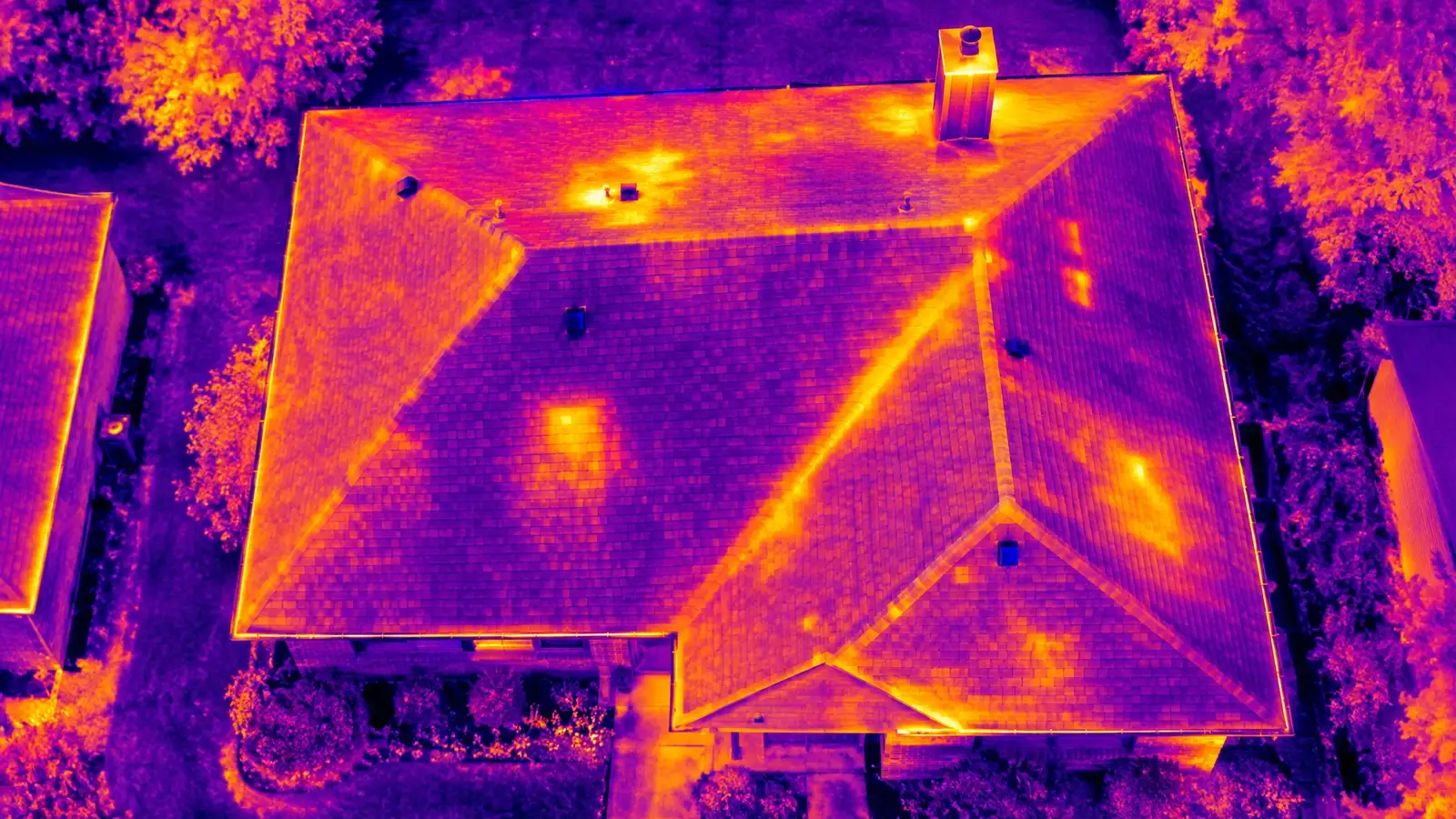 C-02Leak DetectionInfrared Roof InspectionThermal scans that reveal wet insulation and hidden moisture under low-slope roofs, and heat-loss and moisture clues on other roofs, without opening a thing.Infrared thermal
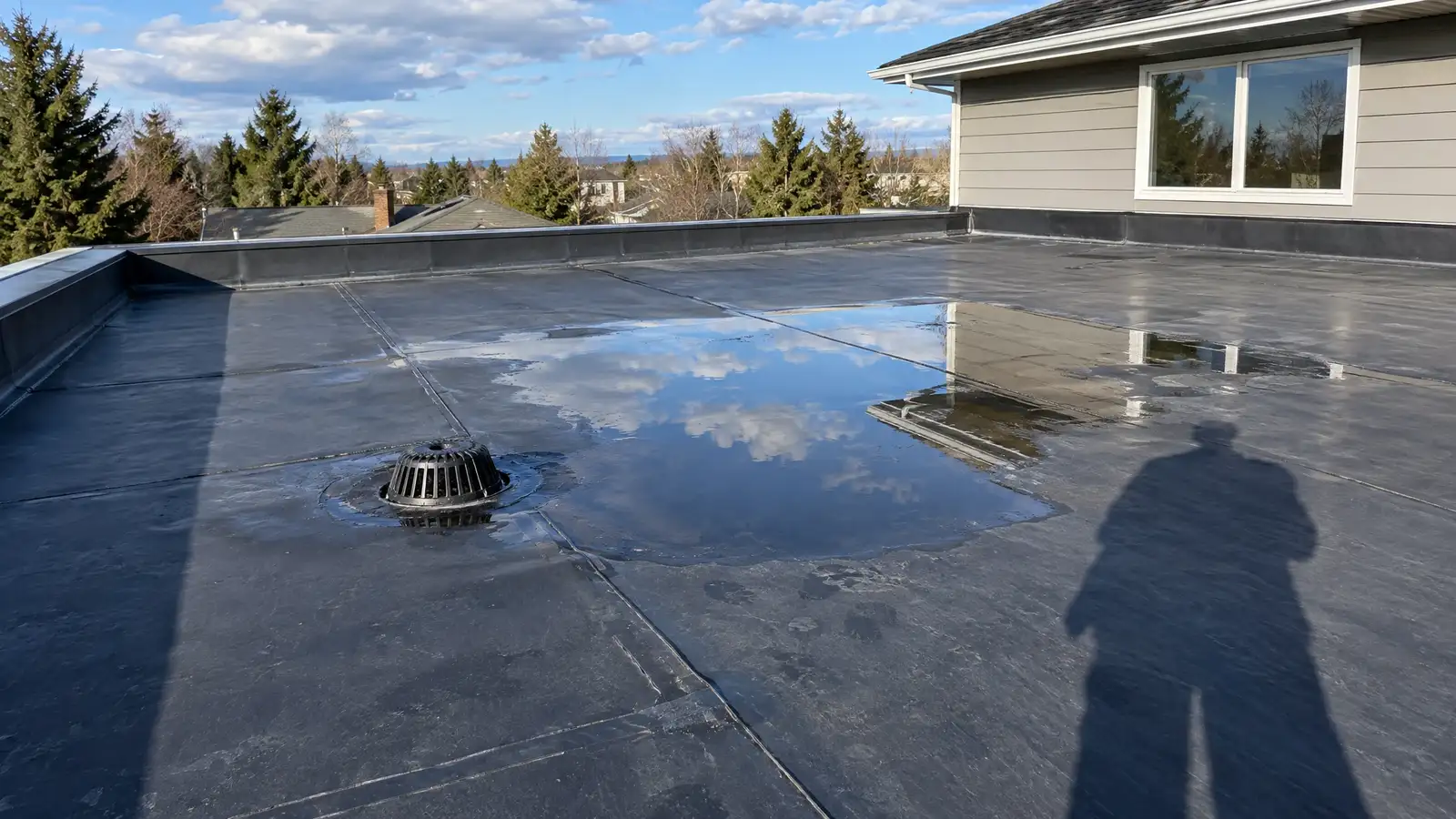 A-13Home InspectionsFlat Roof InspectionAn inspection of flat and low-slope roofs on homes, additions and porches, covering membrane seams, ponding, drains, flashings and edges.Hands-on visual
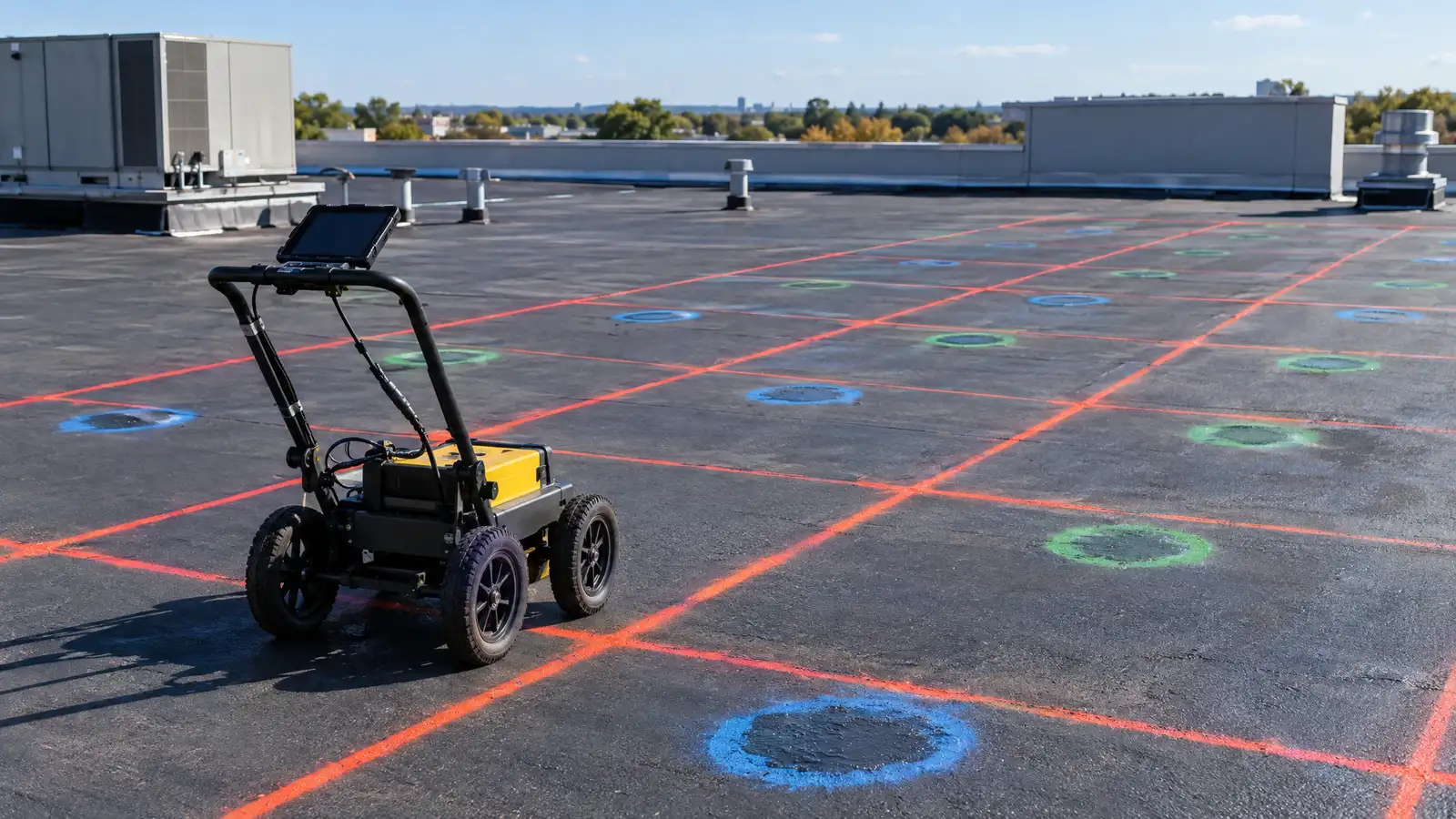 C-04Leak DetectionMoisture Survey & MappingA grid-based survey using moisture meters, infrared and core checks to map exactly where a roof system is wet and where it is dry.Moisture and water test
Read more on this topic.
Commercial Roof Types and How They FailTPO, EPDM, PVC, built-up, modified bitumen and metal: how each is built and where each tends to fail.2 min read Ponding Water on Flat RoofsWhy standing water is a warning sign, what causes it and what it does to a roof over time.2 min read Electronic Leak Detection ExplainedHow a low-voltage test finds pinholes and seam breaches in membrane roofs.2 min read Membrane Roof Inspection FAQ.
What fails first on a membrane roof?
Often seams and flashing details, plus punctures from traffic and equipment.
Can a membrane be repaired?
Often yes, with patches and re-welded or re-adhered seams, if the membrane is otherwise sound.
How long do membrane roofs last?
Commonly cited ranges are roughly 15 to 30 years depending on type and care, but real results vary.
Membrane Roof Inspection across Middle Tennessee.
Pick your city for its page.
Know your roof. Before the next storm.
Tell us about your roof and what worries you, and we will suggest the right inspection. Most leaks announce themselves long before the ceiling does.