
Valley and Step Flashing Leak Detection in Nashville and Middle TN
An inspection of roof valleys, step flashing at walls, dormers and transitions, where concentrated water finds weak points.
- Advanced Roof Leak Detection
- Measured, not guessed
- Middle Tennessee
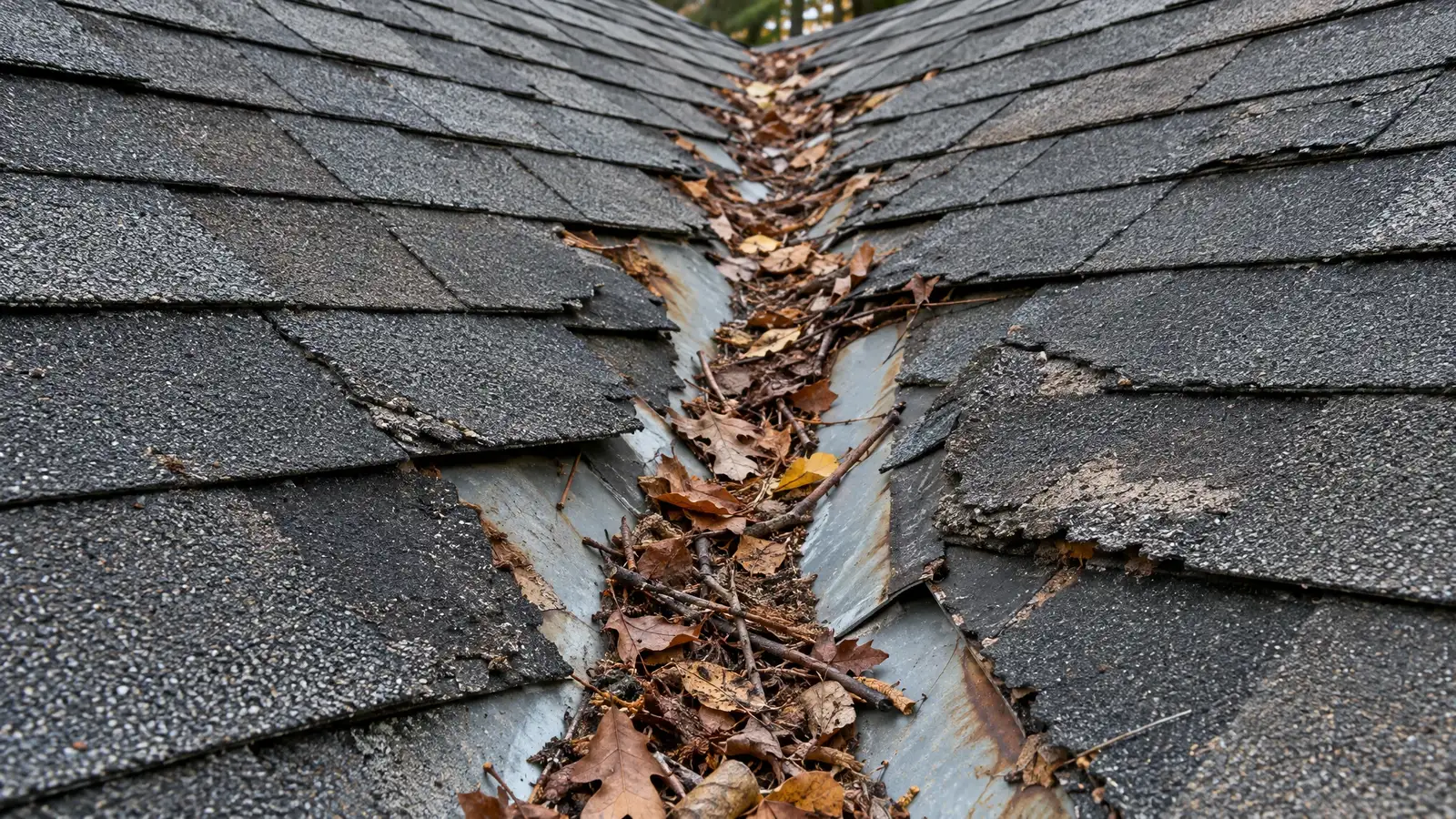
Valley and Step Flashing Leak Detection, explained.
A roof valley carries the runoff of two slopes. That concentrated flow, plus leaves and debris, makes valleys one of the hardest-working parts of a roof. When valley metal rusts, shingles wear or flashing steps loosen where a roof meets a wall or dormer, water gets under the roofing.
We examine valleys for debris, wear, exposed metal and shingle cuts, then follow walls, dormers, and roof-to-wall transitions looking at step flashing, kick-out flashing and sealant. We also look at gutters at valley ends where overflow can cause trouble. The report maps each suspect detail with photographs.
Signs this service fits
- Leaks follow heavy rain
- Stains appear near a roof-wall intersection
- Leaves collect in your valleys
- You see rust or exposed metal in valleys
A good fit, and what to know.
We would rather you hear the limits from us than discover them later.
A good fit when
- Leaks occur near valleys or walls
- You want details inspected thoroughly
- You are tracing a stubborn leak
Worth knowing
- Repairs belong to a roofing contractor
- Hidden damage may need attic checks
Why do it this way.
Concentrated water understood
Valleys get the attention they need.
Details followed to the end
Wall and dormer flashing checked along their length.
Debris and wear documented
Shows why the area fails.
Actionable map
A contractor can fix the exact spots.
Before and after: valley: debris to inspected
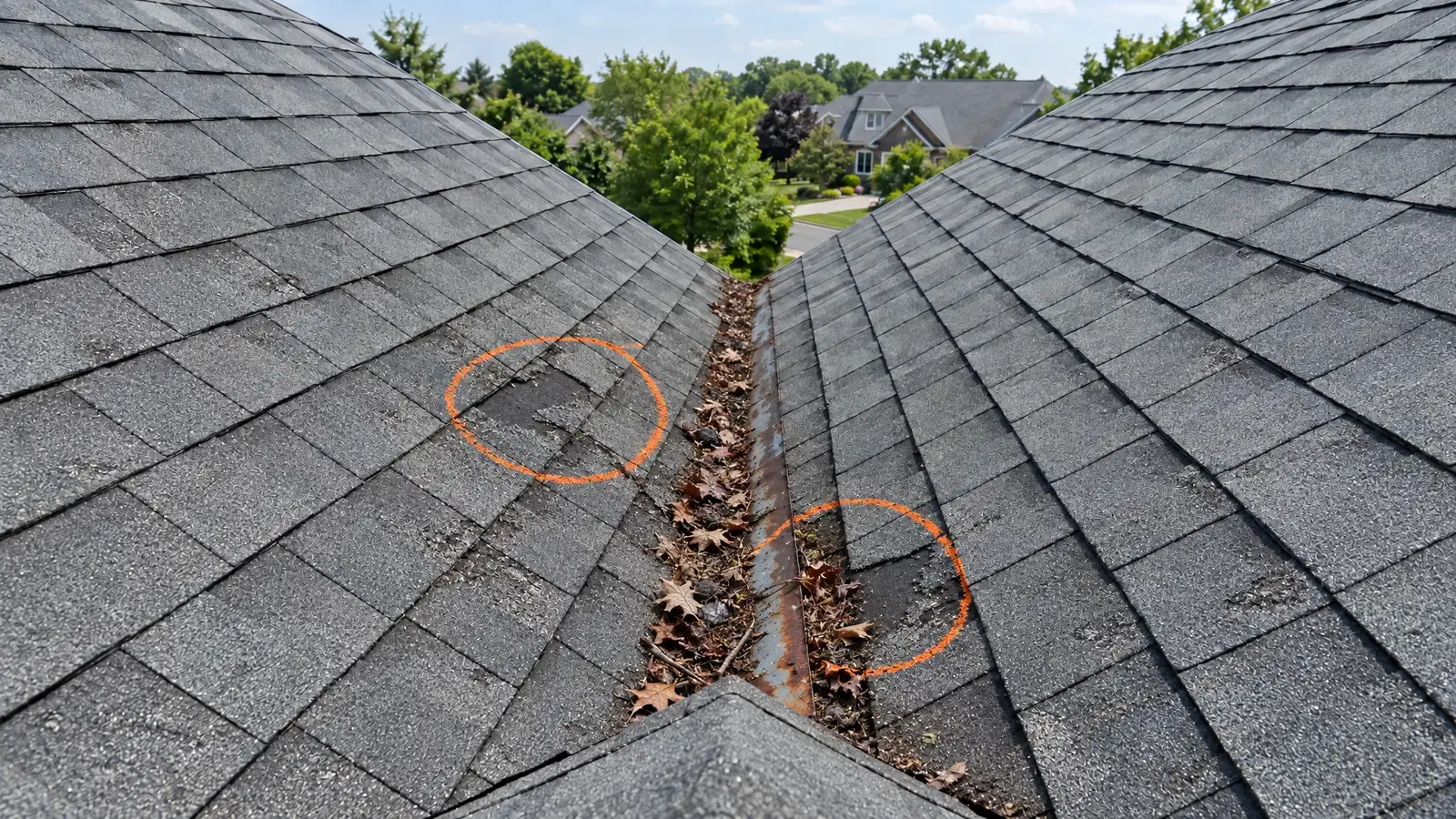
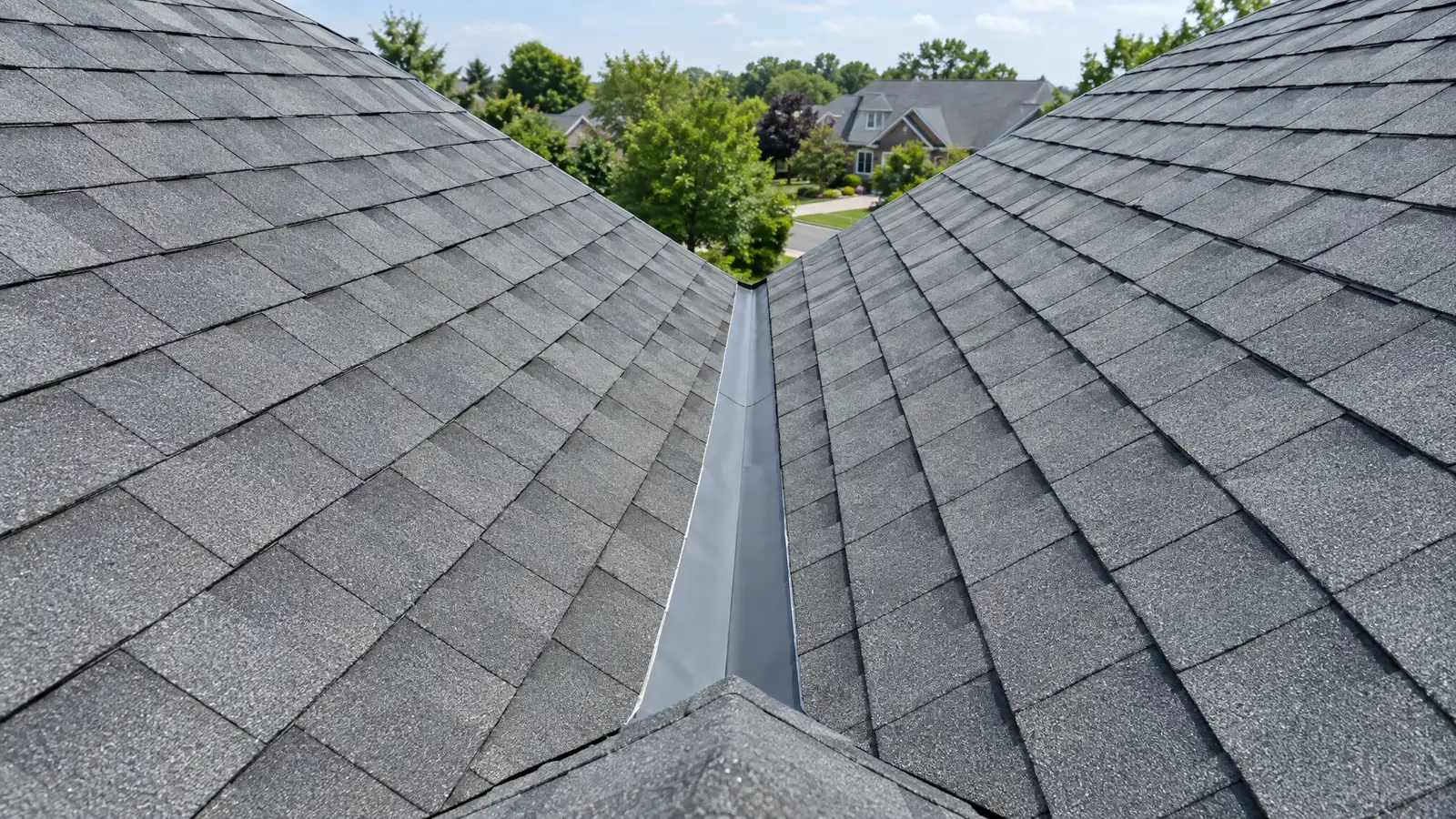 RevealedSurface view
Illustrative scene created to show what a surface view hides and what an inspection reveals. Drag the handle to slide between them.
From first look to finished report.
A clear sequence for every visit.
- 01
Clear and inspect the valley
We examine valley surfaces, edges, shingle cuts and metal.
- 02
Follow the transitions
Walls, dormers, step flashing and kick-outs are examined.
- 03
Confirm with testing
Moisture readings or water tests confirm the leaking detail.
- 04
Map and report
You receive a detail-by-detail map with photos and repair guidance.
Services that go together.
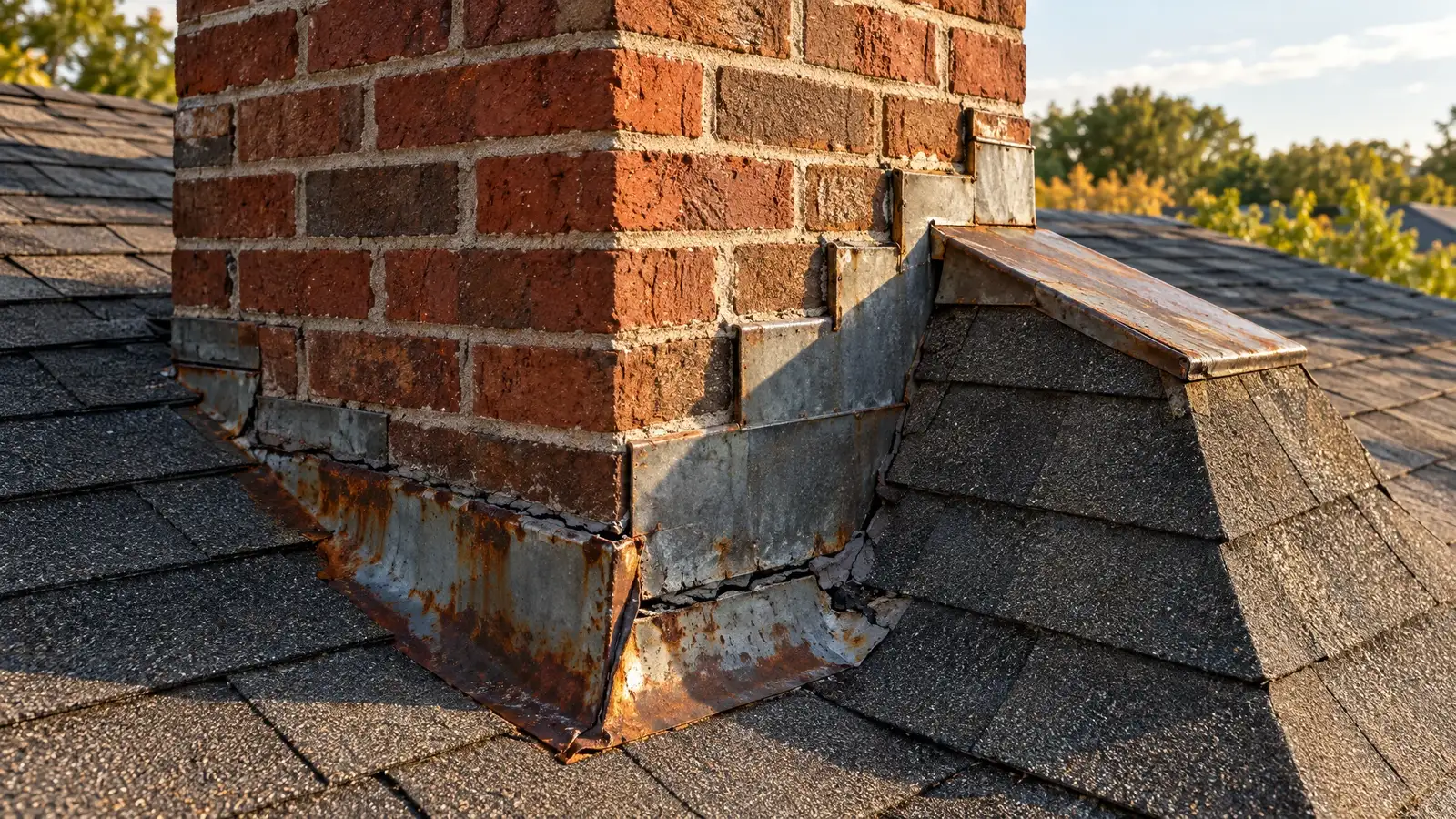 C-08Leak DetectionChimney & Flashing LeaksAn inspection of chimney flashing, crickets, counterflashing, crown, mortar and siding intersections to pinpoint why water is getting in around your chimney.Moisture and water test
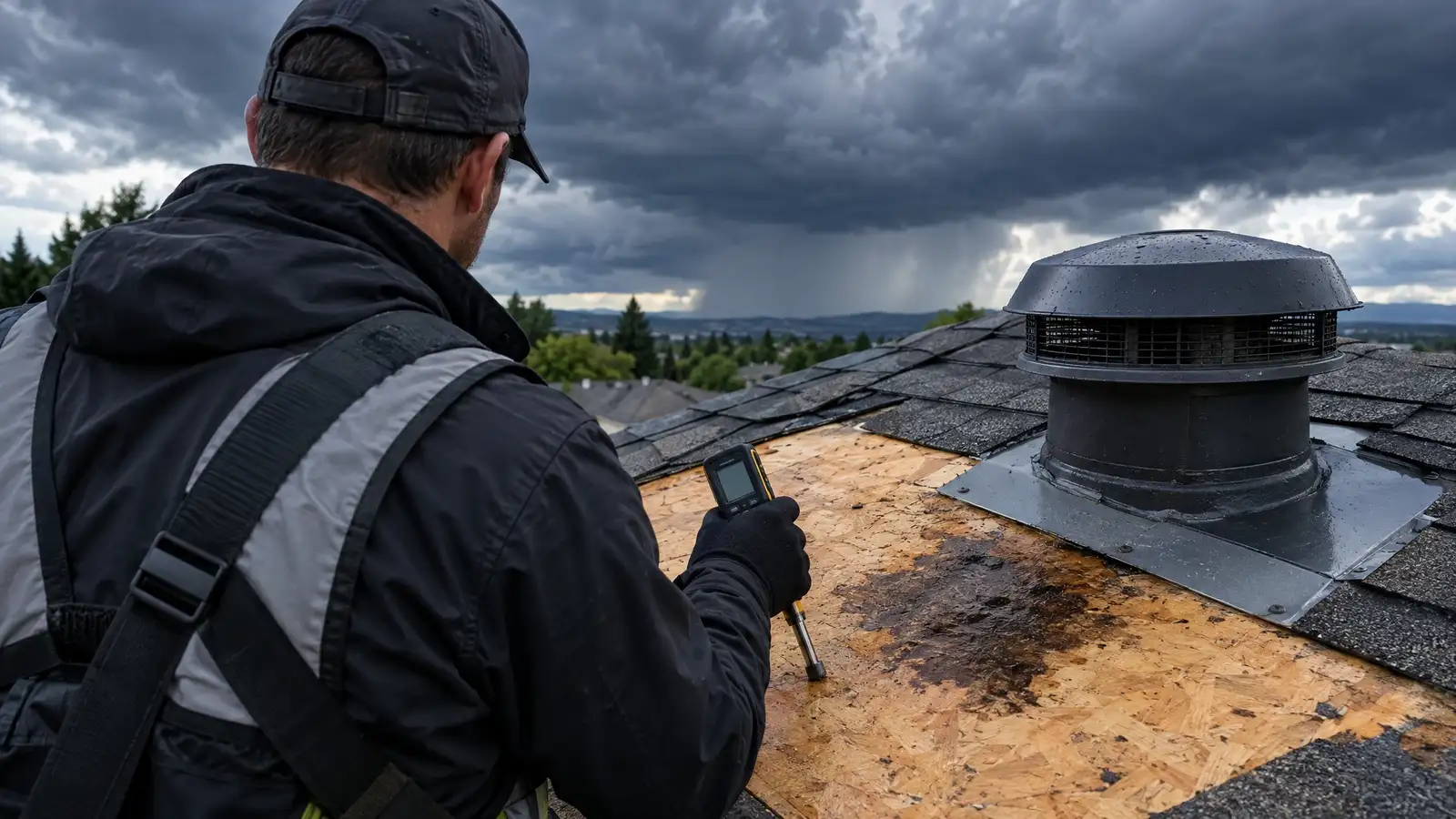 C-01Leak DetectionRoof Leak DetectionA systematic investigation that traces water from the stain on your ceiling back to the exact opening in the roof, using inspection, moisture meters, water testing and thermal imaging.Moisture and water test
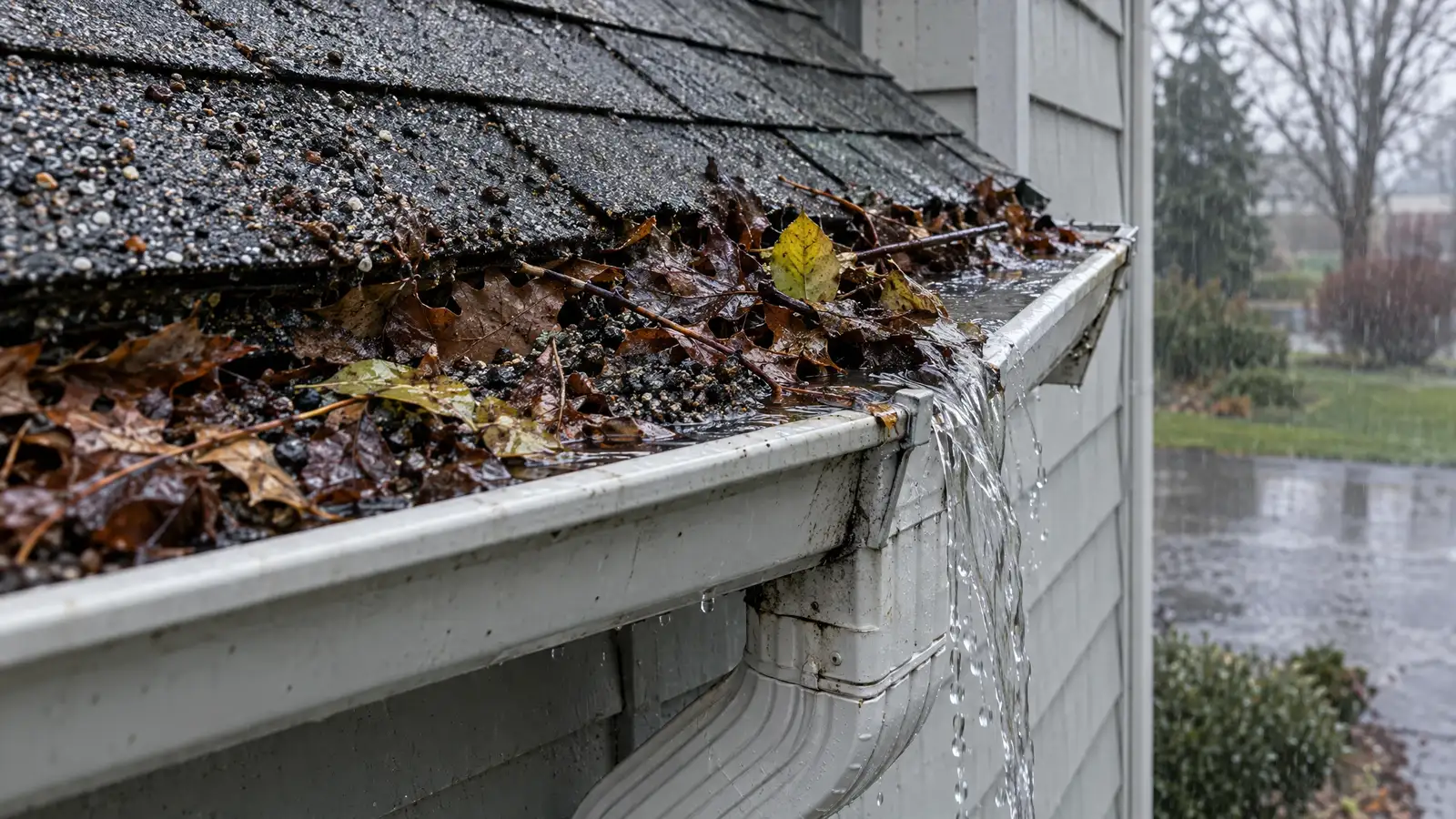 E-01SpecialtyGutter & Drainage InspectionAn inspection of gutters, downspouts, drip edges, scuppers and roof drains to find clogs, sagging, overflow and the leaks that follow.Hands-on visual
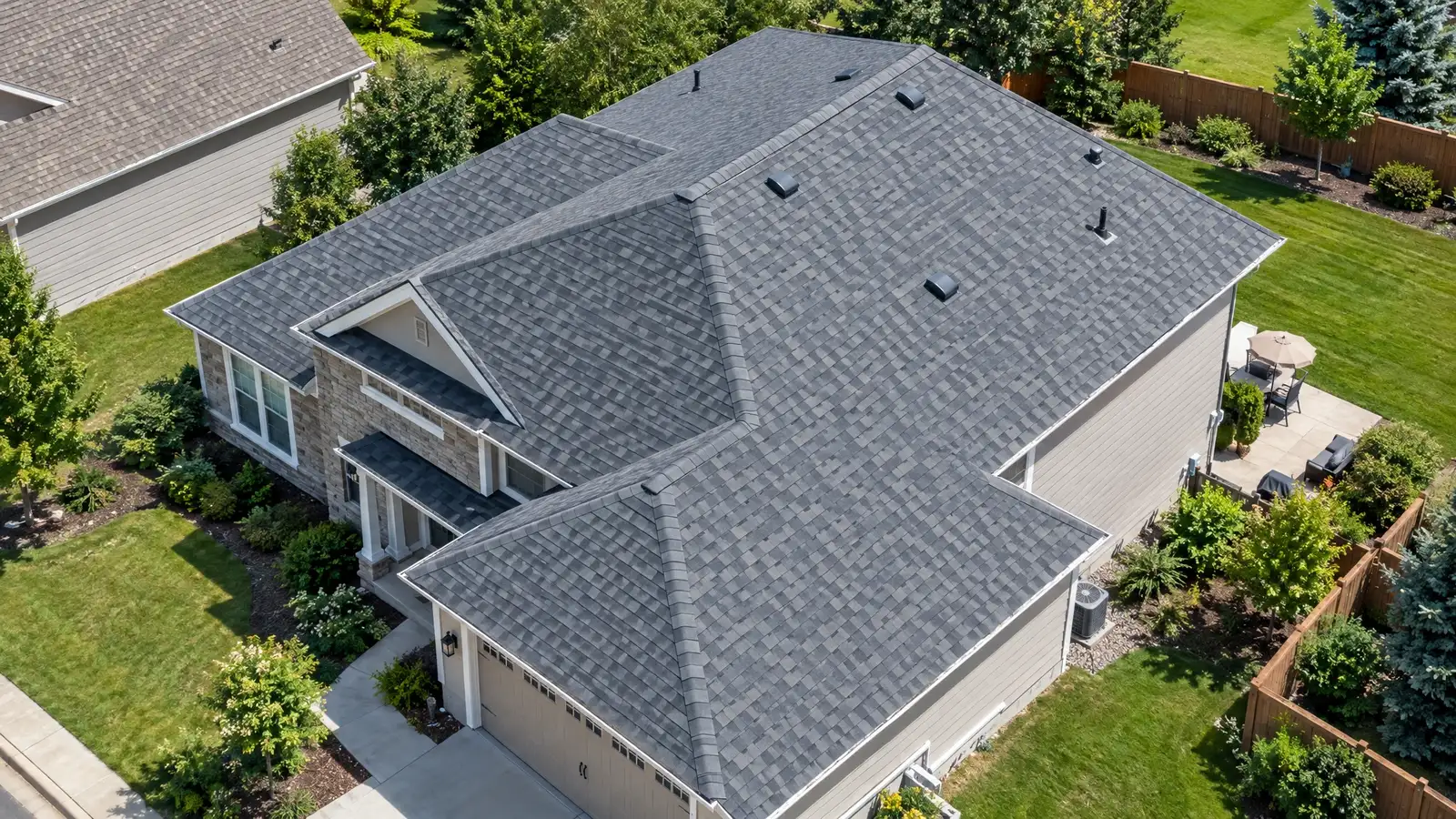 A-10Home InspectionsShingle Roof InspectionA detailed inspection of three-tab and architectural asphalt shingles, covering granule loss, cracking, curling, nail pops, sealant strips and every flashing.Hands-on visual
Read more on this topic.
Why Roofs LeakThe most common reasons water gets into a roof, from flashing failures to clogged valleys.2 min read 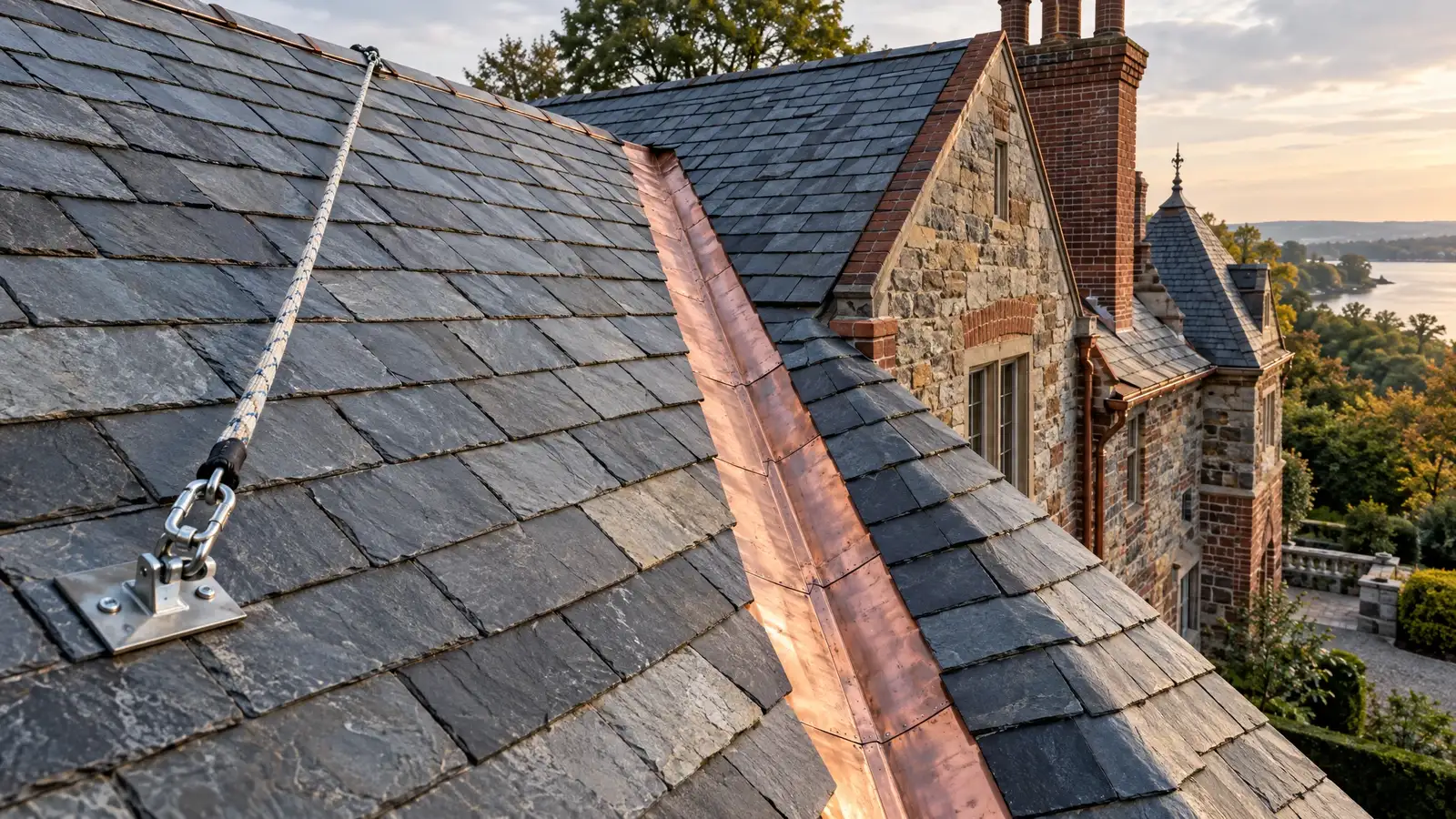 The Anatomy of a Roof, ExplainedDecking, underlayment, flashing, ridge, valley and more: the parts of a roof and what each one does.2 min read What Roof Inspectors Look ForThe checklist behind a thorough inspection: surfaces, flashings, penetrations, edges and the attic.2 min read
Valley & Flashing Leaks FAQ.
Why do valleys leak?
They carry more water than any other part of the roof and trap debris.
What is kick-out flashing?
A small flashing that directs water from a roof edge into the gutter instead of behind the siding.
Can leaves cause leaks?
Yes. Debris dams water and holds moisture against the roofing.
Valley & Flashing Leaks across Middle Tennessee.
Pick your city for its page.
Know your roof. Before the next storm.
Tell us about your roof and what worries you, and we will suggest the right inspection. Most leaks announce themselves long before the ceiling does.