
Infrared Thermal Imaging Roof Inspection in Nashville, TN
Thermal scans that reveal wet insulation and hidden moisture under low-slope roofs, and heat-loss and moisture clues on other roofs, without opening a thing.
- Advanced Roof Leak Detection
- Heat patterns show moisture
- Middle Tennessee
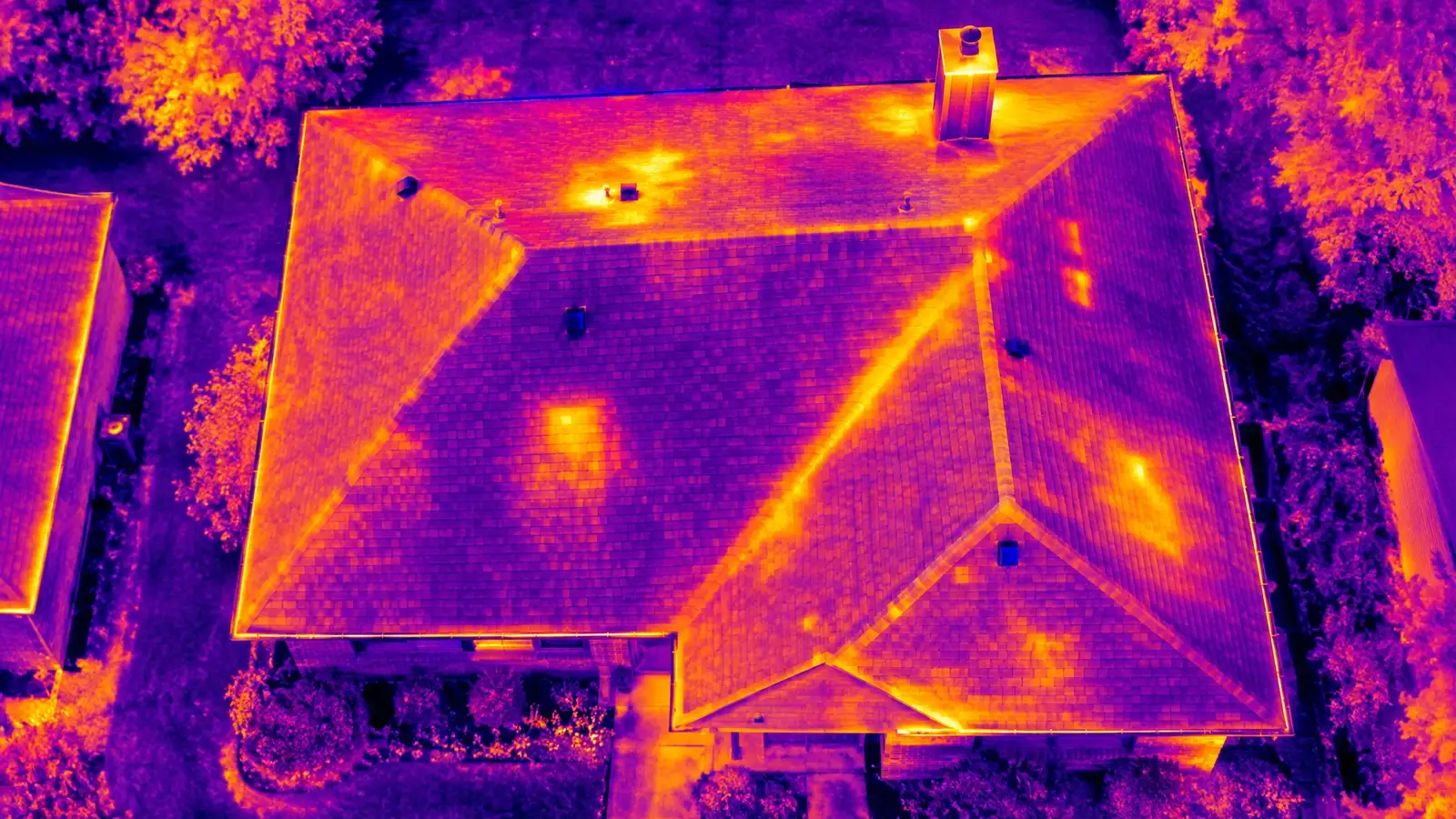
Infrared Thermal Imaging Roof Inspection, explained.
Infrared cameras do not see water, they see temperature. Wet roof insulation holds heat longer than dry insulation, so after a sunny day, wet areas stay warm while dry areas cool. A thermal camera shows those differences, turning invisible moisture into a map.
We scan roofs under the right conditions, usually in the hours after sunset on roofs that have been heated by the sun, and mark suspicious areas. Infrared works best on low-slope roofs with insulation. On other roofs it gives useful clues but is not a final answer, so we confirm findings with moisture readings. We explain what the images show and what they do not.
Signs this service fits
- Your roof is low-slope with insulation
- You suspect trapped moisture
- You are deciding between spot repair and replacement
- Leaks have appeared but the source is unclear
A good fit, and what to know.
We would rather you hear the limits from us than discover them later.
A good fit when
- You need to map moisture on a low-slope roof
- You want to avoid unnecessary replacement
- You need evidence for a repair scope
Worth knowing
- Infrared depends on weather and roof conditions
- Findings should be confirmed by moisture readings
Why do it this way.
Finds hidden wetness
See moisture under a membrane without cutting.
Targets repairs
Replace only the wet insulation, not the whole roof.
Side-by-side images
Thermal and normal photos make findings clear.
Honest limits
We tell you when infrared cannot answer the question.
Before and after: house: visible and thermal
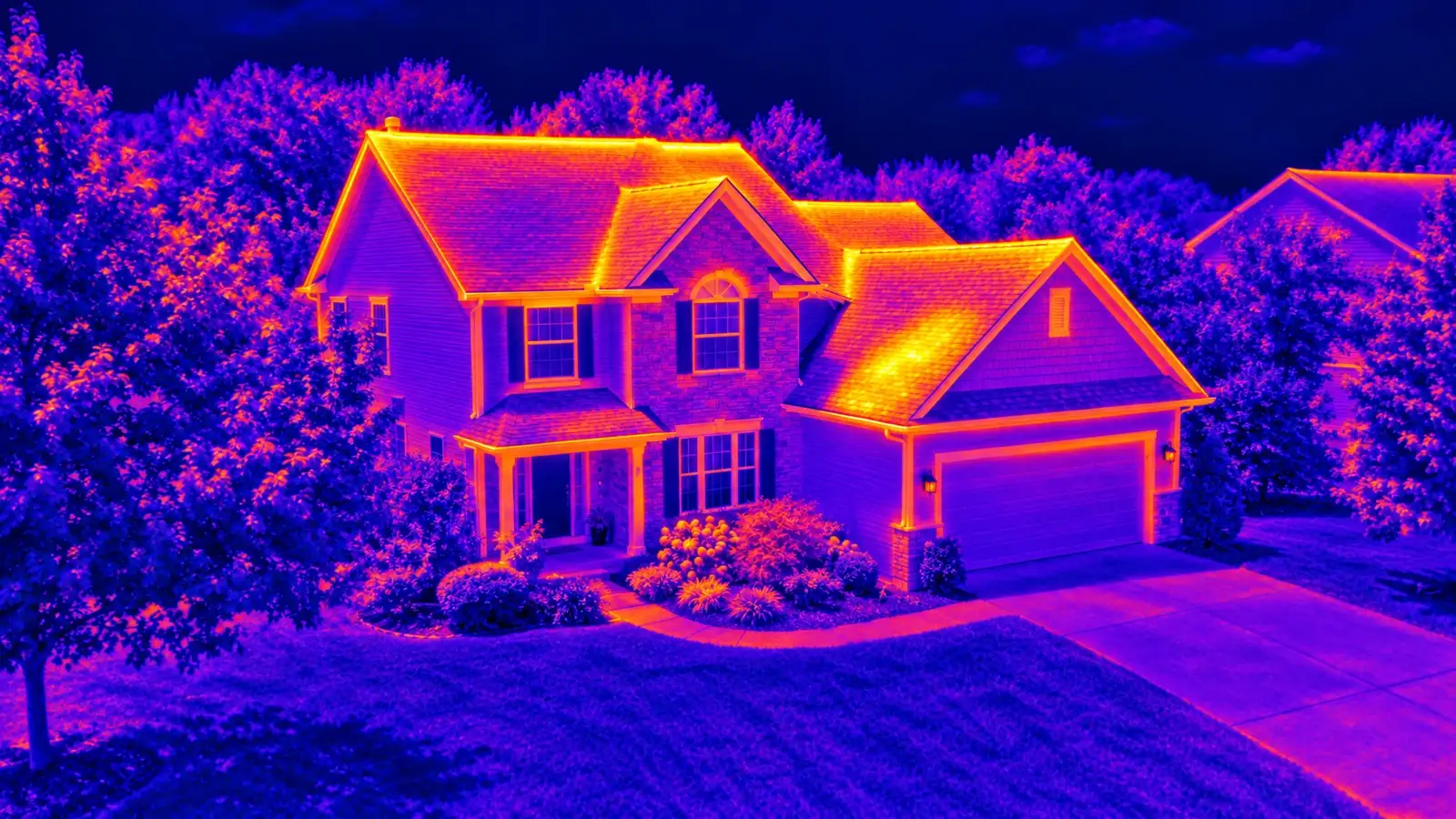
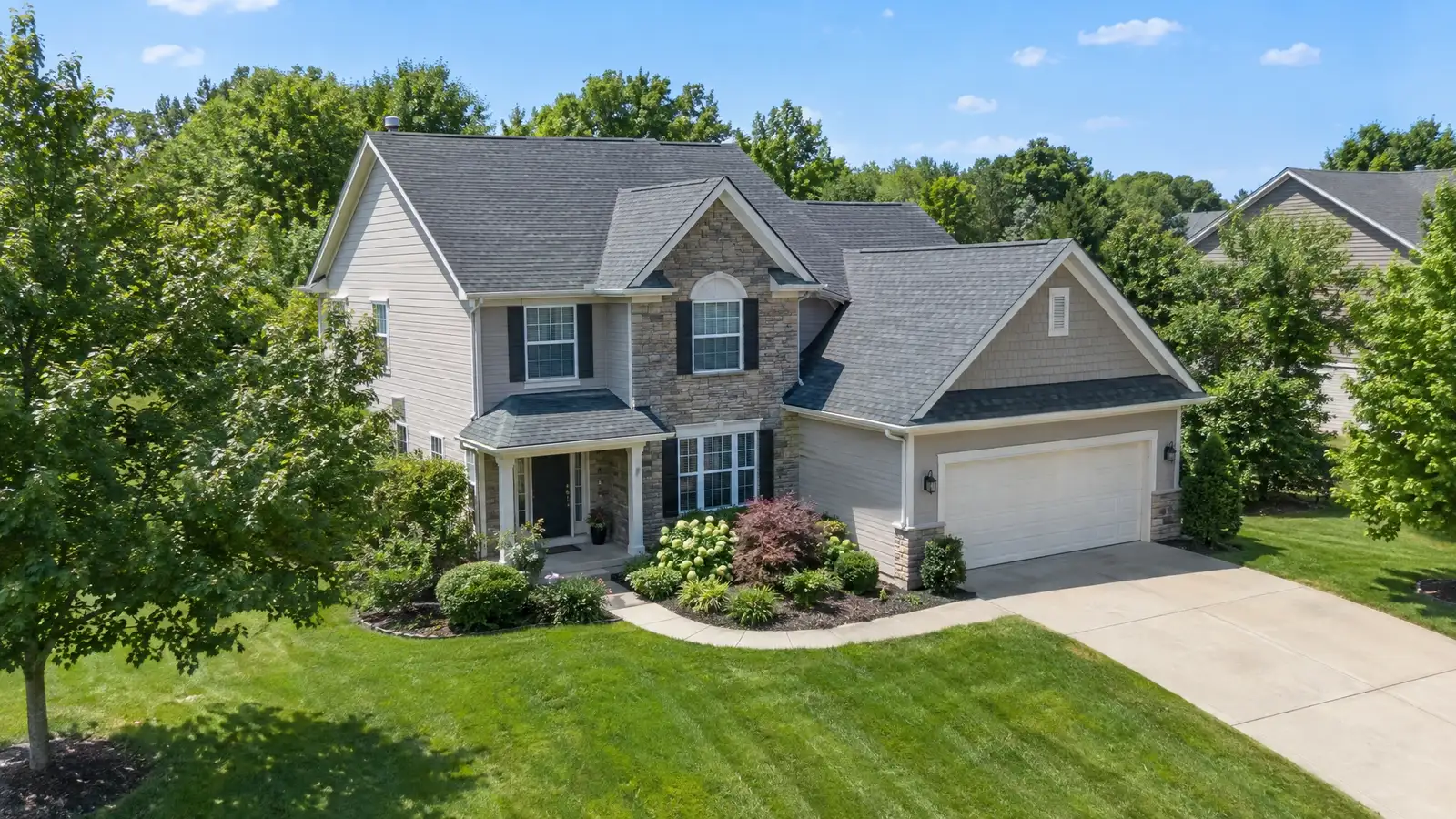 RevealedSurface view
Illustrative scene created to show what a surface view hides and what an inspection reveals. Drag the handle to slide between them.
From first look to finished report.
A clear sequence for every visit.
- 01
Pick the conditions
We schedule the scan for a time when heat patterns show moisture best.
- 02
Scan the roof
We capture thermal and normal images side by side across the roof.
- 03
Mark and verify
Suspect areas are marked and checked with a moisture meter.
- 04
Map and report
You receive thermal images, a moisture map and repair guidance.
Services that go together.
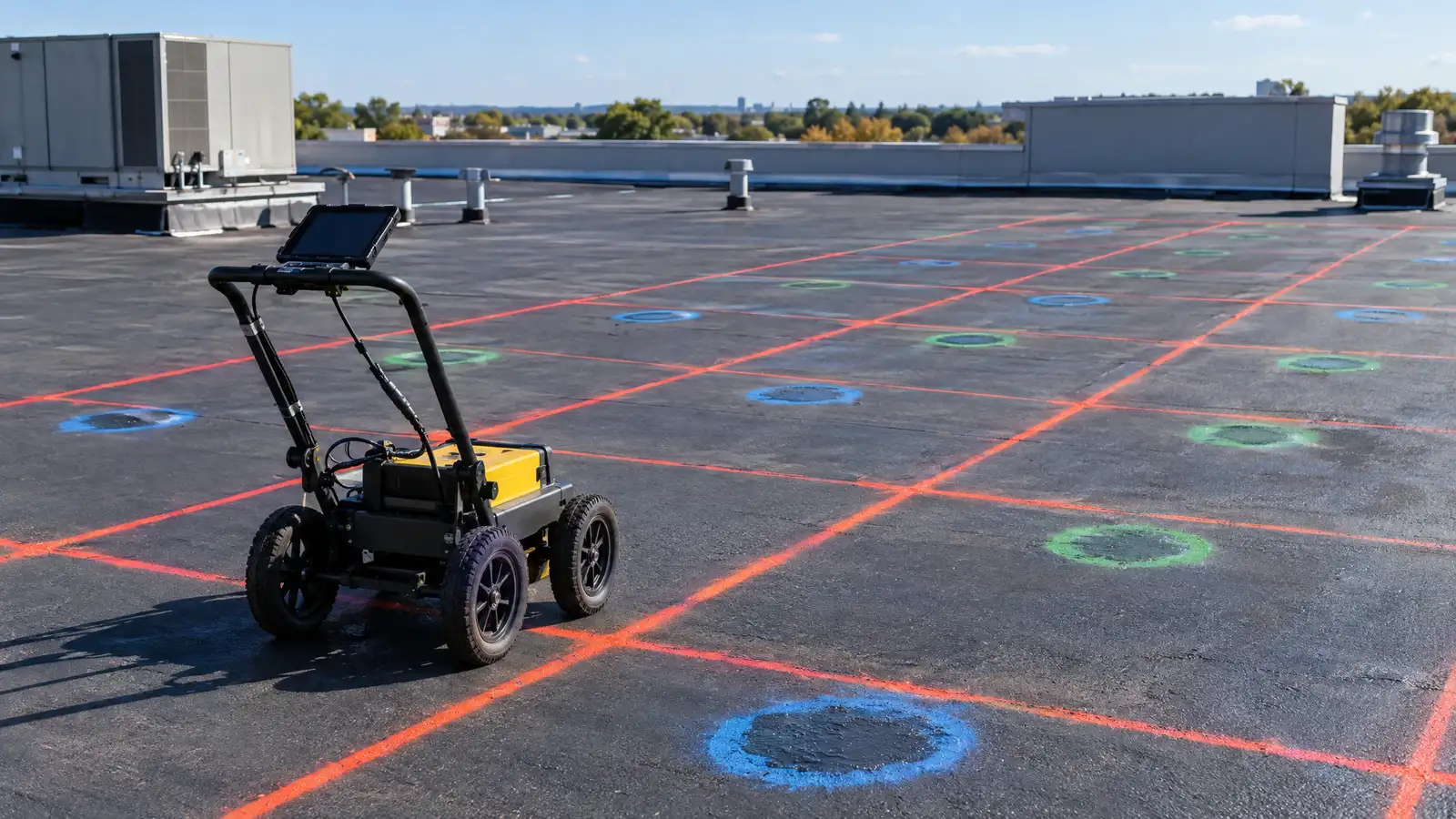 C-04Leak DetectionMoisture Survey & MappingA grid-based survey using moisture meters, infrared and core checks to map exactly where a roof system is wet and where it is dry.Moisture and water test
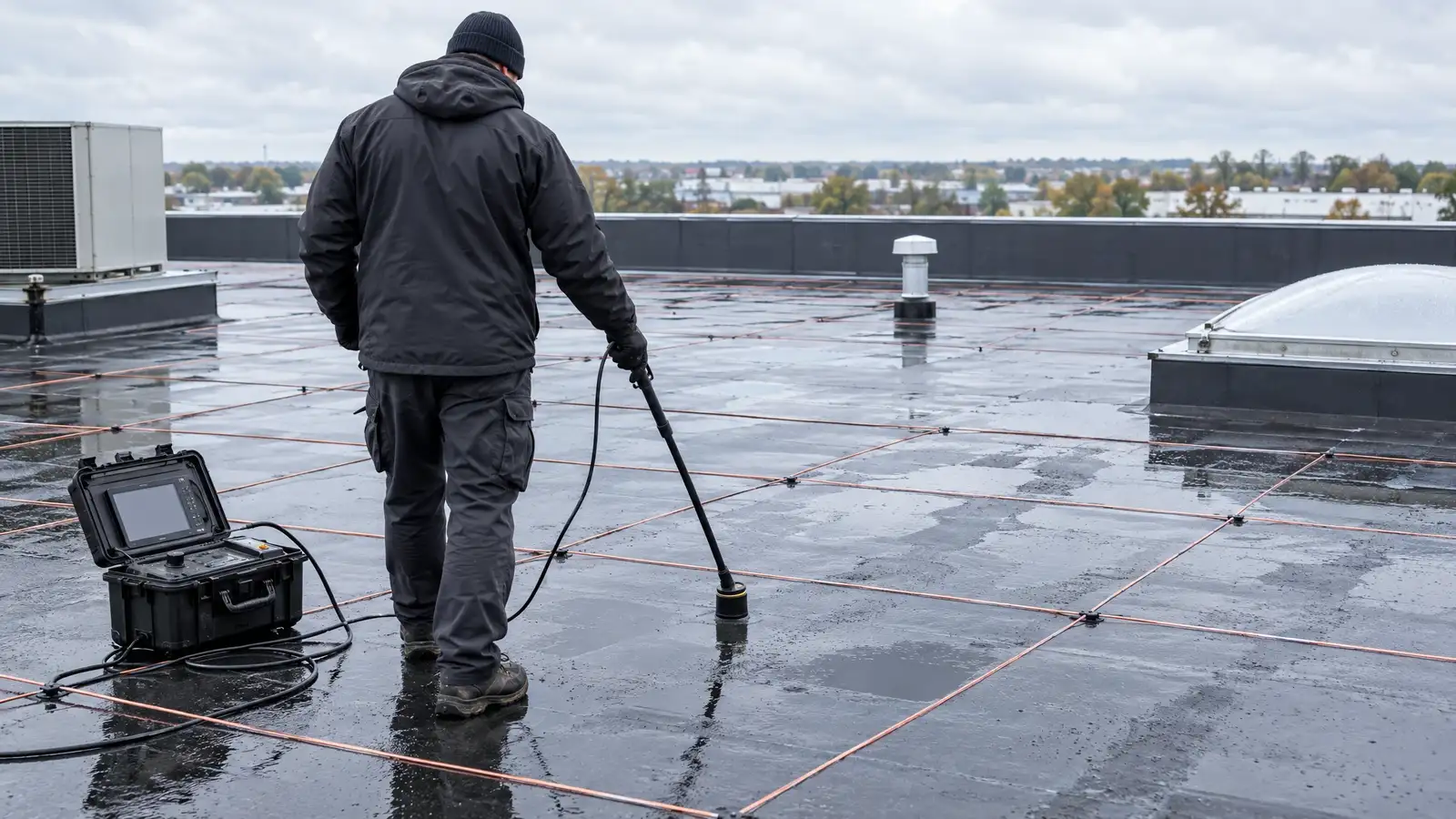 C-03Leak DetectionElectronic Leak DetectionA low-voltage scan that locates punctures and open seams in membrane roofs to within inches, even when the leak shows nowhere near the opening.Moisture and water test
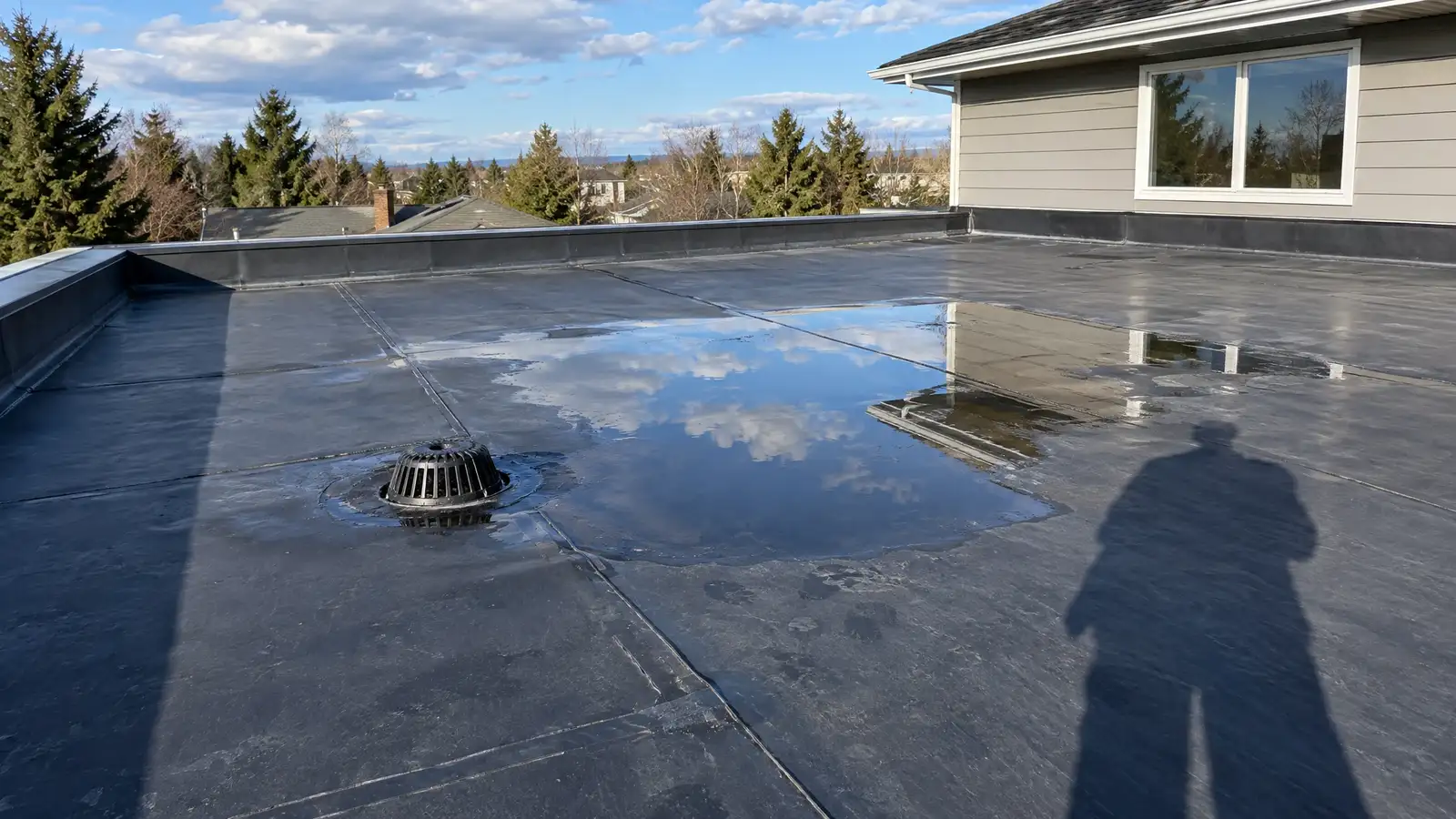 A-13Home InspectionsFlat Roof InspectionAn inspection of flat and low-slope roofs on homes, additions and porches, covering membrane seams, ponding, drains, flashings and edges.Hands-on visual
 B-01CommercialCommercial Roof InspectionThorough inspections of commercial roofs of every type, with drone coverage, close-up photos and a written condition report you can budget from.Hands-on visual
Read more on this topic.
How Infrared Roof Inspection WorksWhy a thermal camera can find wet insulation, when it works best and what it cannot do.2 min read Ponding Water on Flat RoofsWhy standing water is a warning sign, what causes it and what it does to a roof over time.2 min read 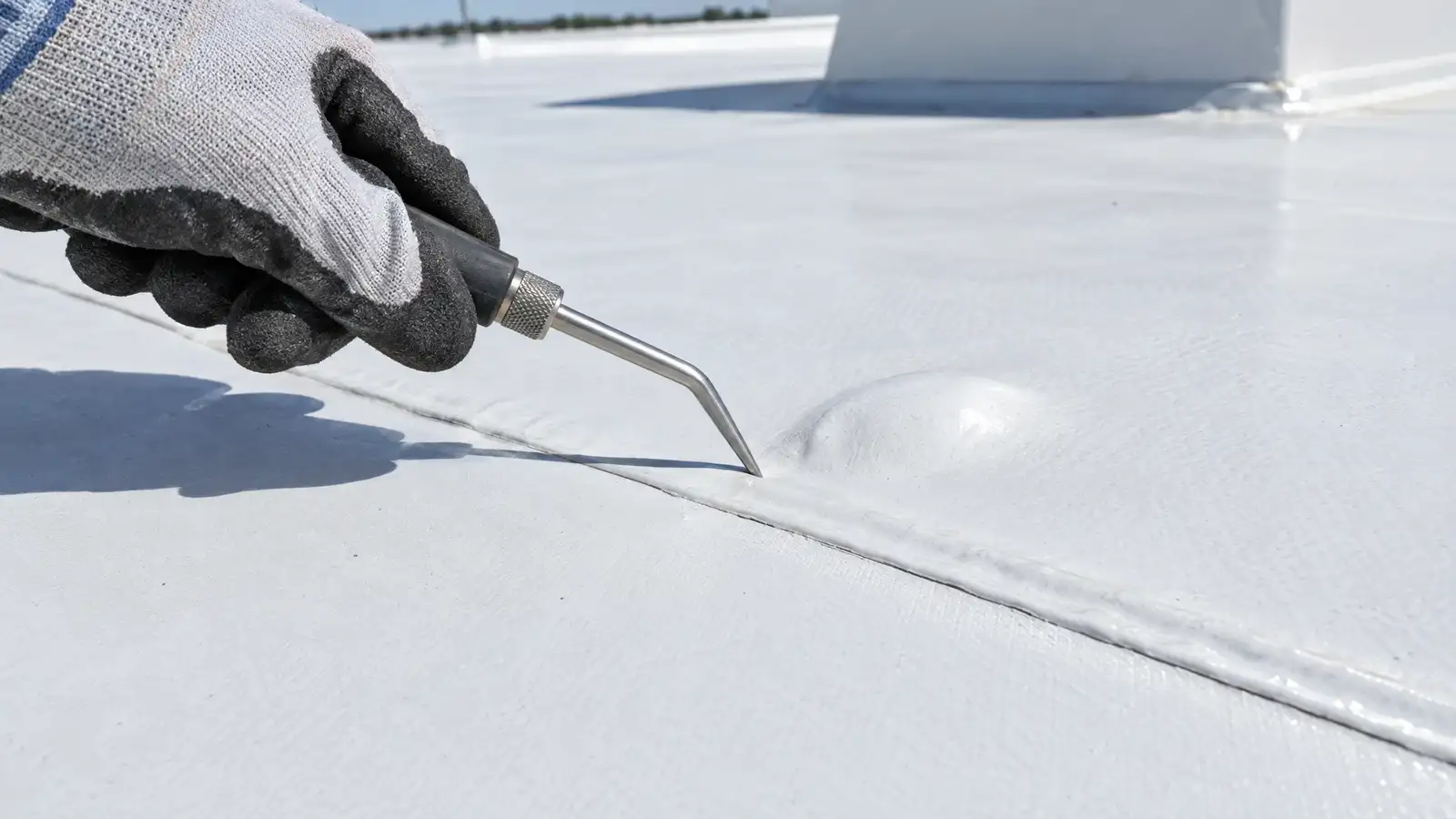 Commercial Roof Types and How They FailTPO, EPDM, PVC, built-up, modified bitumen and metal: how each is built and where each tends to fail.2 min read
Infrared Roof Inspection FAQ.
Does infrared find every leak?
No. It finds temperature patterns that suggest moisture, mostly on insulated low-slope roofs. We confirm findings and tell you when it is not the right tool.
Why do you scan in the evening?
Wet insulation stays warm longer than dry as the roof cools after sunset, which makes the contrast clearer.
Can infrared work on a shingle roof?
It can show clues, such as heat loss or damp in the attic, but it is less definitive on steep shingle roofs.
Infrared Roof Inspection across Middle Tennessee.
Pick your city for its page.
Know your roof. Before the next storm.
Tell us about your roof and what worries you, and we will suggest the right inspection. Most leaks announce themselves long before the ceiling does.