The short version
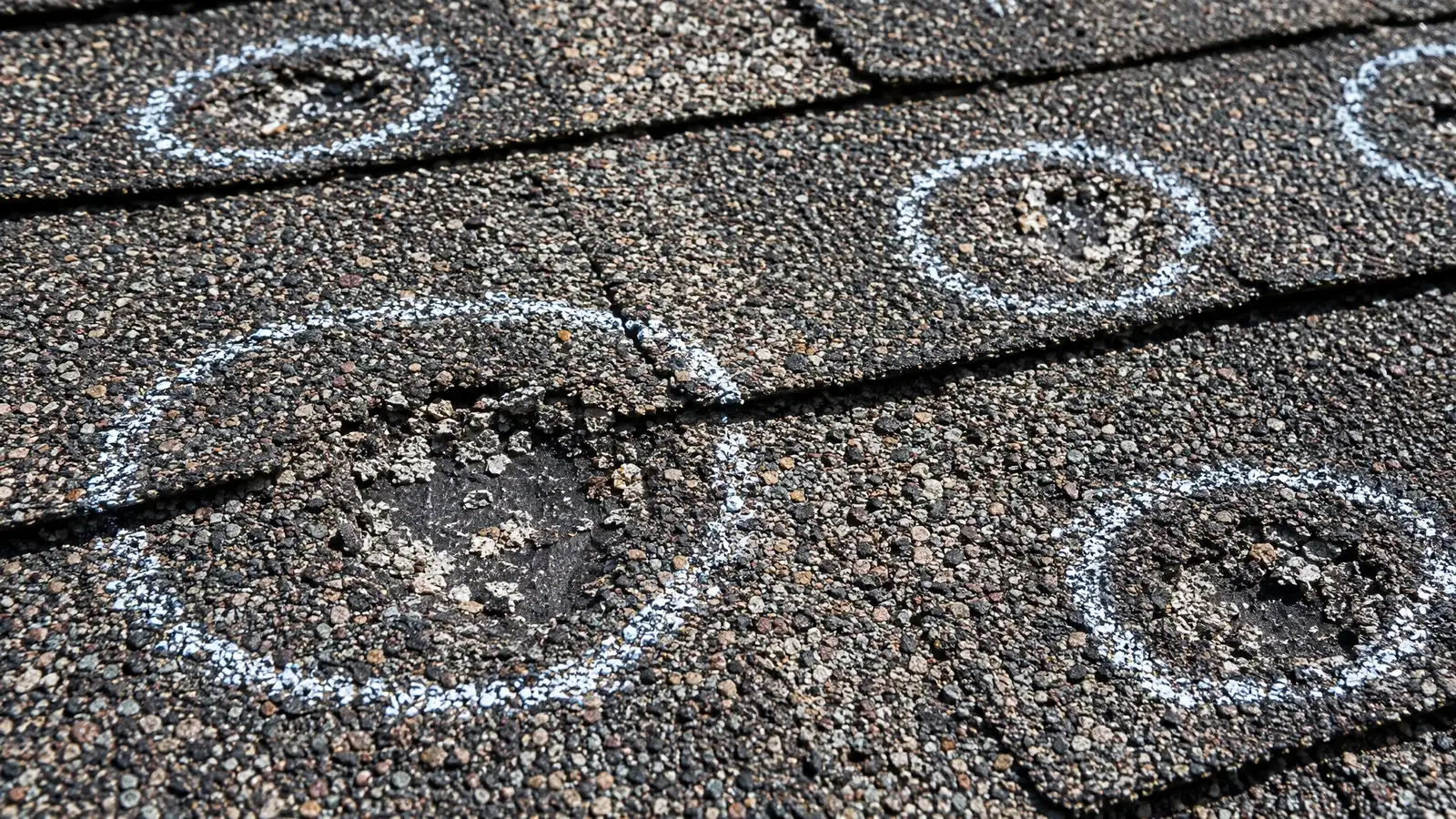
- Hail leaves round bruises and bare spots on shingles
- Dents on gutters, vents and AC fins show hail occurred
- Random placement points to hail; uniform wear points to age
- Damage may not leak for months
On asphalt shingles
Hail leaves round, dark spots where granules were knocked off, exposing the asphalt. The spot may feel soft or bruised, and the mat underneath can crack. Fractures sometimes show as small cracks radiating from the impact. Impacts are scattered, not in rows.
Granules often collect in gutters and at downspouts.
On metal and soft metals
Hail dents metal roofing, vents, flashings, gutters and the fins on air conditioners. Even if the roof surface seems unharmed, dents on soft metals tell you hail fell and show its direction and size. Standing-seam metal may dent without leaking, which is often a cosmetic matter.
Inspectors read the soft metals first.
Hail versus age
Normal aging causes broad, uniform granule loss and cracking that follows sun exposure, while hail causes localized round impacts. Blistering, manufacturing defects and foot traffic can look similar. Inspectors compare slopes and patterns to tell them apart.
On very old roofs, it can be hard to separate causes.
What to do
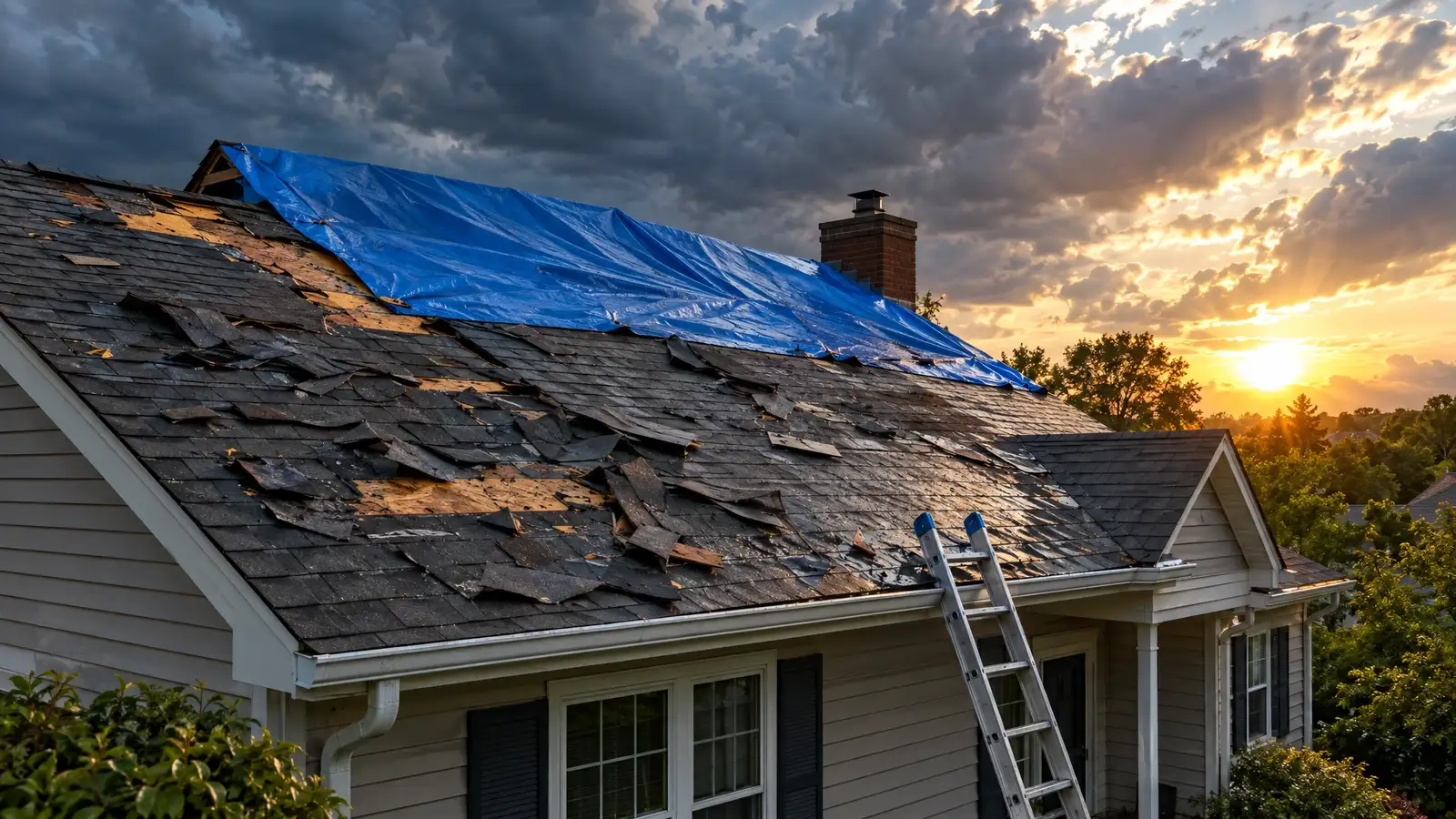
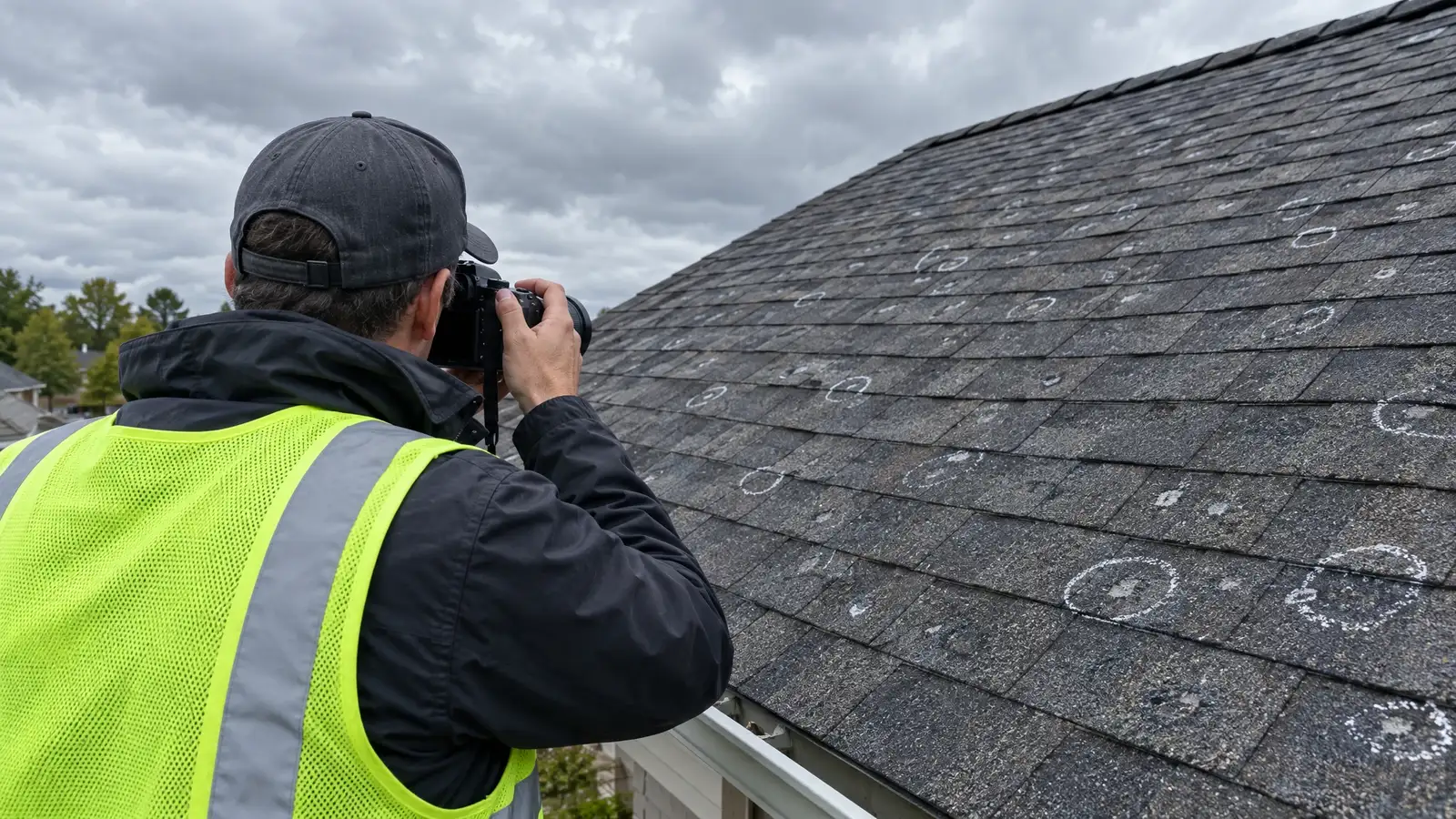
If you suspect hail, take photos from the ground, note the storm date and have the roof inspected before the next heavy rain. Do not climb on a roof you suspect is damaged.
A documented inspection helps with repairs and with insurance discussions.
General information, not engineering, legal, insurance or safety advice. Roofs, policies and local requirements vary, and every roof should be judged on its own condition.