The short version
- Most leaks start at details, not in the middle of the roofing
- Flashing, pipe boots and sealant age faster than shingles
- Clogged drainage and ponding push water where it should not go
- Damage from wind, hail and limbs opens new paths
Details fail first
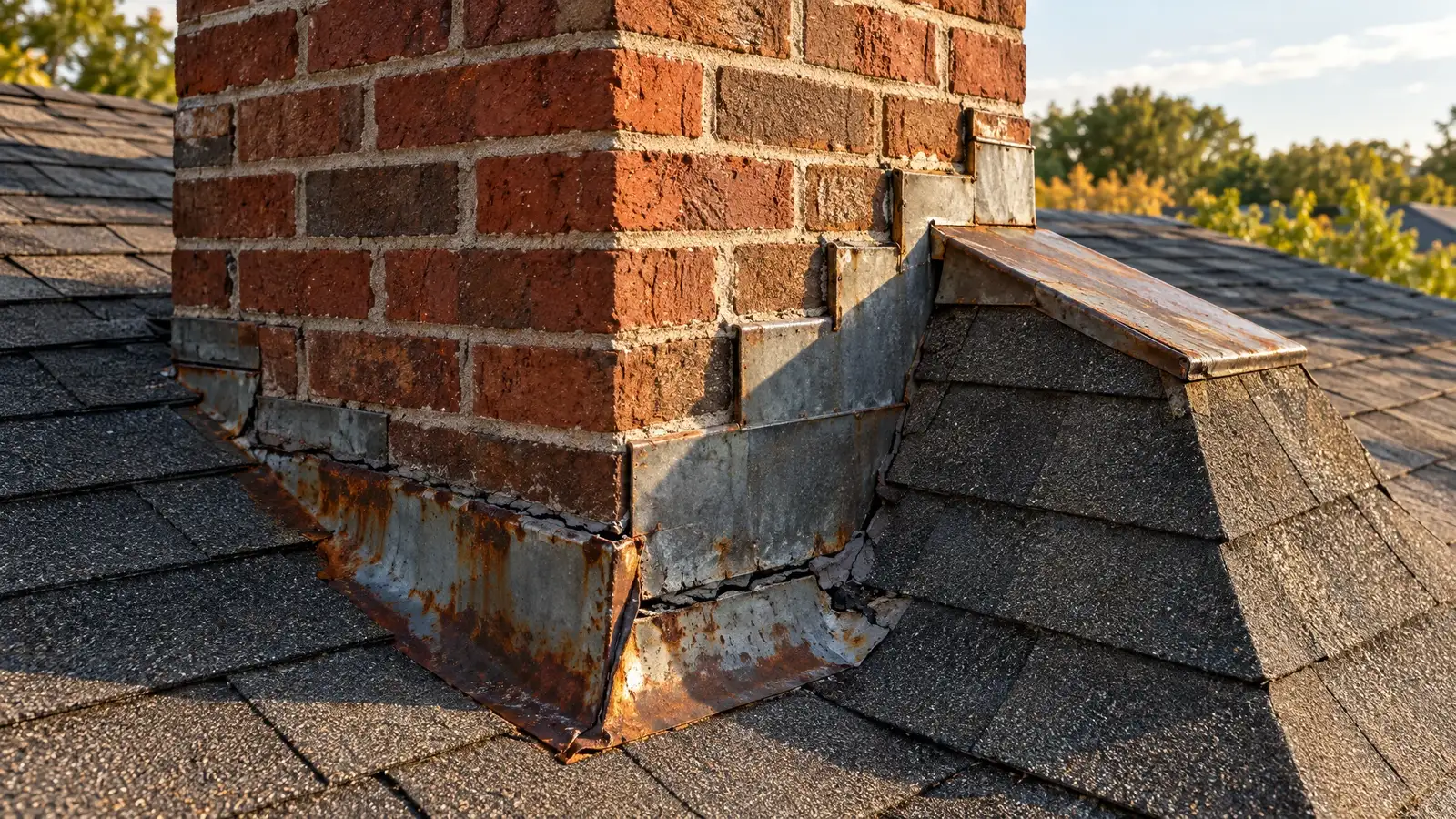
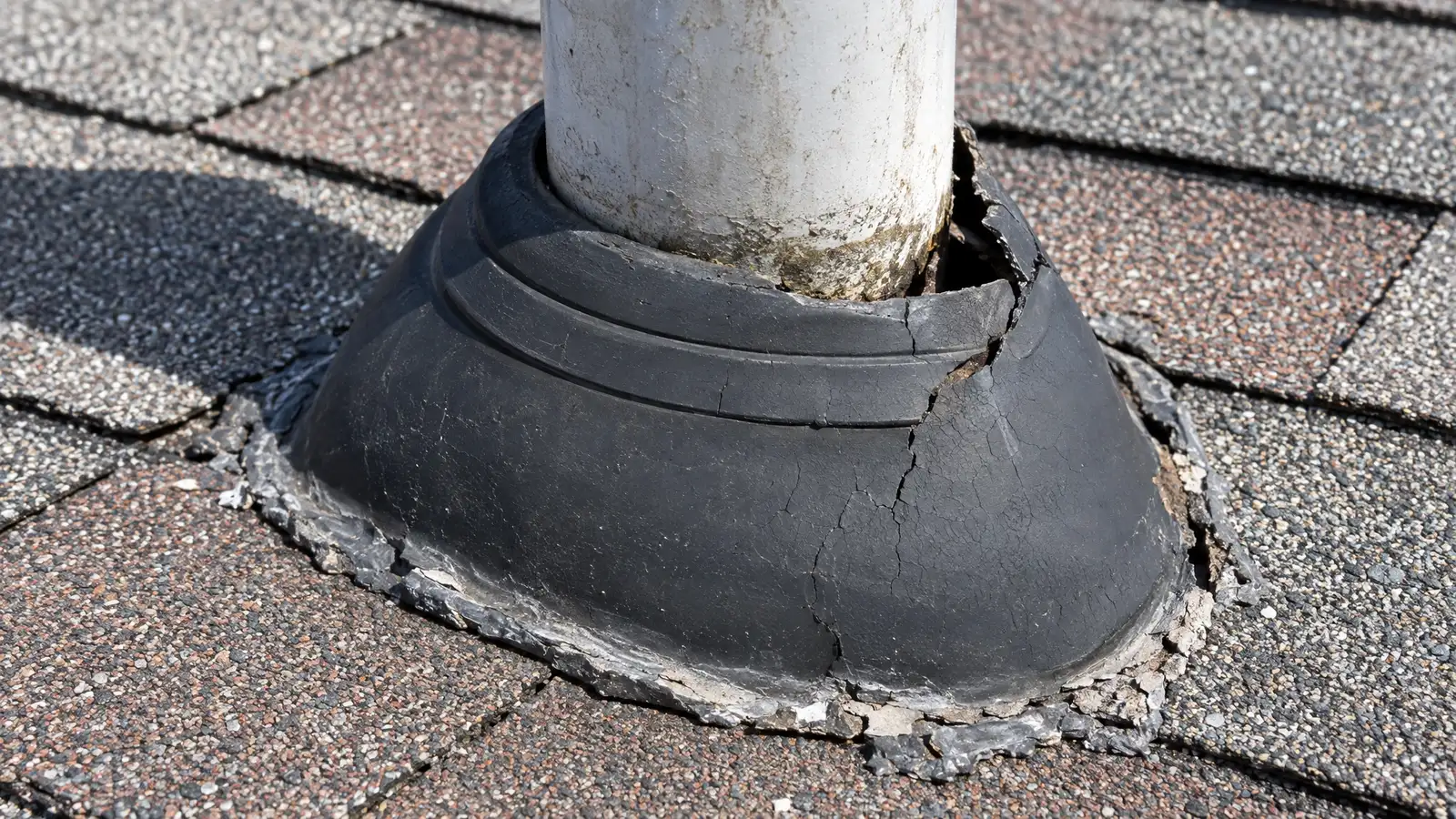
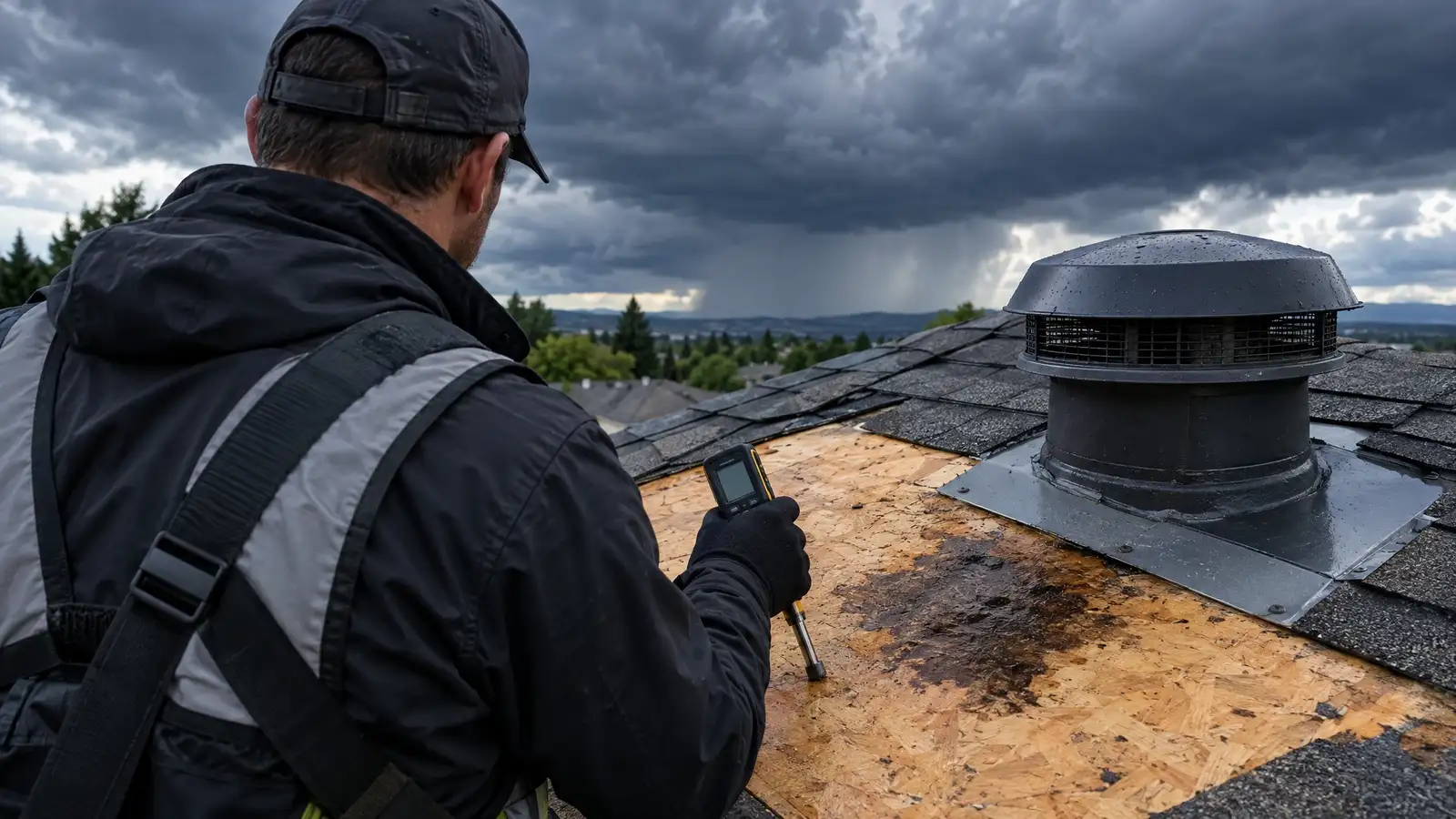
Chimneys, skylights, walls, dormers, vents and pipes all interrupt the roof surface and depend on flashing and sealant. These materials age in the sun and move with temperature, so gaps open over time. A cracked pipe boot can leak during every hard rain.
That is why leak detection starts at the details.
Worn or damaged roofing
As shingles age, they lose granules, crack and curl. Wind lifts and creases them, and hail bruises and fractures them. Damaged roofing lets water reach the underlayment, which may not hold forever.
Missing shingles expose the deck directly.
Water that cannot leave
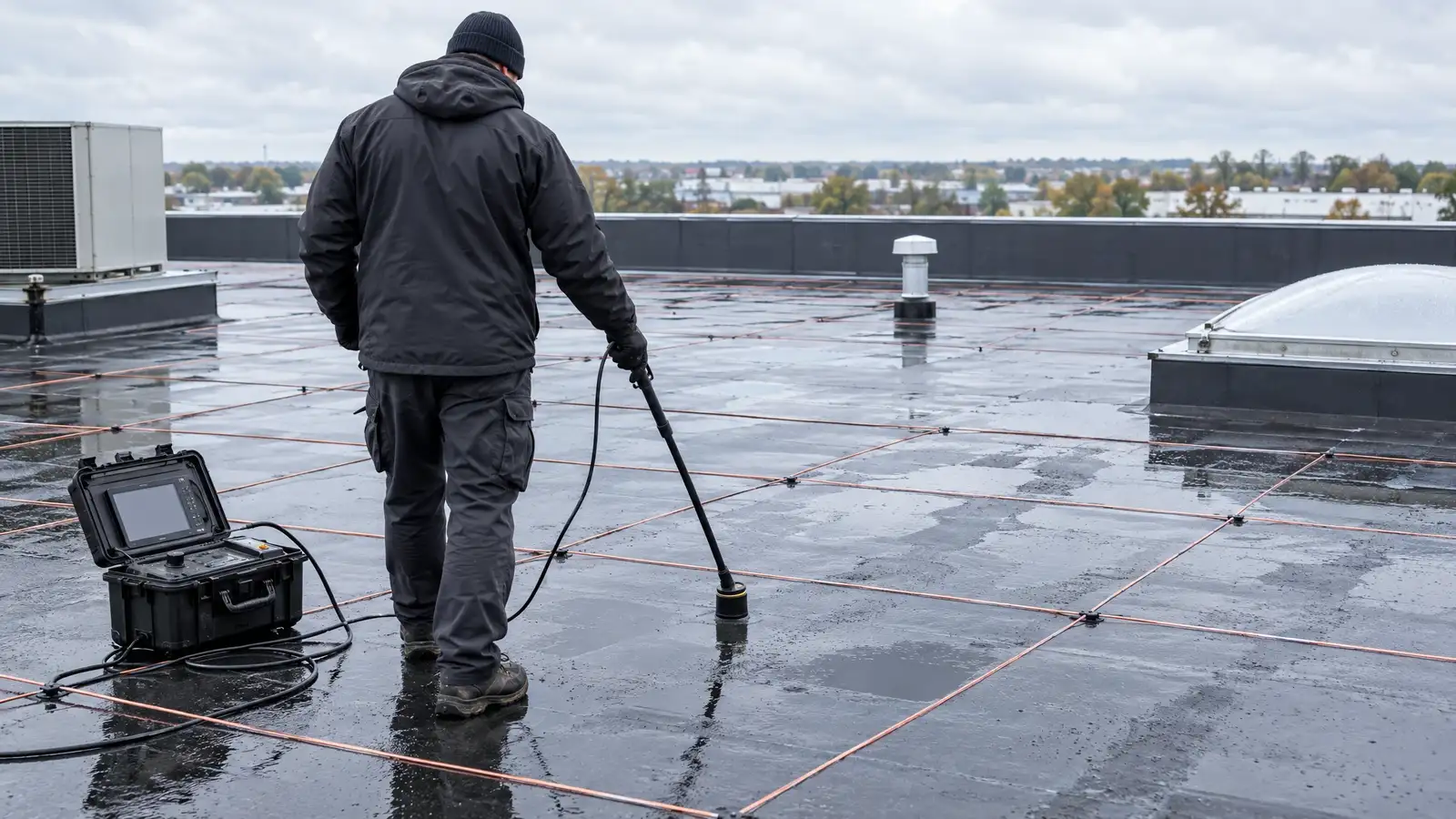
Clogged gutters and valleys, blocked drains and ponded water on flat roofs hold water against the roof for long periods. Water seeks every opening, and standing water finds more of them than running water.
Ice dams are less common here but possible in cold snaps.
Hidden causes
Not every stain is a roof leak. Condensation in a poorly ventilated attic and plumbing leaks can look identical. Diagnosing correctly avoids wasted repairs.
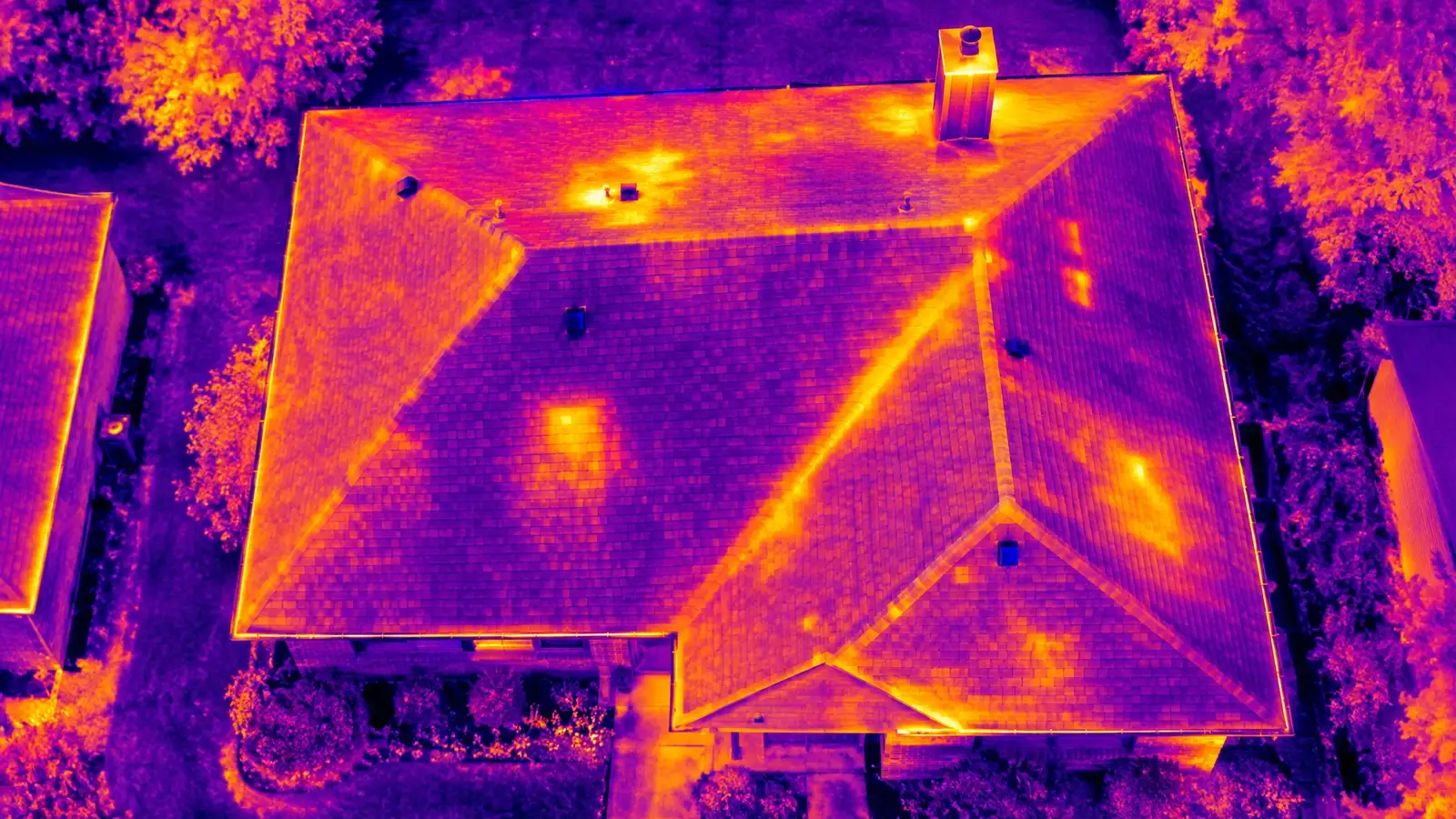
A systematic inspection separates the causes.
General information, not engineering, legal, insurance or safety advice. Roofs, policies and local requirements vary, and every roof should be judged on its own condition.