The short version
- Infrared sees temperature differences, not water
- Wet insulation holds heat longer than dry insulation
- It works best on low-slope roofs after a sunny day
- Findings should be confirmed with moisture readings
The basic idea
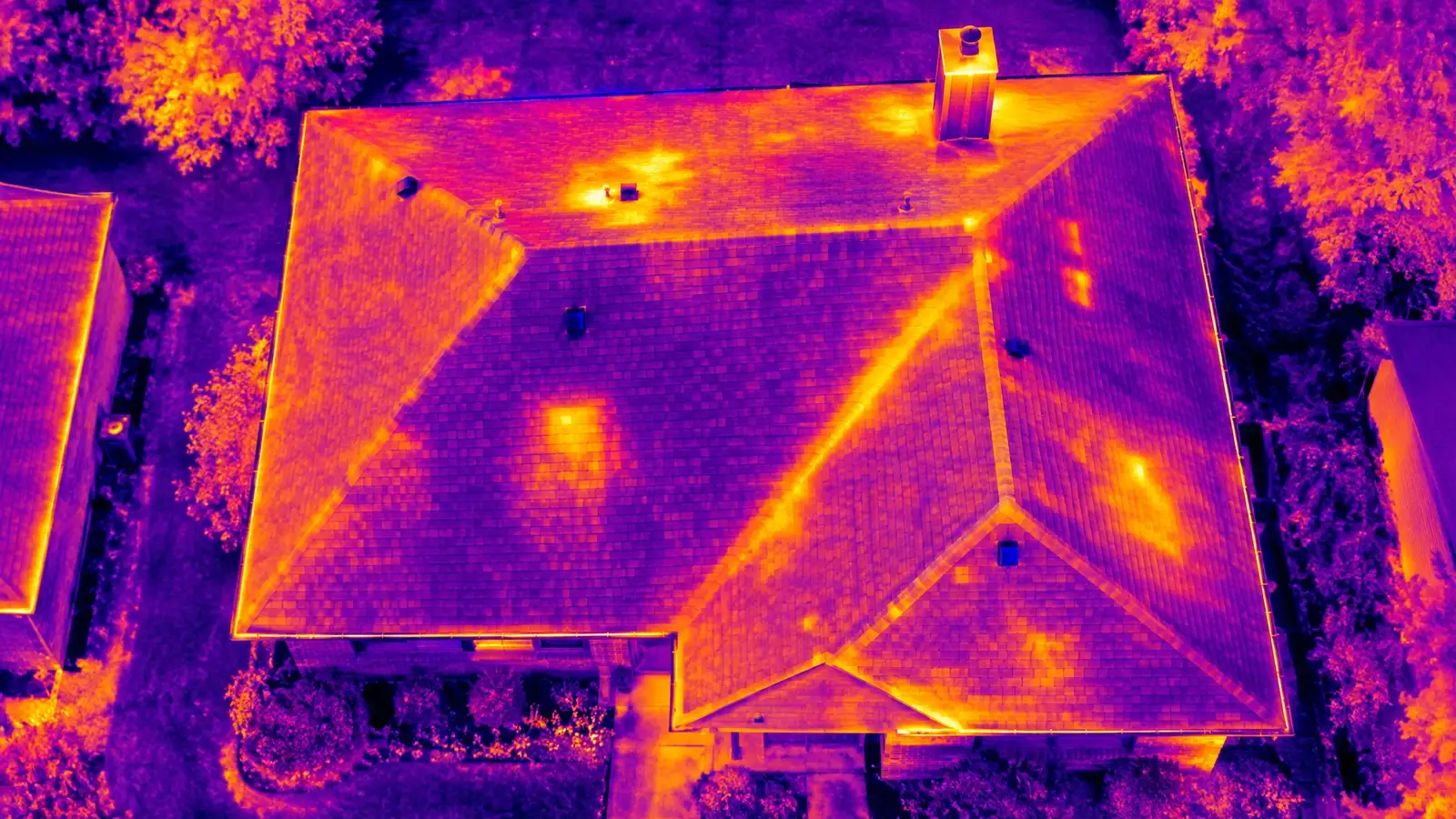
An infrared camera produces an image of surface temperature. Dry roof insulation heats and cools quickly. Wet insulation has higher thermal mass, so it warms more slowly and releases heat more slowly. After sunset, wet areas often look warmer than dry ones.
The camera does not see water. It sees the pattern that moisture creates.
When it works best
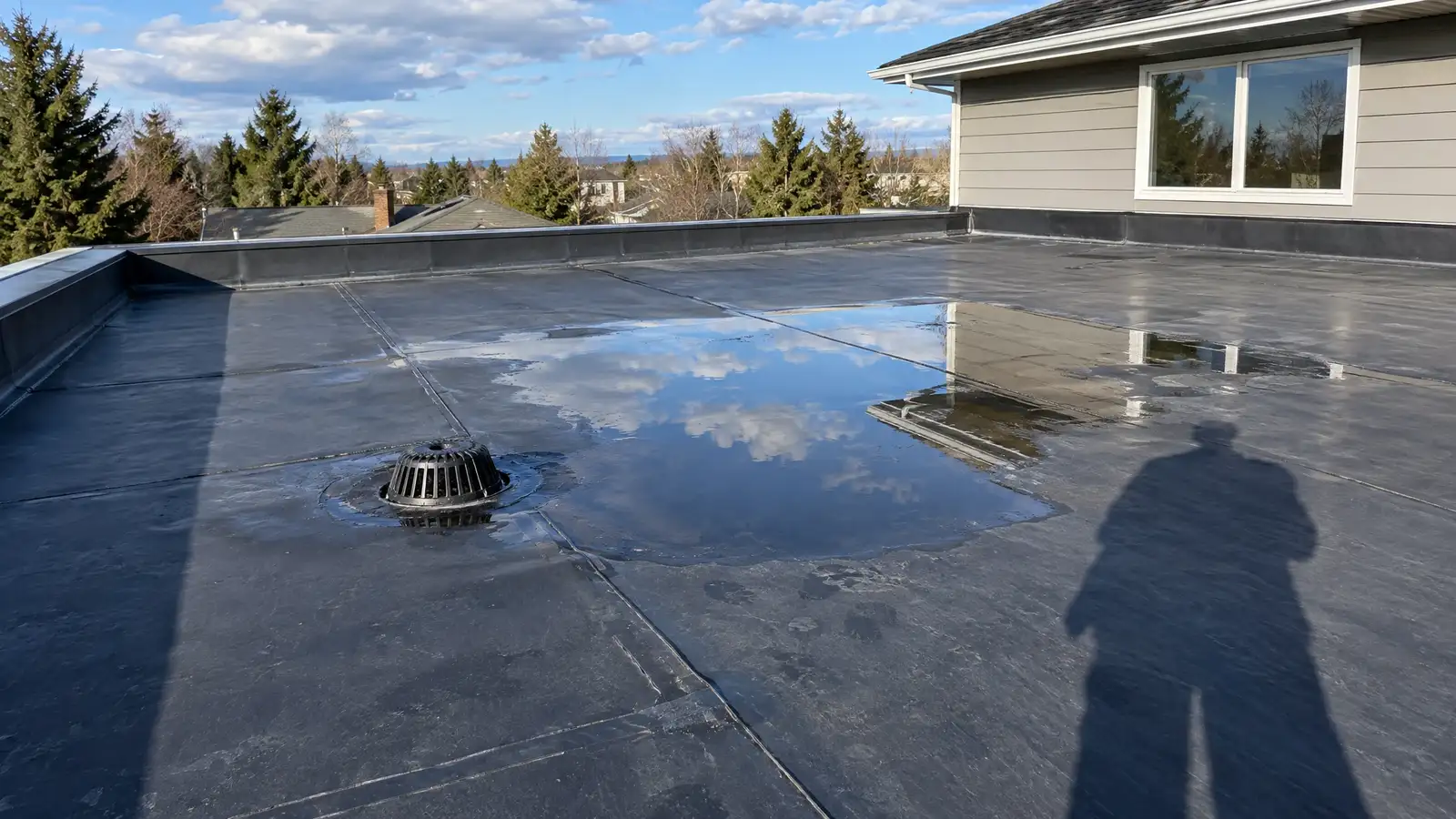
Conditions matter. The roof should have been warmed by a sunny day, the sky should be clear and winds light. Scans are often done in the hours after sunset. The method suits low-slope roofs with insulation under a membrane, where moisture can hide.
On steep shingle roofs, thermal imaging is less conclusive but can still reveal heat loss and attic moisture.
How findings are confirmed
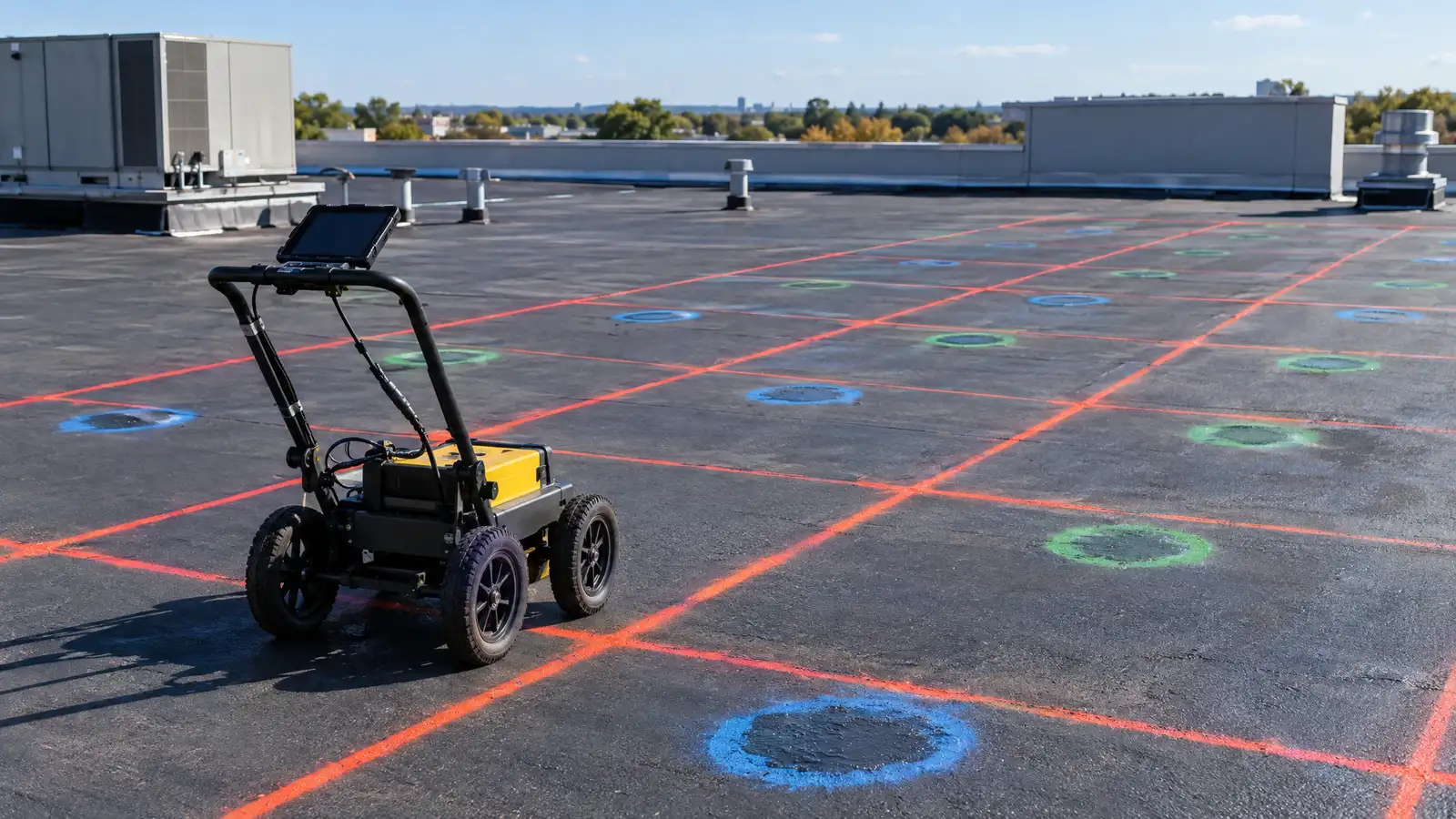
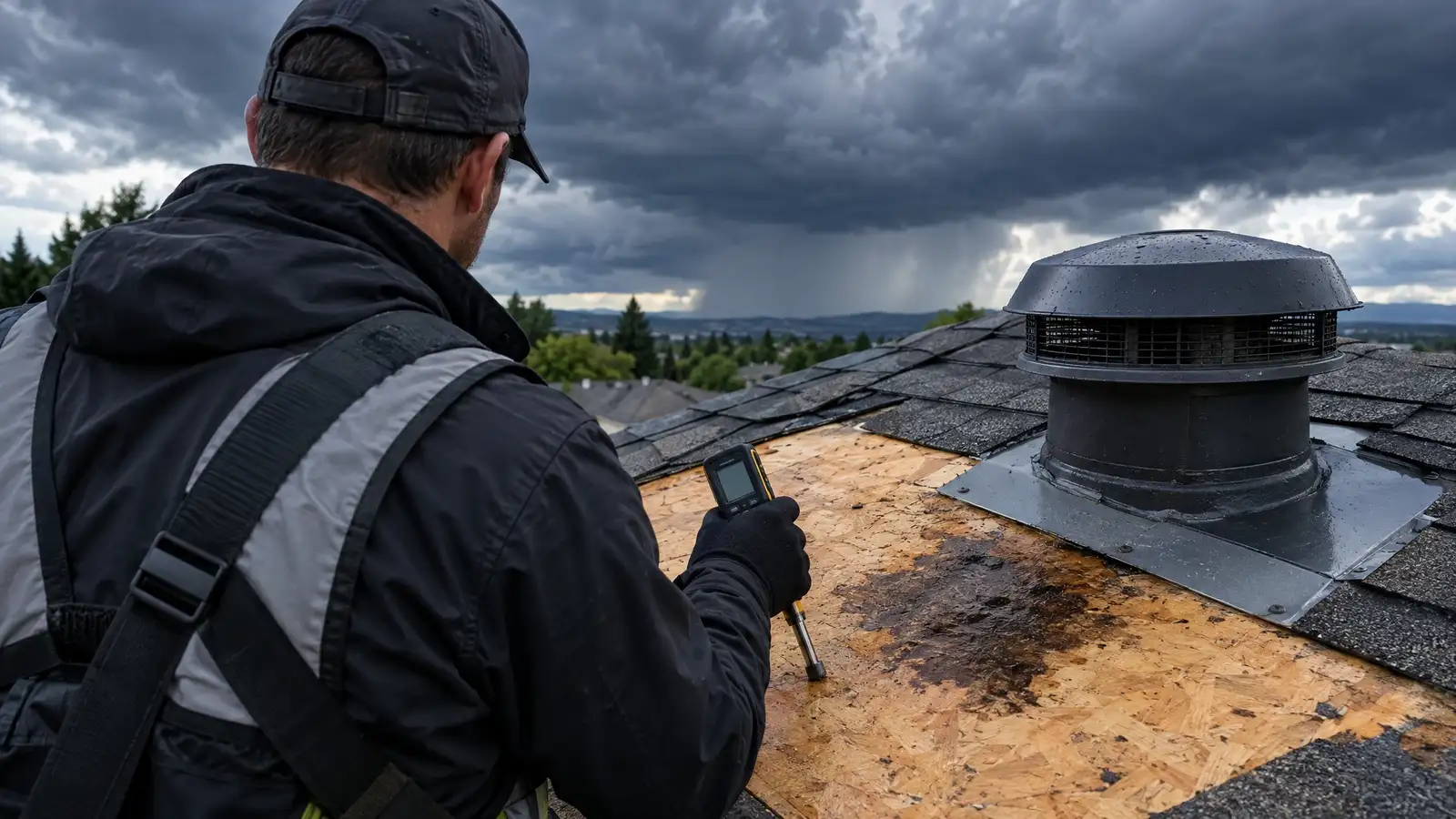
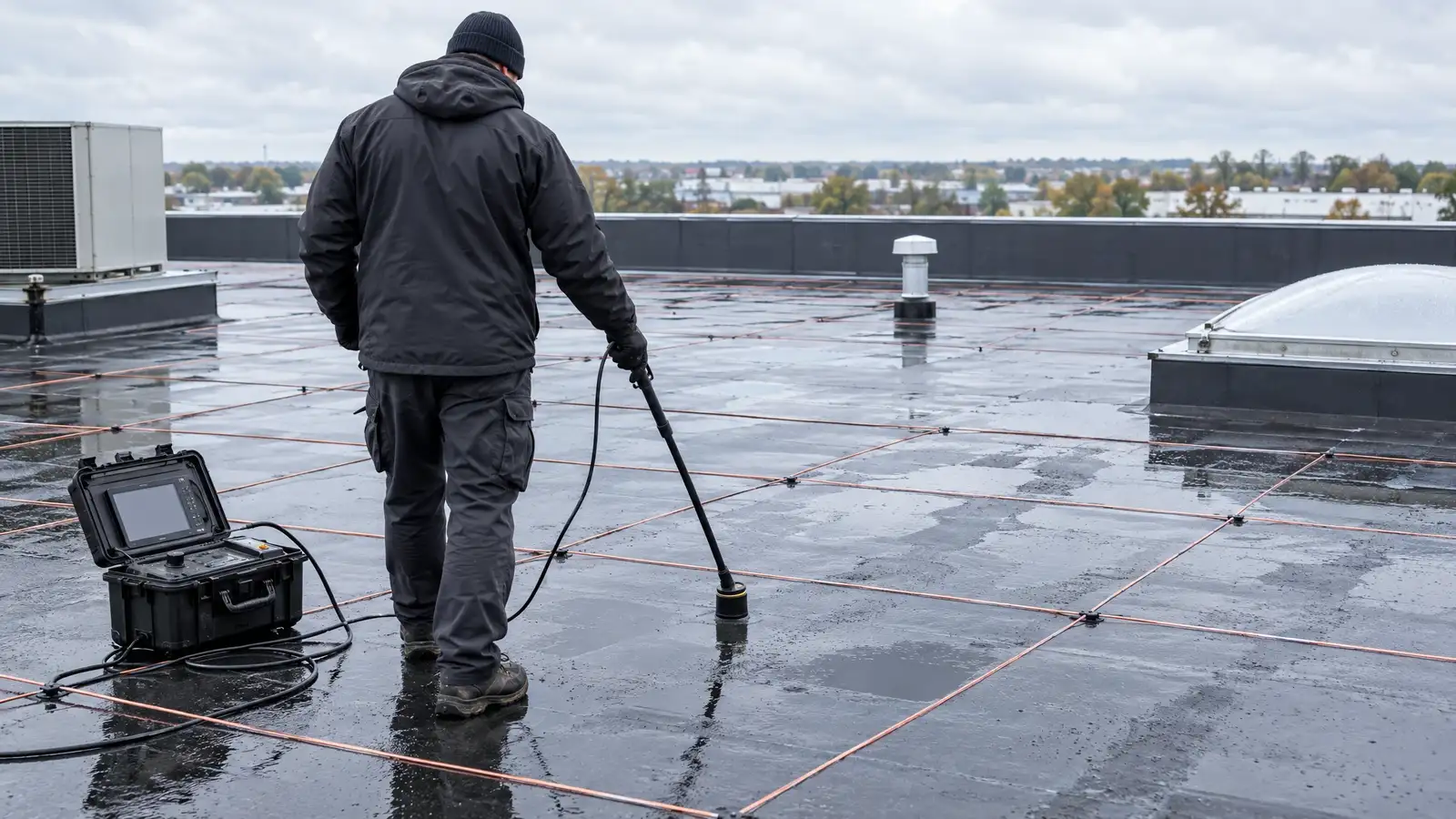
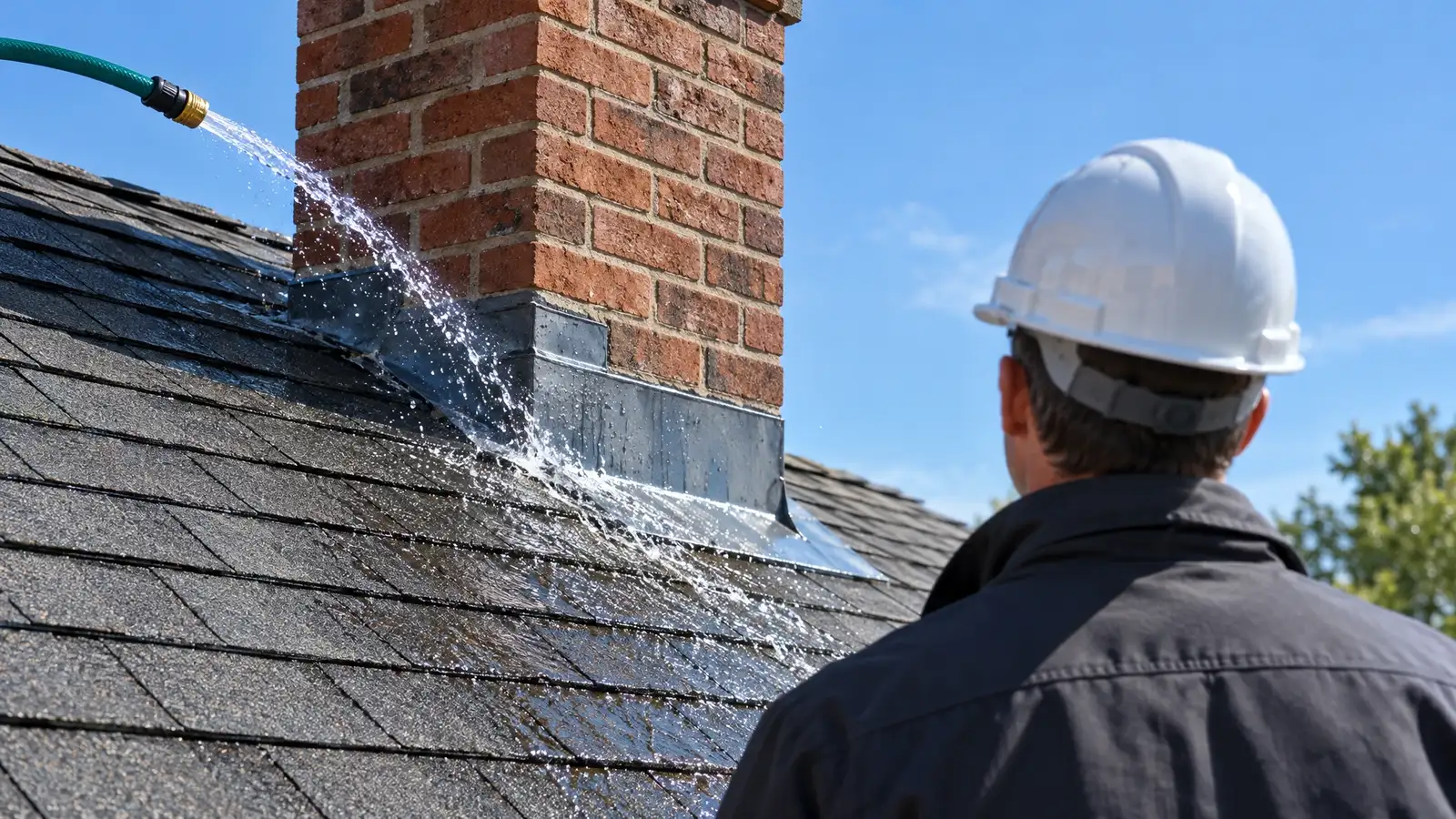
Thermal patterns are suspicious, not proof. Inspectors mark the areas and verify them with moisture meters, probes or small cores. The result is a map of wet and dry zones.
That map helps owners decide between spot repairs and replacement.
What it cannot do
Infrared cannot see through metal decks or thick ballast, and it can be fooled by shadows, surface dirt and equipment. It does not find every leak.
A trustworthy inspector tells you where infrared helps and where another method is better.
General information, not engineering, legal, insurance or safety advice. Roofs, policies and local requirements vary, and every roof should be judged on its own condition.