The short version
- Water travels along framing before it drips
- Start at the stain and work uphill
- Check details first: flashings, vents, valleys
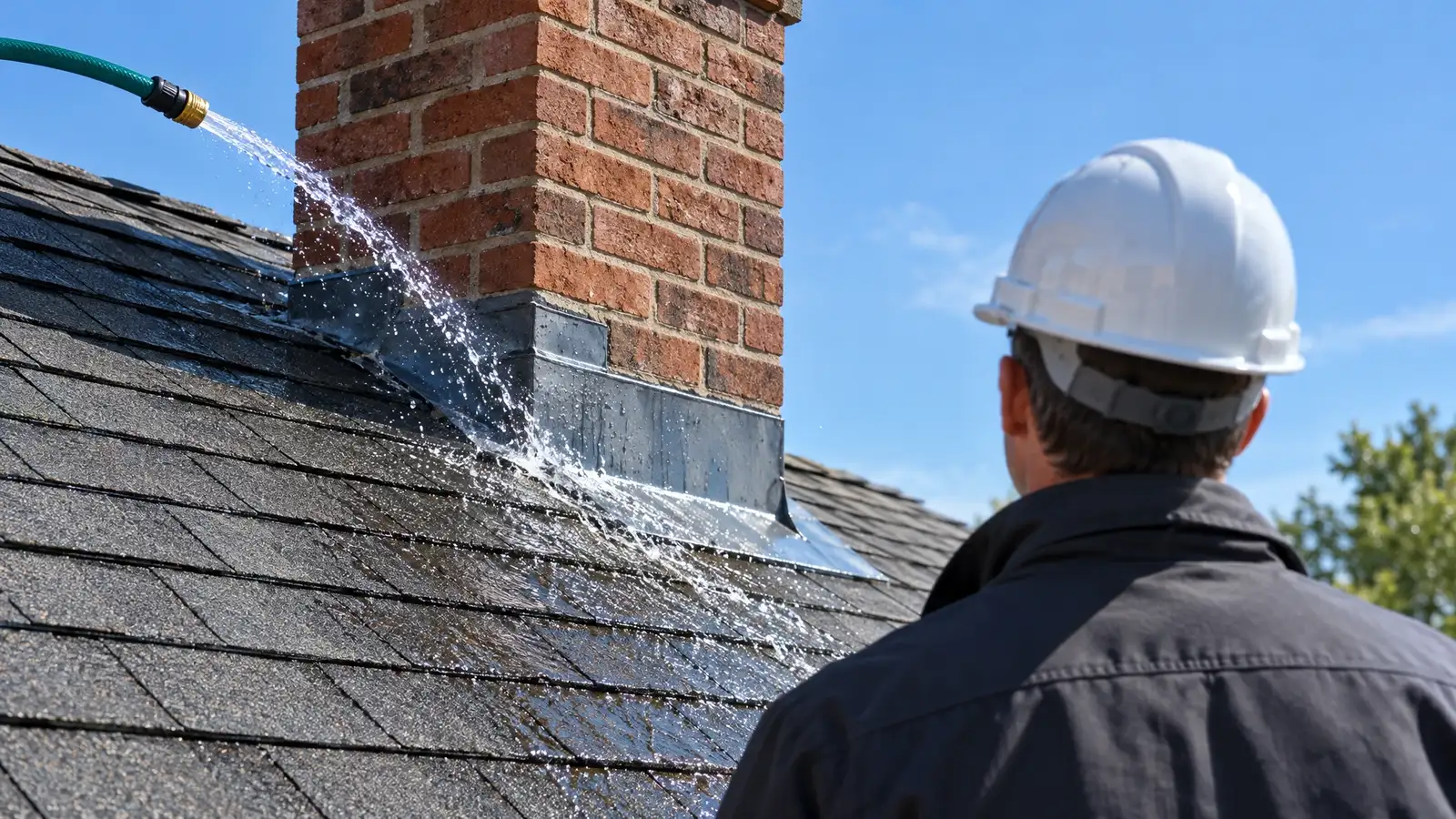
- Controlled water tests can prove the path
Why the stain misleads
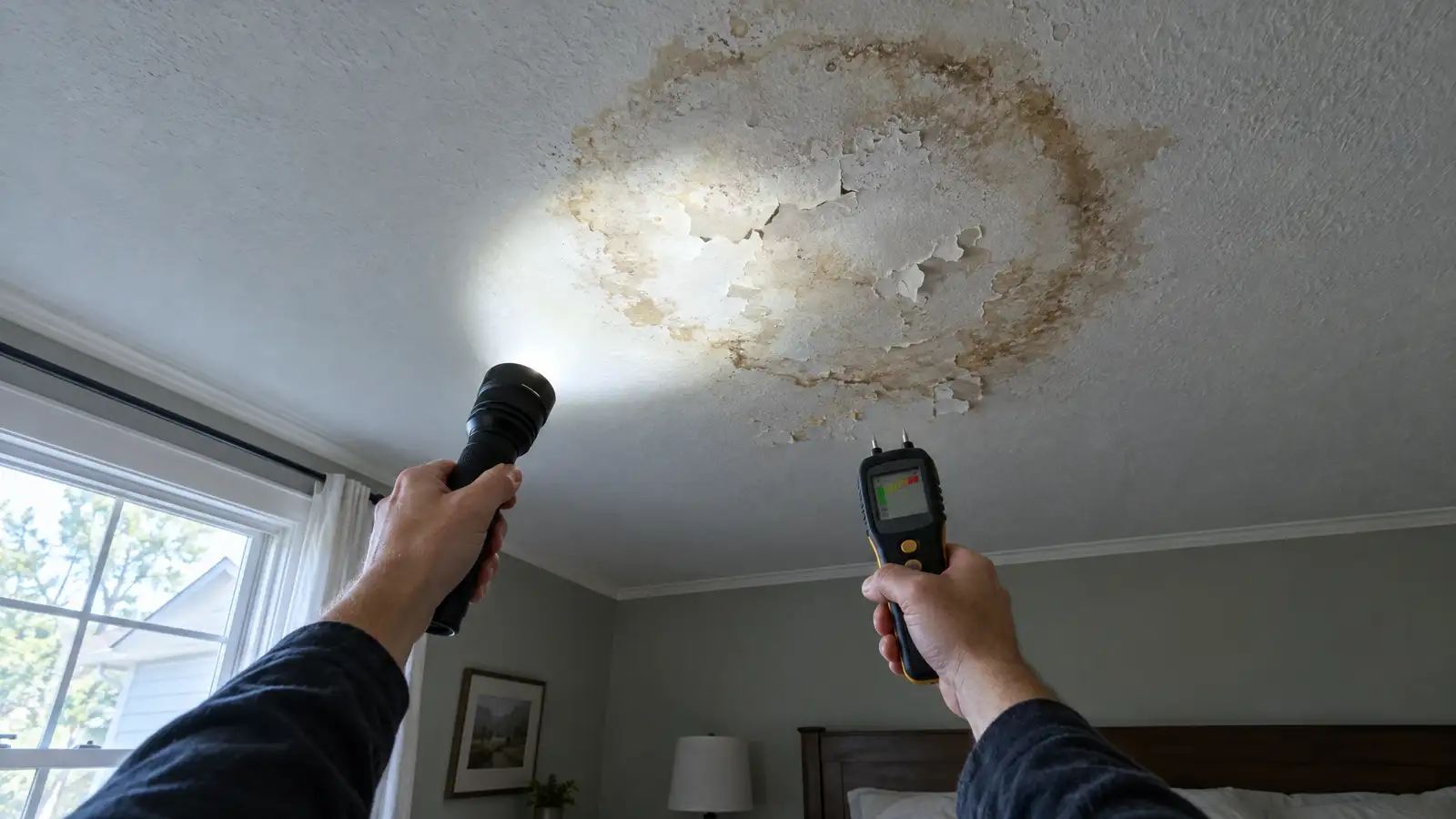
Water entering a roof follows gravity along the underlayment, the deck and the rafters. It may travel several feet before it finds a gap in the ceiling and drips. The stain on the ceiling is where the water arrived, not where it entered.
That is why repairs aimed at the spot above the stain often fail.
Work uphill from the stain
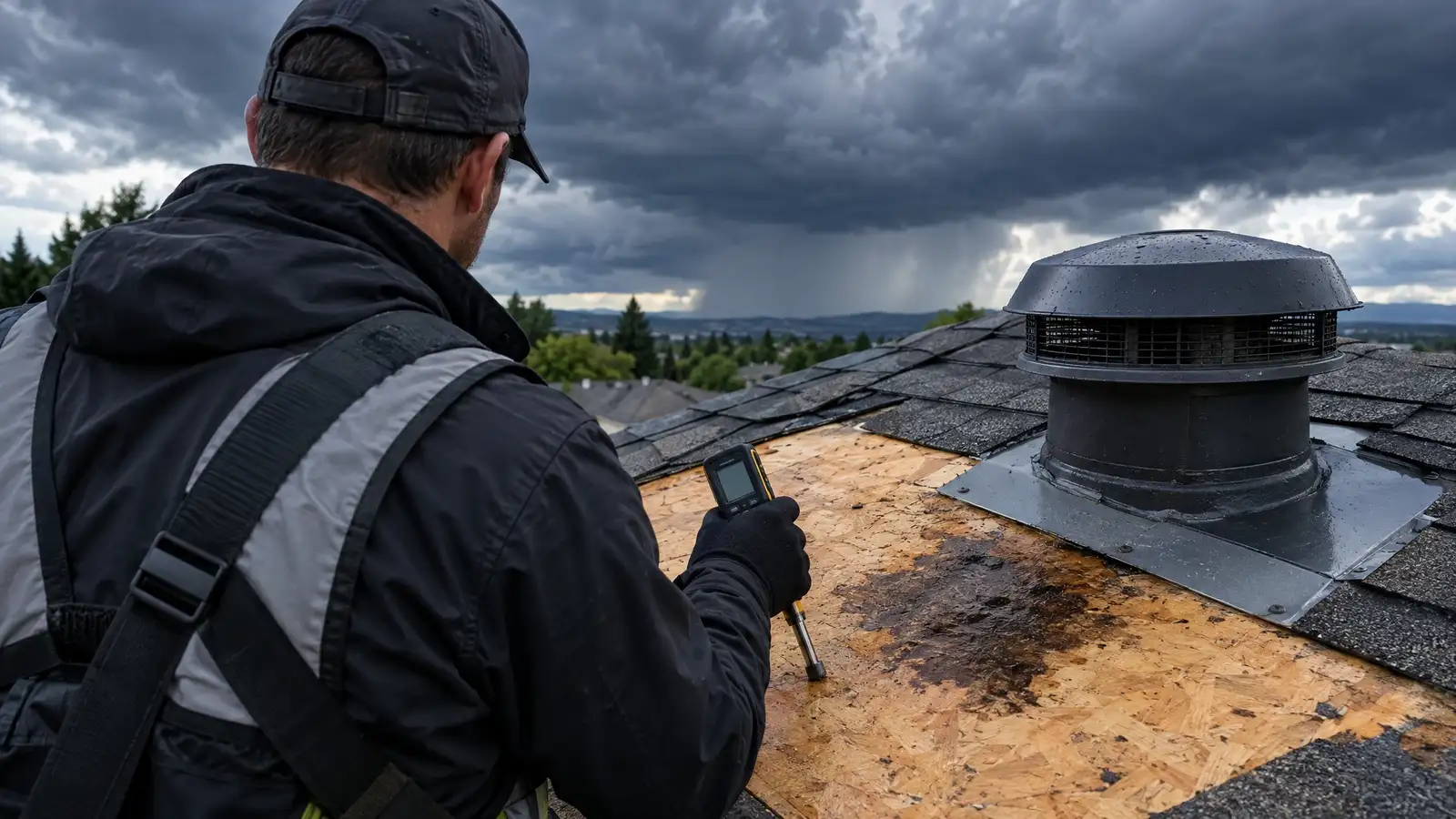
Inspectors start at the stain and follow clues up through the attic: stained wood, damp insulation, rusty nail tips. Water travels down, so the entry point is upslope from the highest evidence.
They then examine the roof area above, looking for likely details.
The usual suspects
Penetrations such as vent pipes and chimneys, valleys, wall intersections, skylights, damaged shingles and exposed fasteners are the most likely entries. A roof with several suspects needs testing to find which one leaks.
Clues such as timing with wind direction help narrow it down.
Proving it
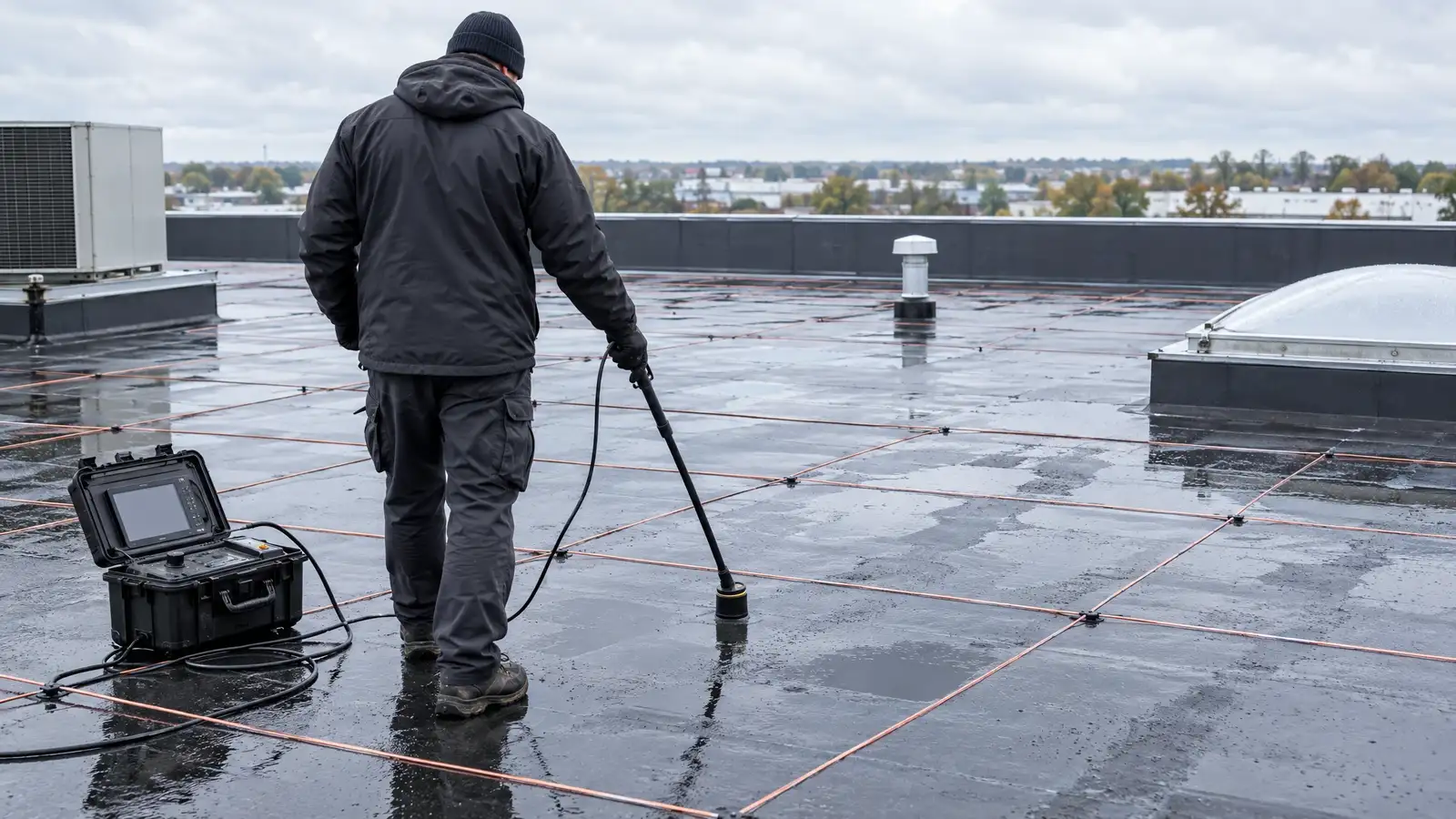
A controlled water test applies water to one area at a time, starting low, while someone watches inside. When the leak appears, the area responsible is known.
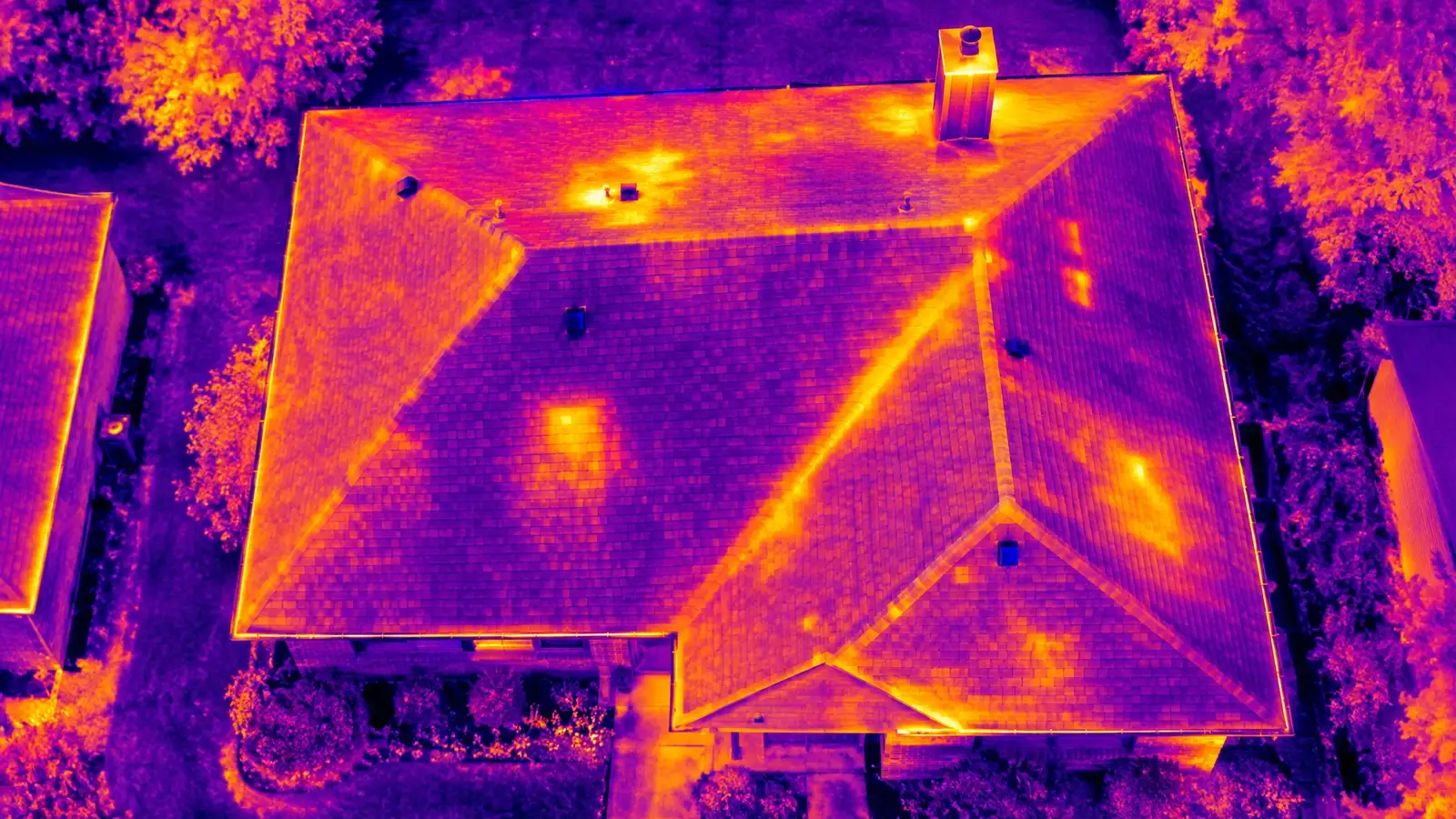
Moisture meters and thermal imaging add confirmation without water.
General information, not engineering, legal, insurance or safety advice. Roofs, policies and local requirements vary, and every roof should be judged on its own condition.