The short version
- Surface wear shows in granule loss, cracks and curling
- Flashings and penetrations cause most leaks
- Edges, valleys and drainage are inspected closely
- The attic reveals what the surface hides
The roof surface
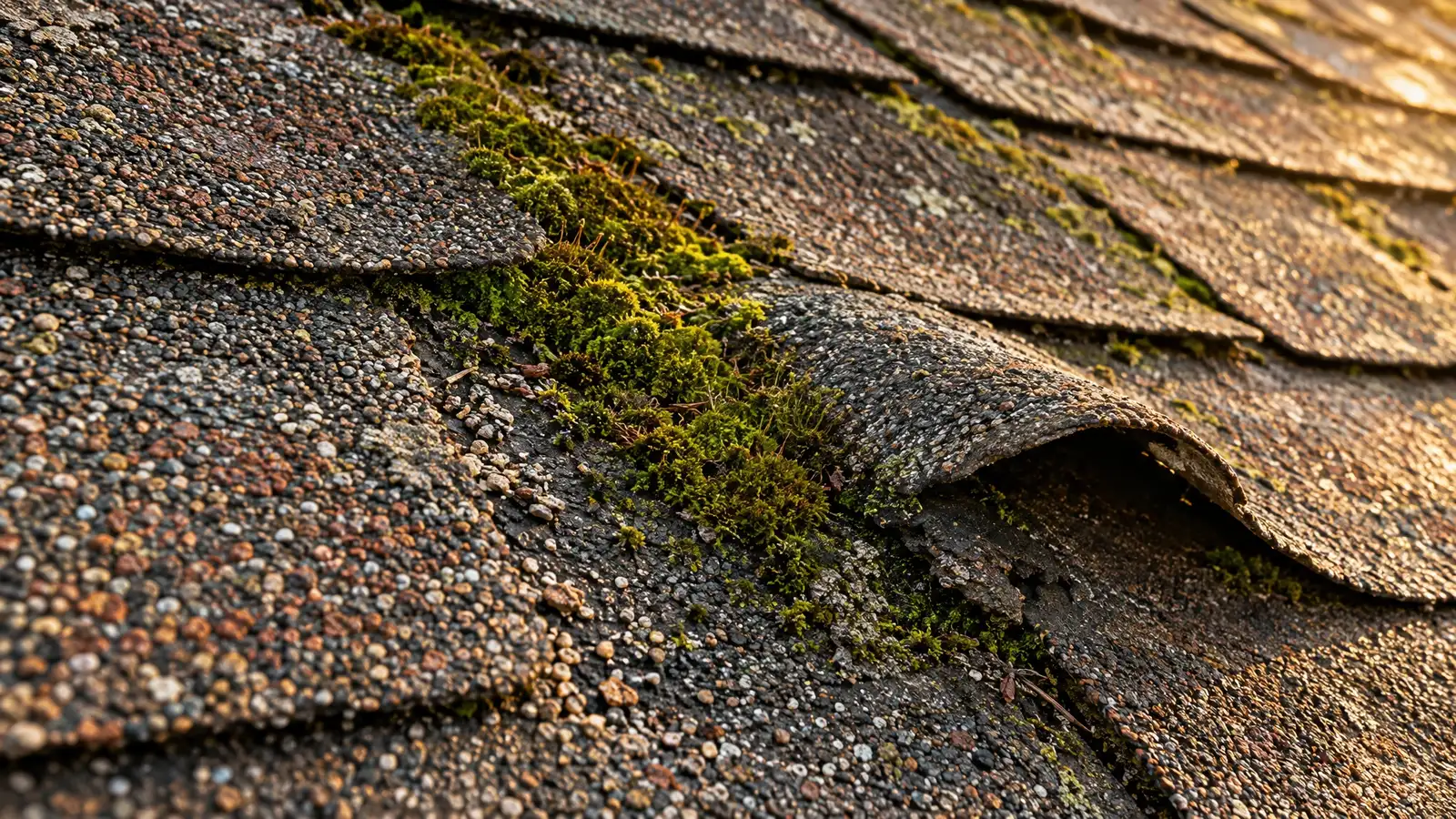
On shingle roofs, inspectors look at granule loss, cracking, curling, blistering, missing pieces and nail pops. On metal roofs they look at fasteners, seams, coatings and corrosion. On flat roofs, they look at the membrane, seams, blisters, punctures and ponding.
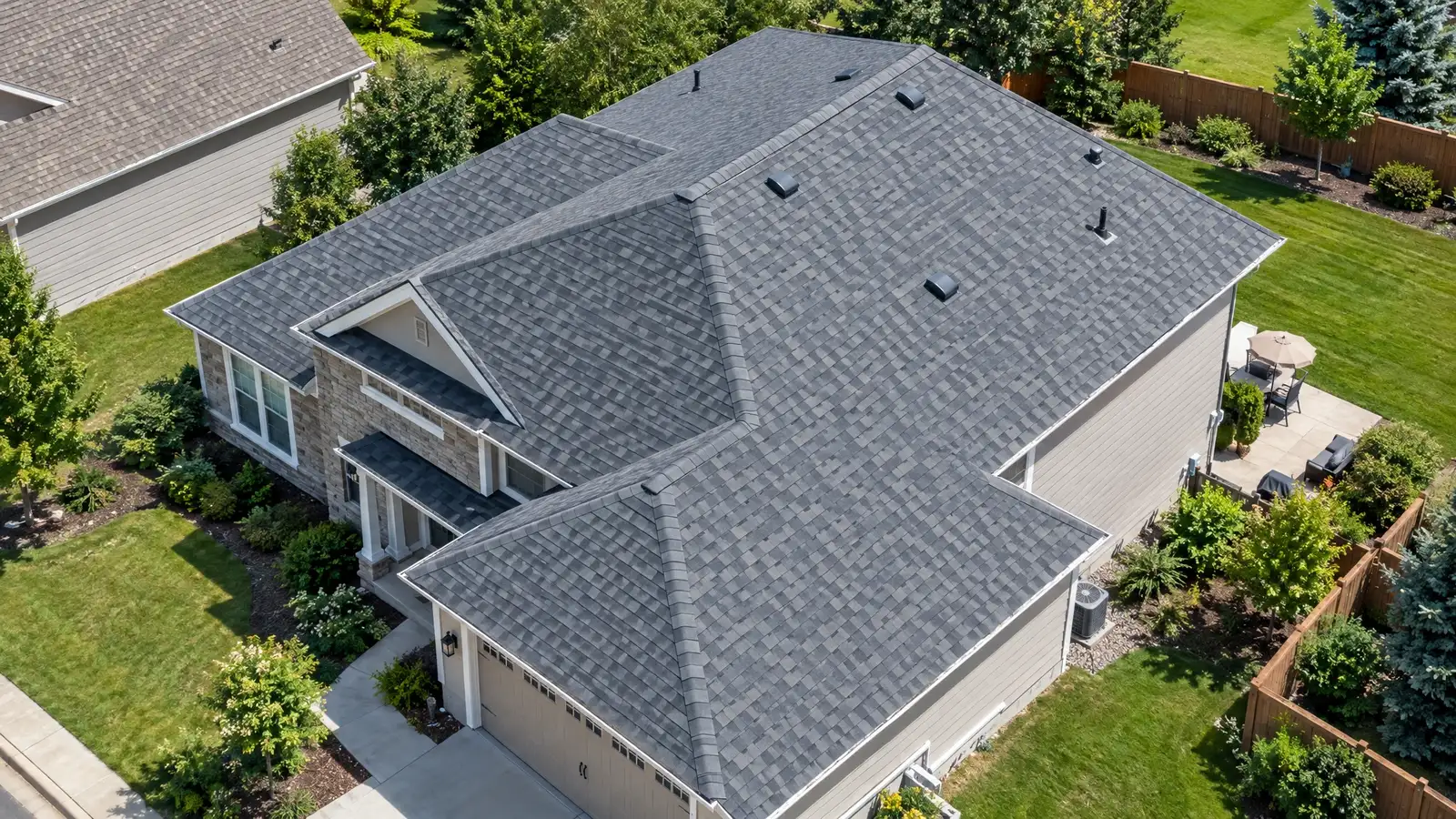
They compare slopes, because sun and wind age each differently.
Flashings and penetrations
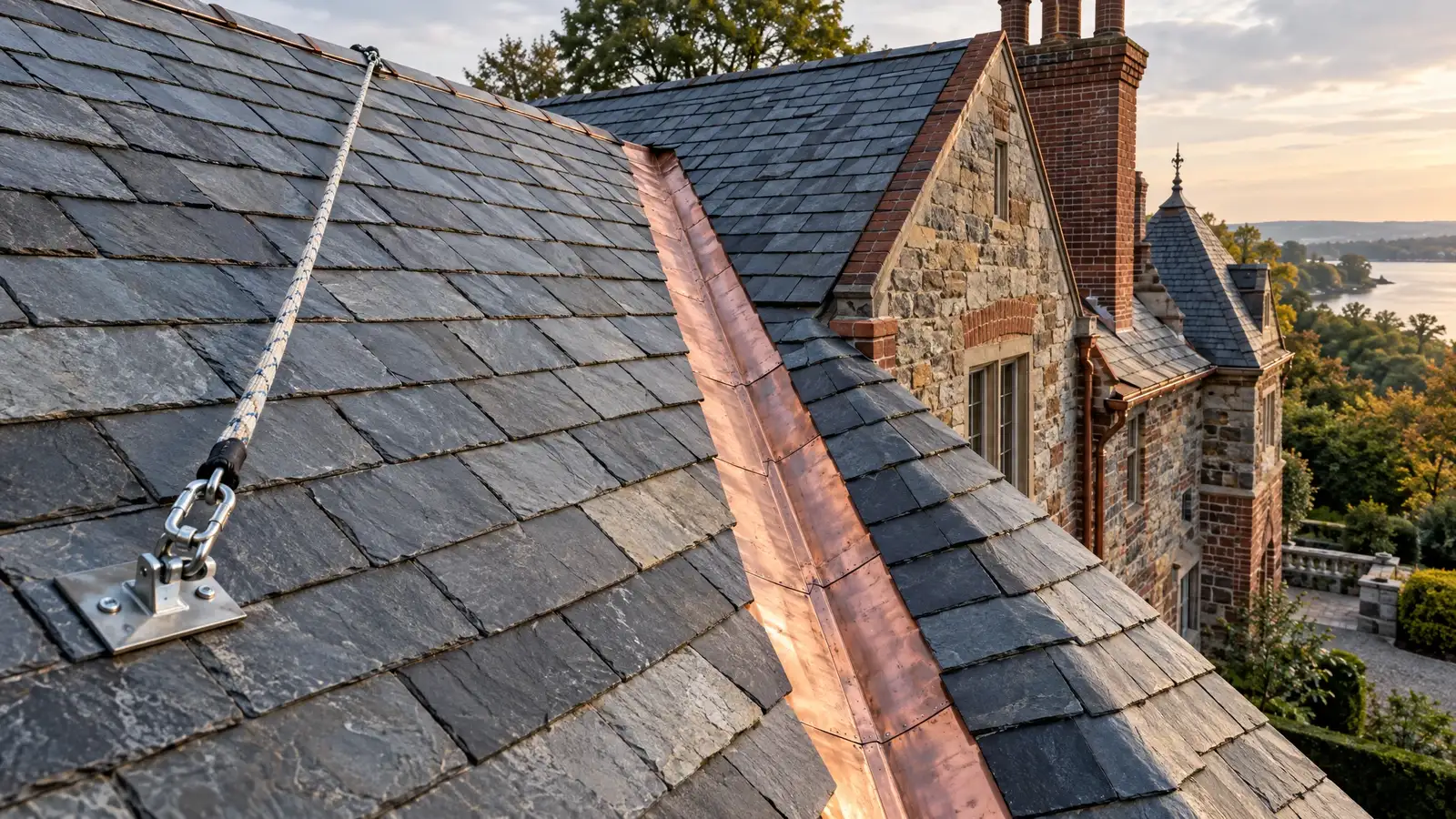
Flashings are the metal or membrane pieces that seal where the roof meets something: a chimney, a wall, a dormer, a skylight or a pipe. Inspectors look for gaps, rust, cracked sealant and displaced pieces. Pipe boots and vents get the same attention.
These details are small, and they are where most leaks start.
Edges, valleys and drainage
Roof edges take the brunt of wind and water. Valleys carry the most runoff. Gutters, downspouts, scuppers and drains move water away. Inspectors check all of them for damage, debris and blockage.
Poor drainage can cause leaks even on a sound roof.
The attic and interior
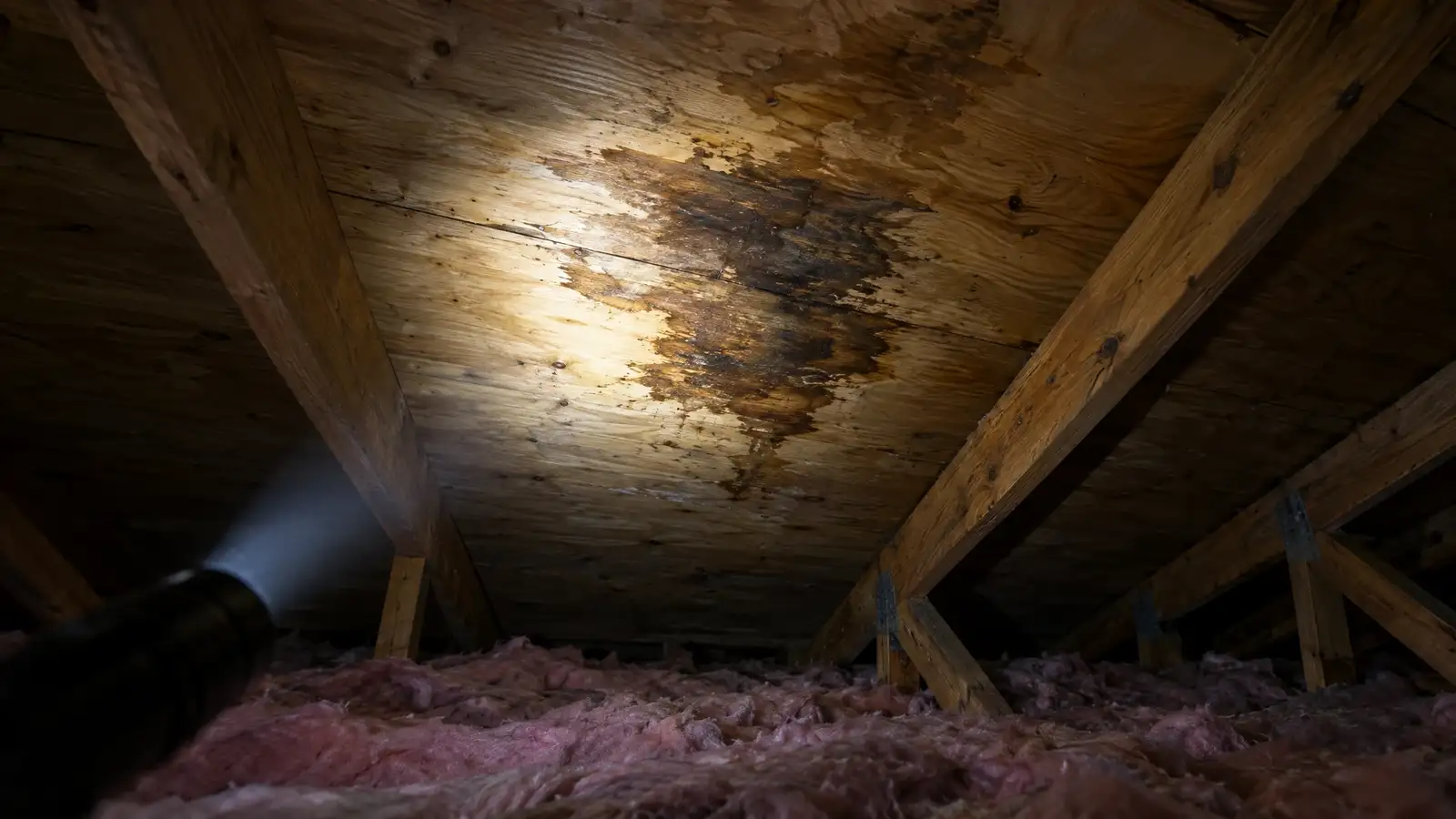
From inside, inspectors look for stains on decking, damp insulation, mold, daylight where it should not be and ventilation problems. Ceiling stains tell them where to look outside.
Together, the inside and outside views give a more complete picture than either alone.
General information, not engineering, legal, insurance or safety advice. Roofs, policies and local requirements vary, and every roof should be judged on its own condition.