The short version
- Single-ply roofs often fail at seams and flashings
- Built-up and mod-bit roofs crack, blister and open at laps
- Metal roofs fail at fasteners and sealants
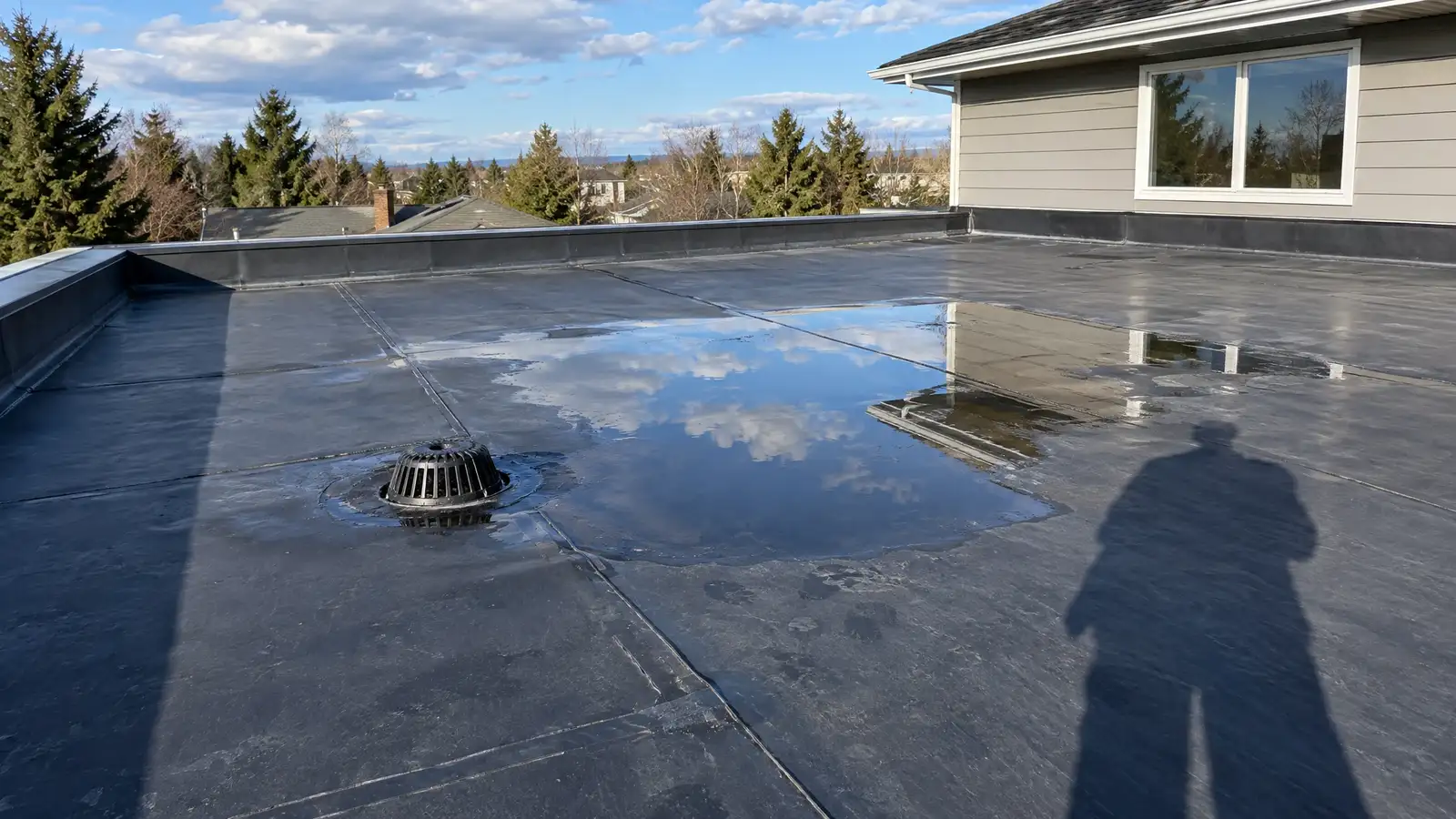
- Ponding water speeds up failure on almost every low-slope roof
Single-ply membranes
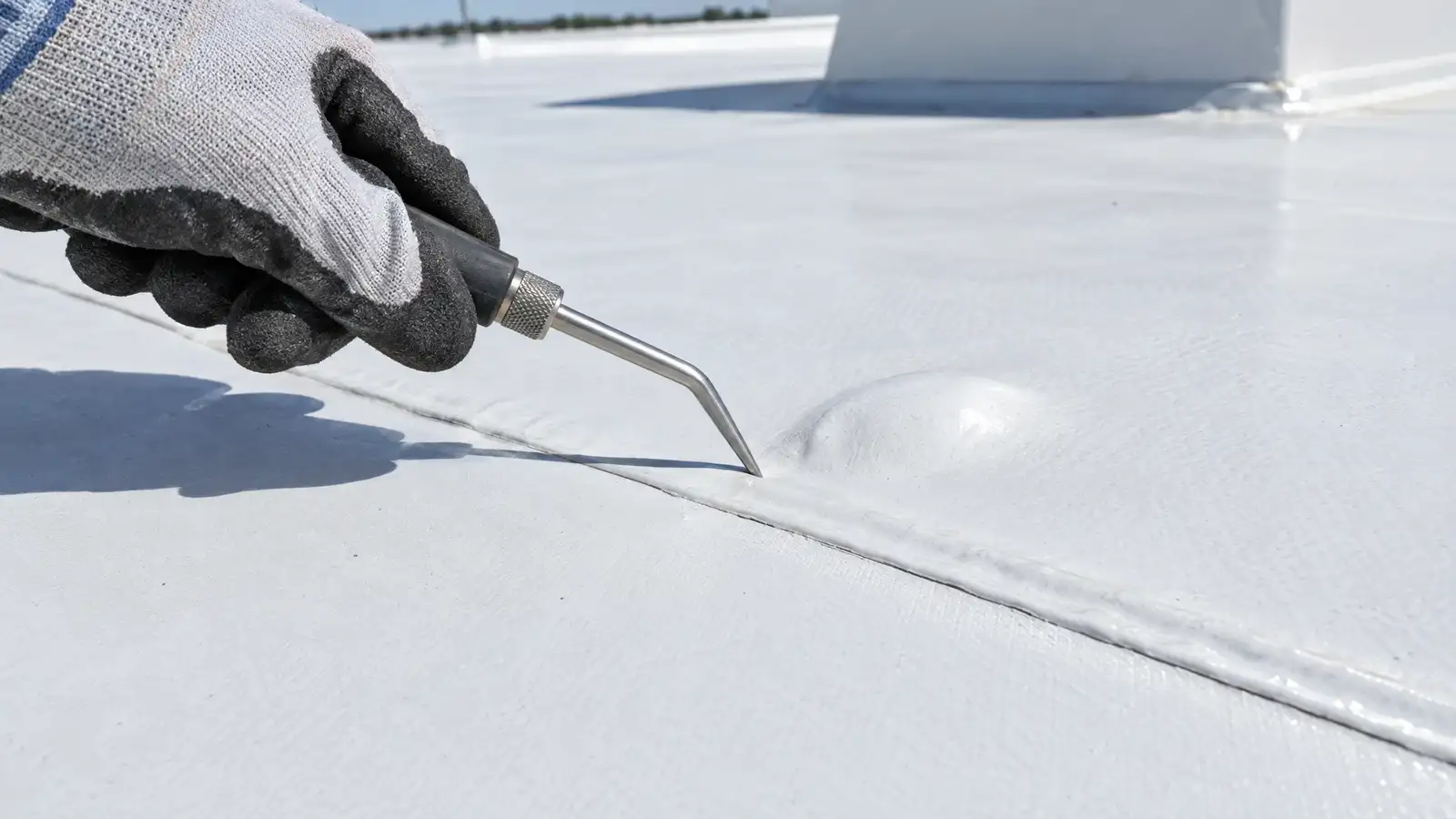
TPO, EPDM and PVC are sheets rolled over insulation and either mechanically fastened, adhered or ballasted. TPO and PVC seams are heat-welded, while EPDM seams use tape or adhesive. They fail at seams, flashings, punctures and where the membrane shrinks or pulls away at edges and penetrations.
Foot traffic and equipment service cause many punctures.
Built-up and modified bitumen
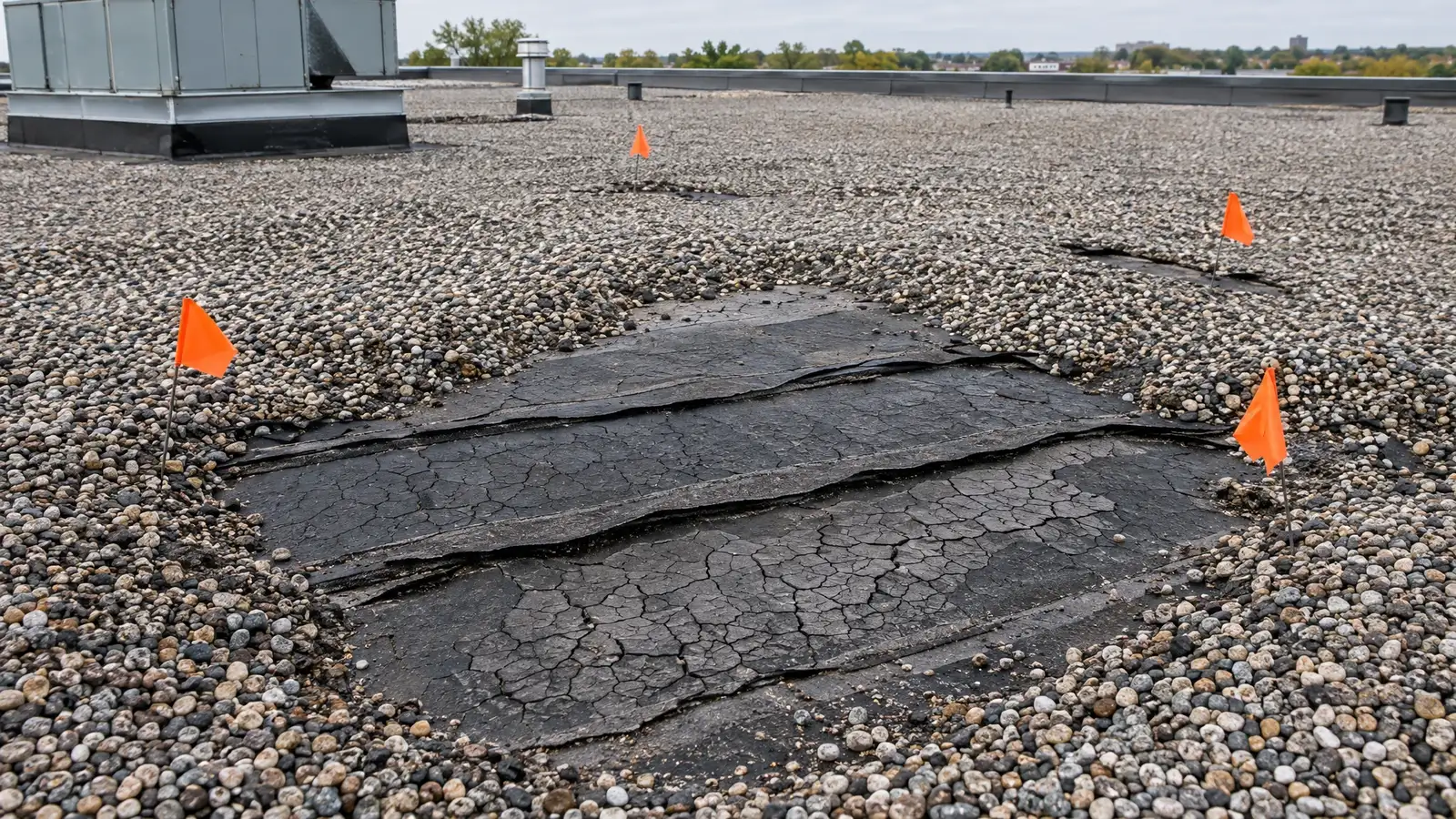
Built-up roofs layer asphalt and felts, often topped with gravel. Modified bitumen uses factory-made sheets with polymer-modified asphalt, applied by torch, adhesive or cold process. Both can crack with age, blister, ridge and open at laps and flashings.
Surface coatings and granules protect them, and when those wear they age faster.
Metal roofs
Standing seam roofs rely on seams and clips, and exposed-fastener roofs rely on thousands of screws with rubber washers. Fasteners back out, washers crack and sealants dry out. Coatings fade and can allow corrosion at scratches.
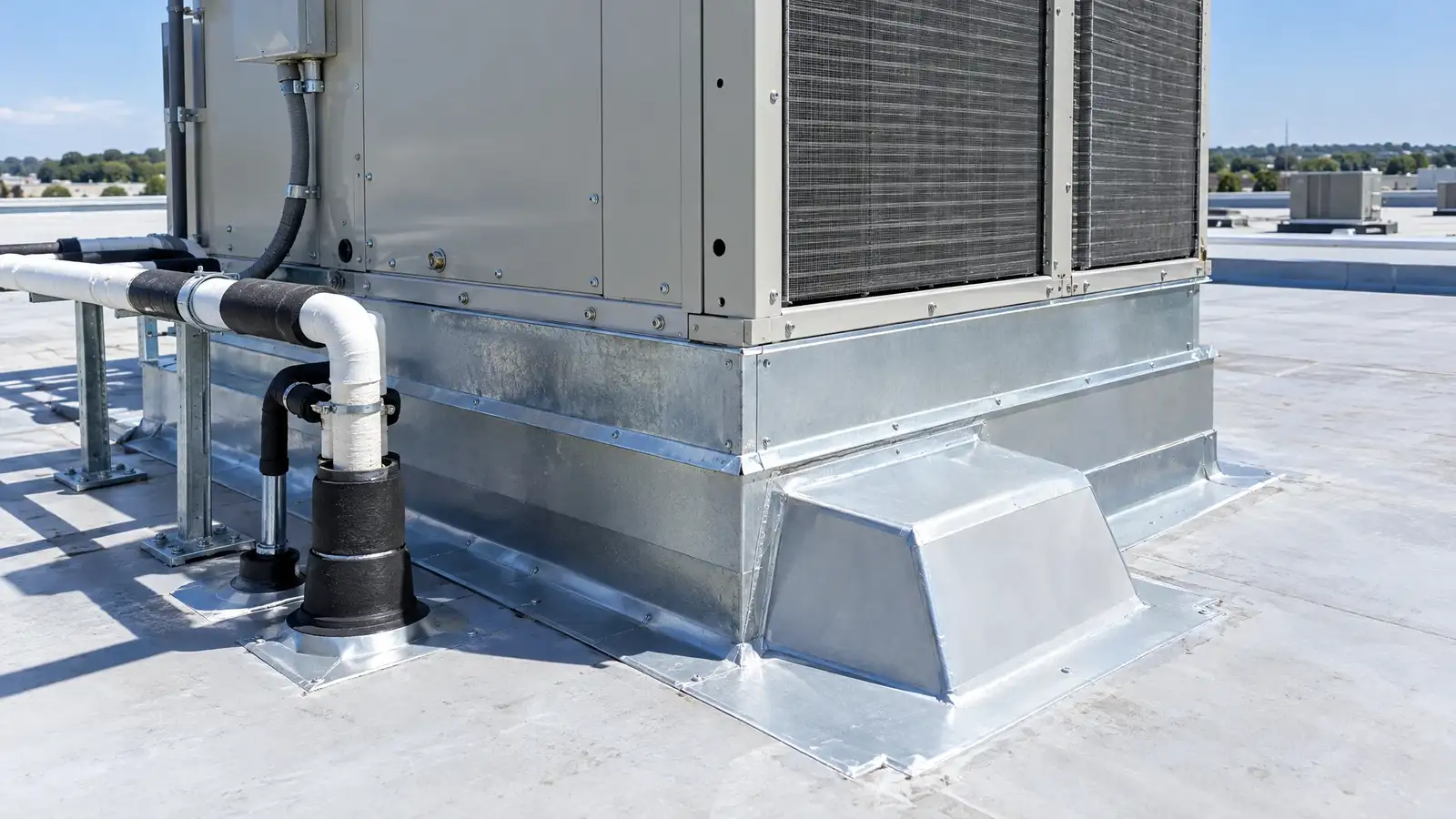
Penetrations and curbs are frequent leak points.
Common to all
Poor drainage, ponding water, rooftop equipment traffic and neglected maintenance shorten the life of any commercial roof. Regular inspection and prompt repair of small defects are the best protection.
Moisture trapped in insulation can ruin a roof from the inside.
General information, not engineering, legal, insurance or safety advice. Roofs, policies and local requirements vary, and every roof should be judged on its own condition.