The short version
- Standing water that remains long after rain is a problem
- Causes include clogged drains, sagging decks and low spots
- Ponding speeds up membrane aging and finds weaknesses
- Fix the drainage, then the roof
What counts as ponding
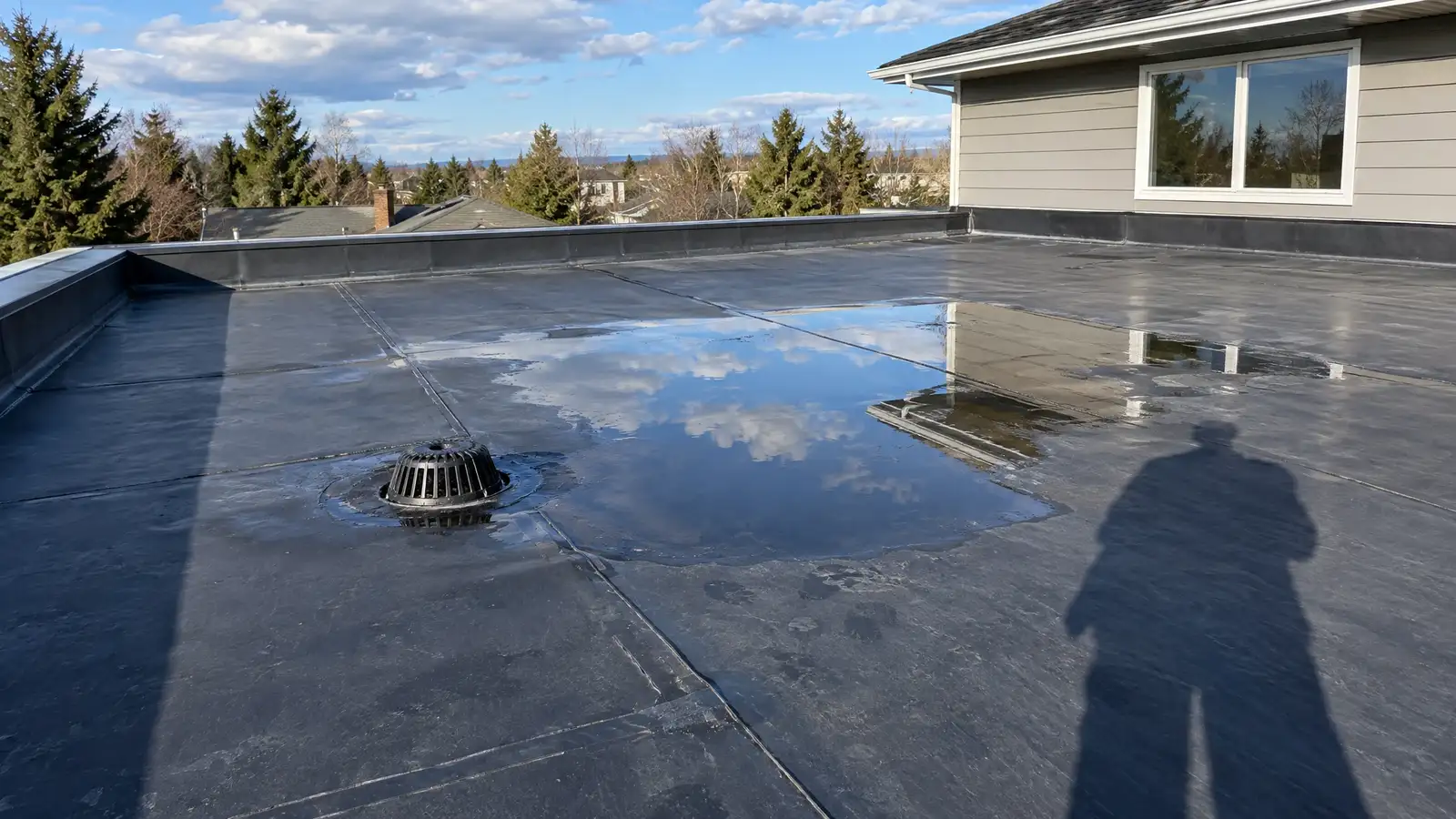
Many roof experts treat water that stands on a roof for 48 hours or more after rain as ponding. A little water in a few low spots after a storm is normal. Large, deep or persistent puddles are not.
Ponding is a symptom of drainage that is not working.
Why it happens
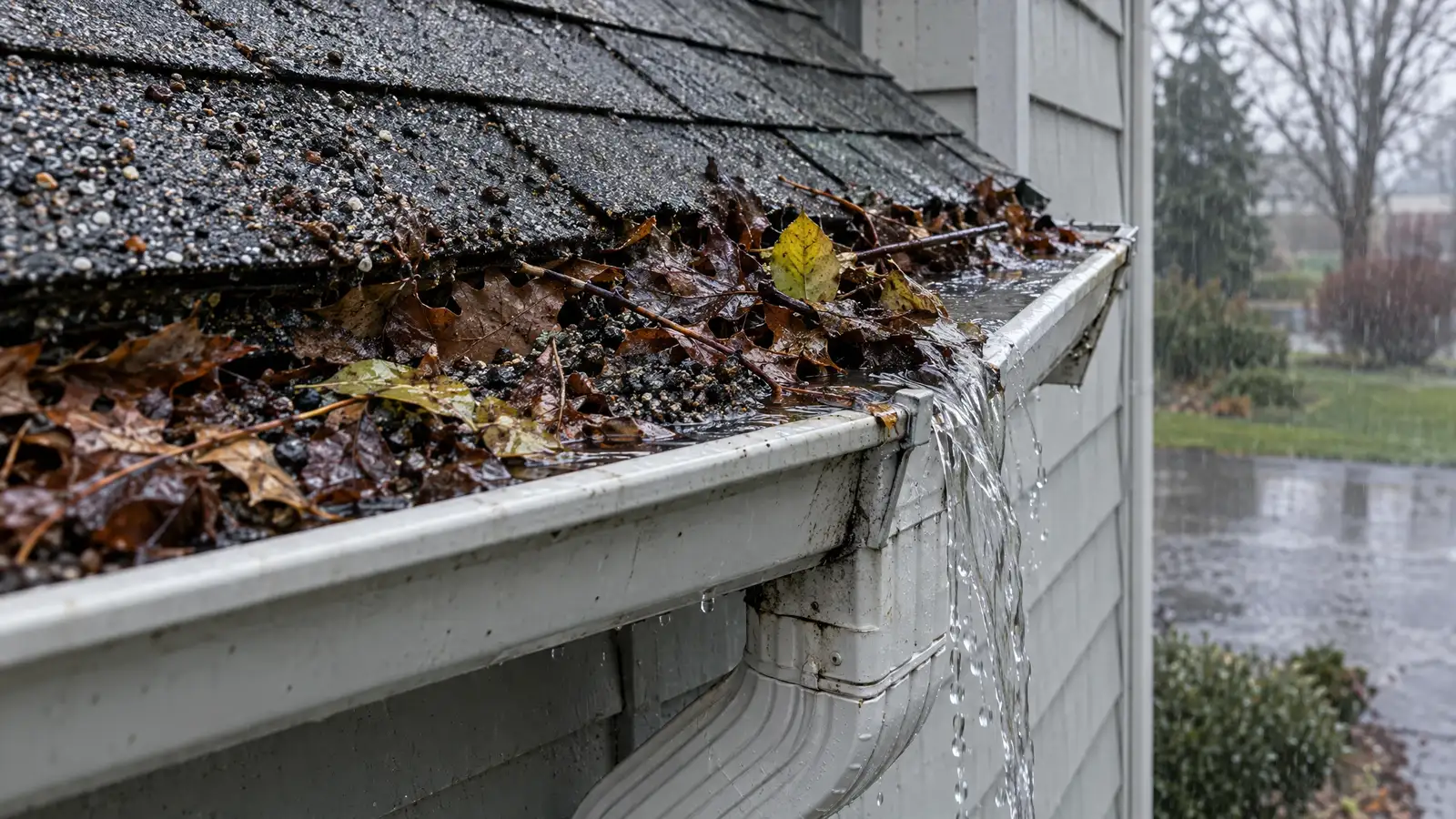
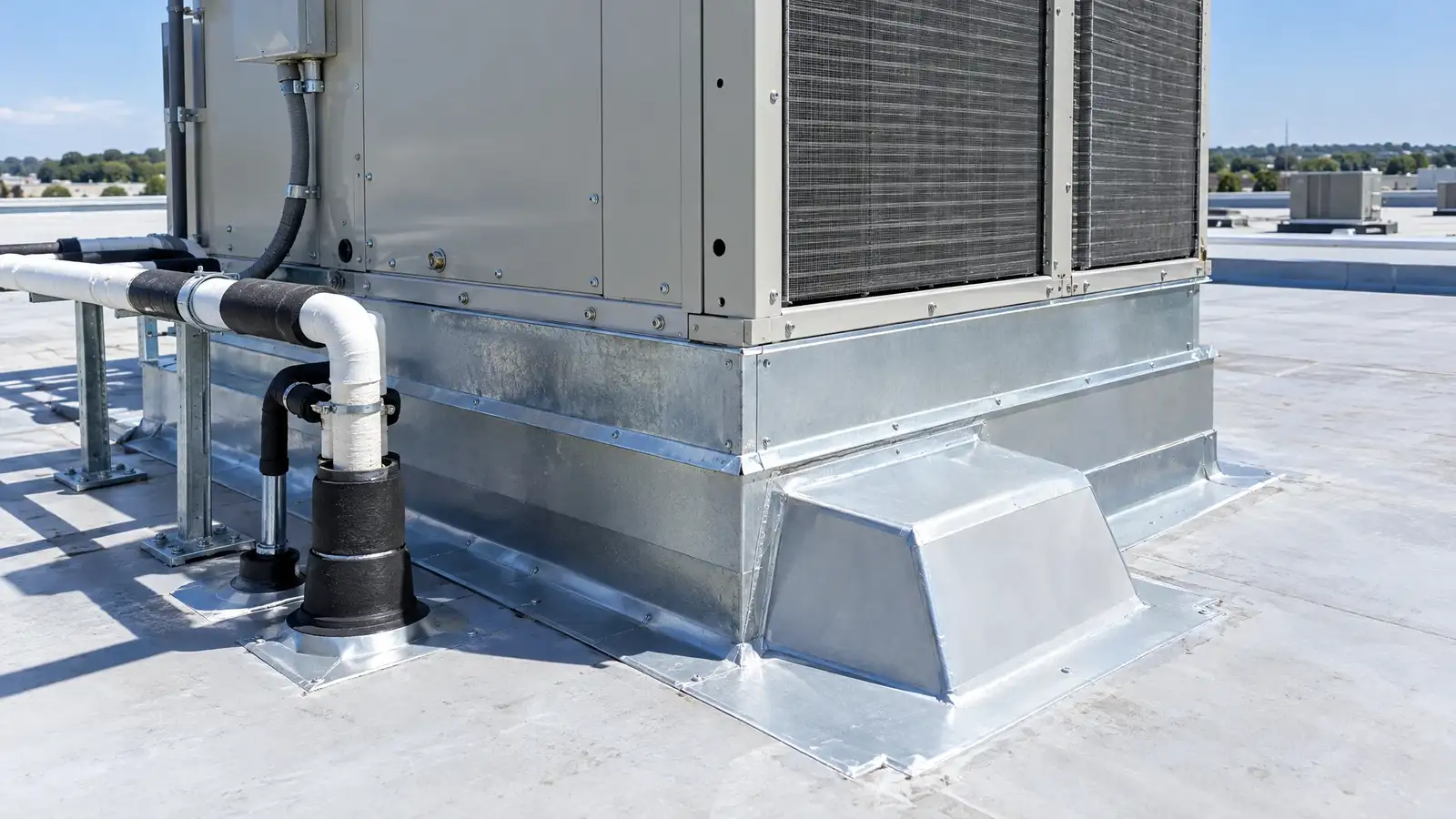
Clogged drains and scuppers, deflection of the roof deck, settling of the structure, poor original slope and added equipment are common causes. Debris and leaves block drains on roofs near trees.
Sometimes the roof was never sloped well enough.
What it does
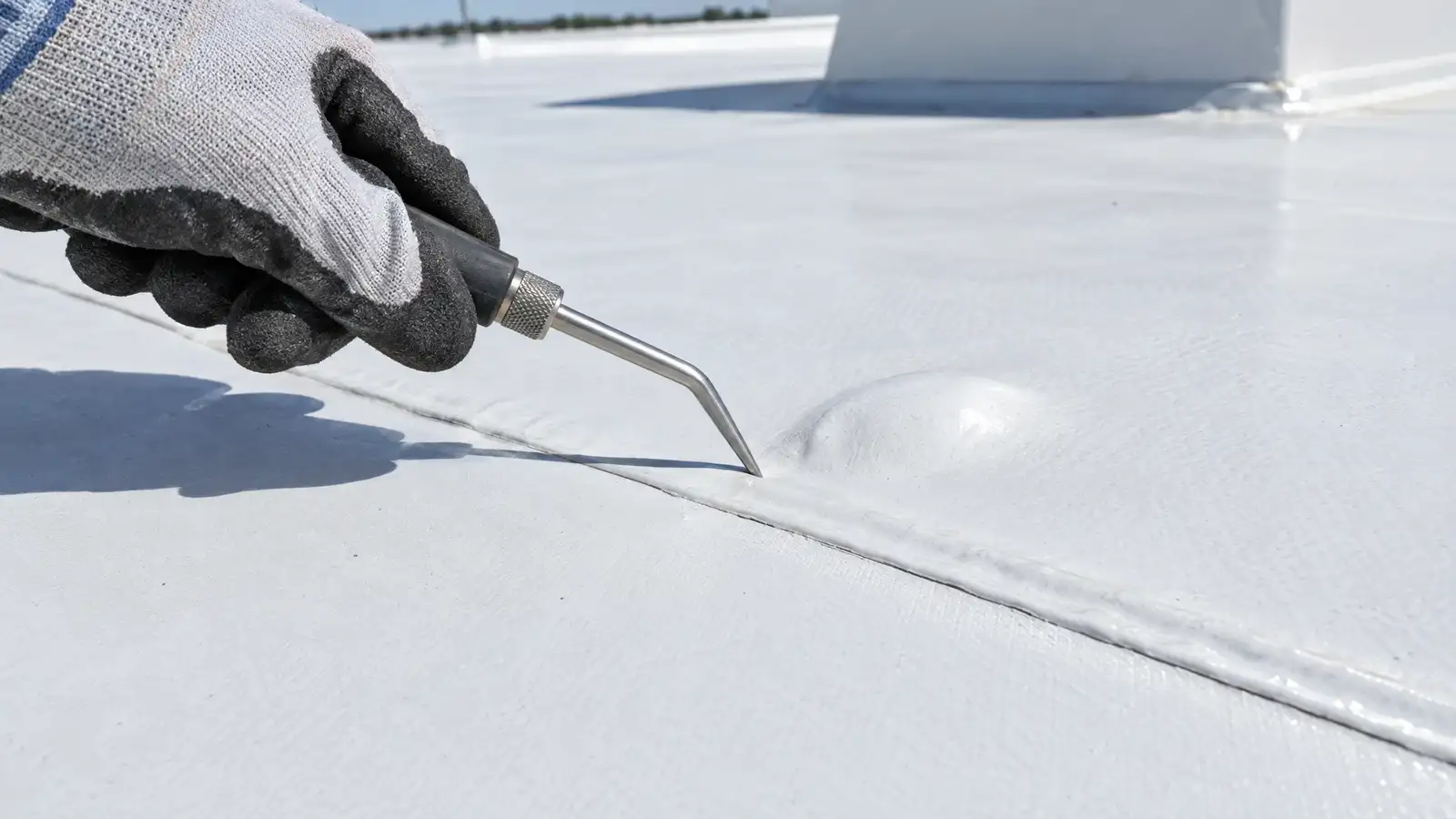
Standing water adds weight, speeds up membrane aging, grows algae, freezes and thaws, and finds every small opening in the membrane. Warranties often exclude damage from ponding.
Persistent ponding can shorten a roof’s life considerably.
What to do
Keep drains and scuppers clear, inspect after storms and ask an inspector to document ponded areas. Solutions range from adding drains or tapered insulation to regrading and sometimes structural work.
An inspection helps you choose a solution that fits the cause.
General information, not engineering, legal, insurance or safety advice. Roofs, policies and local requirements vary, and every roof should be judged on its own condition.