The short version
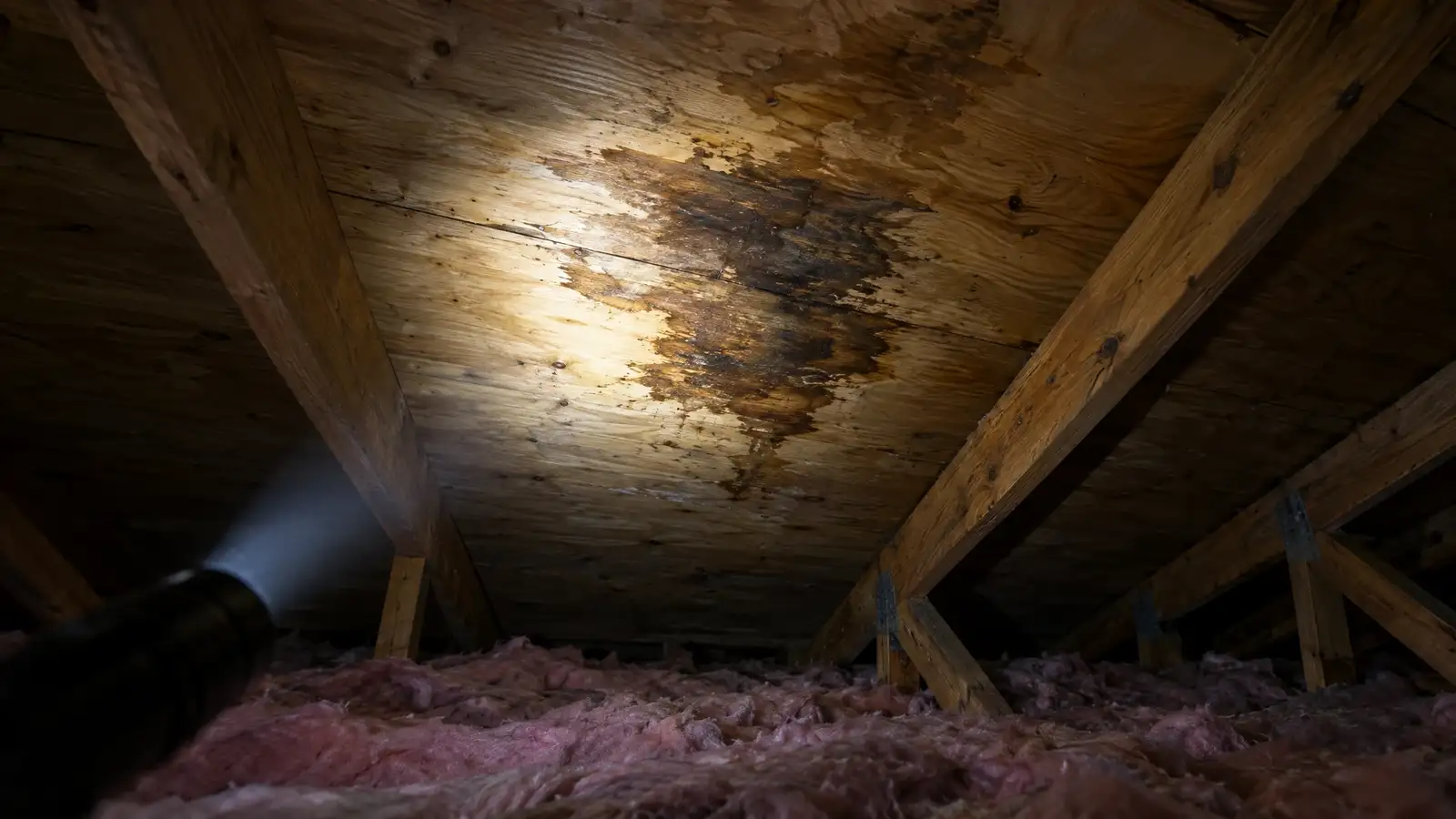
- Dark or tide-line stains on decking show past or present water
- Damp or compressed insulation signals moisture
- Rusty nail tips can mean condensation
- Daylight through the roof boards means open gaps
Before you go up
Choose a dry day with good light, use a bright flashlight and walk only on joists or boards. Wear a mask and protective clothing and stay out if the attic is very hot or fragile. If anything feels unsafe, call a professional.
Never step between joists onto the ceiling drywall.
Stains and wet spots
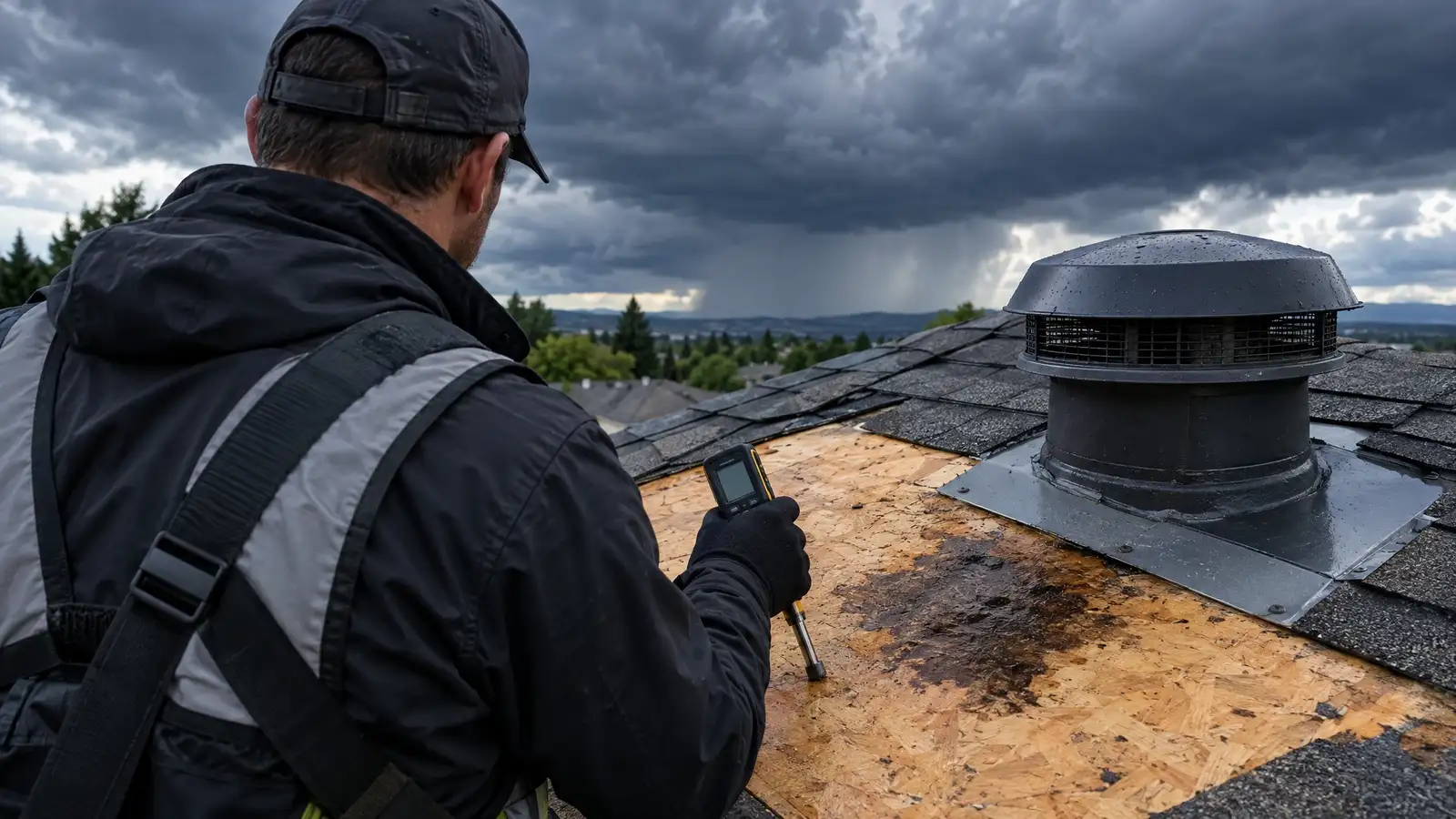
Look at the underside of the roof deck and along rafters. Dark stains, rings and tide lines show where water has been. Fresh dampness, darker wood or dripping show active leaks. Check around chimneys, vent pipes, valleys and skylights.
Compare stained areas with the roof layout outside.
Insulation and nails
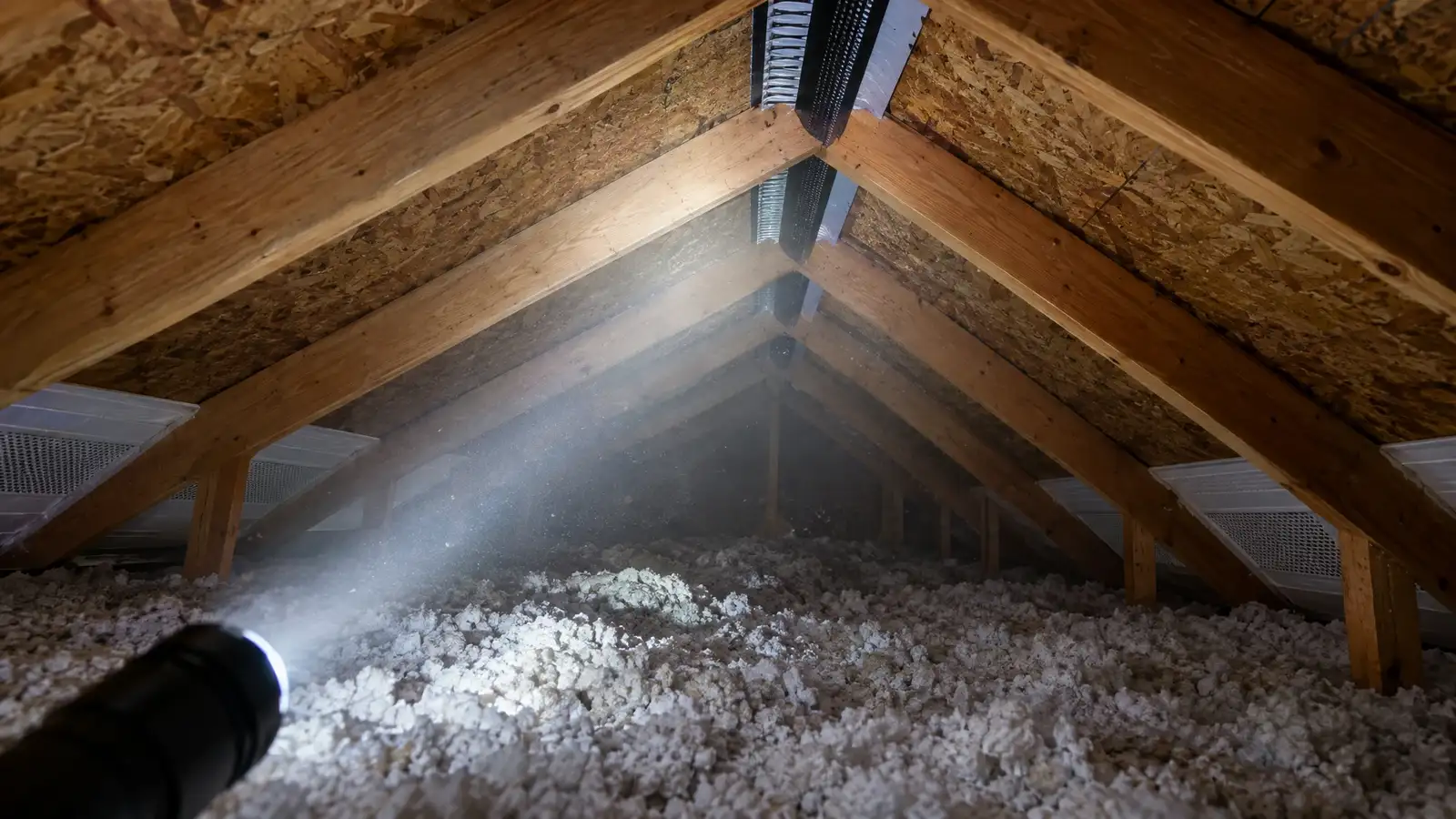
Wet or matted insulation, especially under a stained area, is a sign of a leak. Rusty nail tips, frosty decking in winter and mold patterns spread over wide areas point to condensation instead.
Both are worth reporting to an inspector.
Light and ventilation
Pinpoints of daylight mean holes in the roof. Check that soffit vents are not blocked by insulation and that exhaust vents are open. Poor airflow causes problems that mimic leaks.
Take photographs to show to an inspector.
General information, not engineering, legal, insurance or safety advice. Roofs, policies and local requirements vary, and every roof should be judged on its own condition.